AI & Automation Initiatives: Future‑Proofing Charity Growth
From chatbots to blockchain, discover how intelligent tech drives donations, efficiency, and trust – Part 3 of 7.
Introduction
In today’s digital age, artificial intelligence (AI) and automation are transforming how charities operate and engage supporters. This article is the third instalment in our seven-part Beyond Fundraising series that explores why embracing AI and automation is no longer optional but mission-critical for charities. From AI chatbots providing 24/7 donor support to data-driven fraud detection safeguarding funds, these innovations help charities raise more funds, retain more donors, and scale operations efficiently. In fact, over 58% of charities already use AI in communications and 68% in data analysis as of 2024, underscoring how quickly the sector is adapting.
Why do AI and automation matter for charities? In short, they enable charity teams that are often stretched thin to do more with less. Smart algorithms can personalise donor outreach at a level impossible by hand, predictive models can flag donors likely to lapse before they do, and process automation can handle routine admin tasks in seconds. The result is a leaner, more responsive organisation that can improve donor experience, boost conversion rates, and build long-term supporter loyalty.
In this post, we break down nine key AI & automation initiatives that charities can implement today. For each, we explain what it is, how it works, the potential impact on growth, the effort required, and the teams involved. You’ll also find real-world examples from charities and tech platforms showing these ideas in action. Finally, we’ll connect the dots on how AI and automation drive measurable growth (think higher donor conversion, better retention, and greater scalability). Let’s dive in and explore how cutting-edge tech can future-proof your charity’s fundraising and operations.
Key AI & Automation Initiatives in Fundraising
Modern charities are leveraging AI and automation to create smarter donor journeys and more efficient back-office processes. Below are nine practical initiatives reshaping how charities fundraise and scale impact. Each comes with a brief overview, potential impact on growth, effort required to implement, and teams involved, giving you a roadmap to apply these innovations in your organisation.

1 – AI Chatbot for Donor & Campaigner Support
An AI-powered chatbot serves as a virtual assistant on your website or app, handling common inquiries from donors and campaign creators around the clock. This chatbot can instantly answer questions like “How do I start a fundraising campaign?” or “What’s the process to donate?” – even suggesting relevant causes based on user interests. Powered by natural language processing and trained on your charity’s FAQs and knowledge base, the bot provides on-demand support without needing human staff to be available 24/7. Over time, it learns from interactions to improve its answers and can hand off complex queries to staff when necessary.
Potential Impact
Medium – By providing instant, self-serve support, an AI chatbot enhances user experience and reduces drop-offs. Donors get answers immediately instead of waiting for an email reply, meaning they’re more likely to complete a donation rather than give up. Studies show chatbots can resolve 60–80% of common questions instantly, freeing staff for higher-value tasks. For example, the UK platform Easyfundraising deployed an AI support chatbot and offloaded 80% of support queries to AI; only edge cases needed a human response. This kind of efficiency not only cuts customer support costs but also boosts conversion rates (as queries like “How do I donate?” get answered on the spot).
Effort Required
Medium – Deploying a chatbot is easier than ever, with many no-code AI chatbot builders available. Implementation mainly involves choosing a platform (or using tools like IBM Watson Assistant or Google Dialogflow), training the bot on your organisation’s FAQs and help articles, and testing for quality. Initial setup can be done in weeks, but ongoing tuning is needed to improve responses. Ensure the chatbot is kept up-to-date with new campaigns, policies, or common issues.
Teams Involved
- Tech / IT: Integrates the chatbot on the website or app, and connects it to your databases or FAQ content.
- Support / Customer Success: Provides the knowledge base content, trains the AI on common inquiries, and monitors the bot’s responses for accuracy.
- Marketing: Promotes the chatbot’s availability (“Chat with us live!”) so users know help is instant.
Compliance: Reviews answers for accuracy and tone, ensuring the bot’s guidance is correct and aligned with your charity’s voice and policies.
2 – Hyper-Personalised Donor Outreach (AI-Driven)
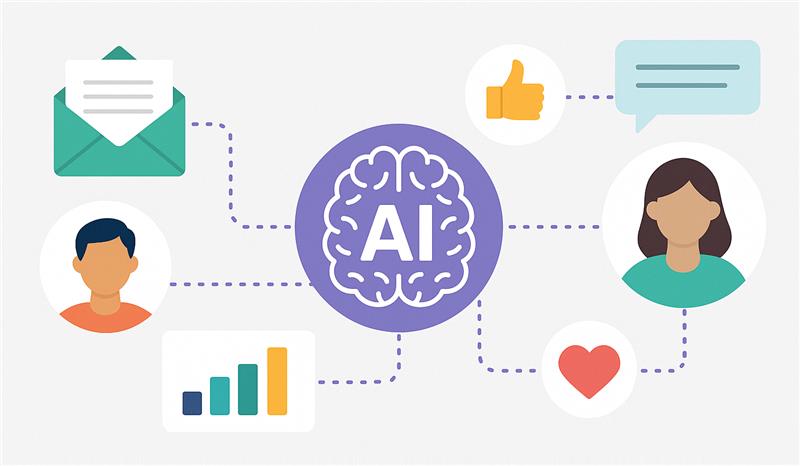
AI-driven personalisation takes donor communications to the next level by tailoring messages and appeals to each individual’s interests and history. Using machine learning to analyse donor data (e.g. past donations, campaigns viewed, email engagement), AI can segment supporters into micro-groups or even “segments of one.” It then helps craft customised content for each donor: for instance, a lapsed donor who previously gave to disaster relief might receive a targeted email about a new emergency appeal similar to their past support, whereas a long-term monthly donor might get a personalised impact report showing what their contributions achieved. AI can even optimise send times and channels for each person, increasing the chances of engagement.
Potential Impact
High – Personalised outreach has been proven to dramatically improve donor response and retention. By making each supporter feel “known” and relevantly engaged, charities see higher open rates, click-throughs, and ultimately more donations. One notable example is a UK Muslim charity’s Ramadan campaign that used AI to generate completely unique emails for each donor, referencing that donor’s own giving history and impact. The result was a 311% increase in donations (over 4× more per email opened) compared to a standard mass email appeal. Such hyper-personalisation not only reactivates lapsed donors but also boosts loyalty among active ones – supporters are more likely to give again when communications resonate with their personal journey. For LaunchGood (our case study platform), this could mean a larger share of its 2.1 million users become repeat givers, powering growth toward ambitious fundraising targets.
Effort Required
Medium – Implementing AI-personalised outreach requires data and content preparation. You’ll need to invest in an AI marketing tool or work with data scientists to analyse donor behaviour and automate segmentation. Many CRMs and email platforms (like Salesforce Einstein or Mailchimp) now offer AI-driven personalisation modules out of the box. Content-wise, your team will need to create variant messaging or templates that the AI can fill with personalised details. Expect an initial setup phase to connect data sources and define algorithms (e.g. an AI model to predict each donor’s preferred cause or likely next gift), followed by ongoing content curation and AI training.
Teams Involved
- Marketing / Communications: Leads the strategy for donor comms, crafting the narratives and ensuring messaging stays on-brand even when automated. They will work closely with the AI tool to generate and review personalised content.
- Data / Analytics: Sets up the data pipelines and machine learning models that segment donors and make predictions (such as churn risk or upgrade potential). They ensure data quality (garbage in, garbage out) and interpret AI insights for the marketing team.
- Fundraising / Donor Relations: Provides insight into donor behaviour and ensures the personal touches remain genuine. For example, major donor officers might use AI-suggested talking points but will personalise further for high-value supporters.
IT / CRM Management: Ensures the AI integrates with your existing CRM and email systems, and that data flows (and privacy compliance) are handled correctly.
3 – Predictive Analytics for Donor Retention & Reactivation
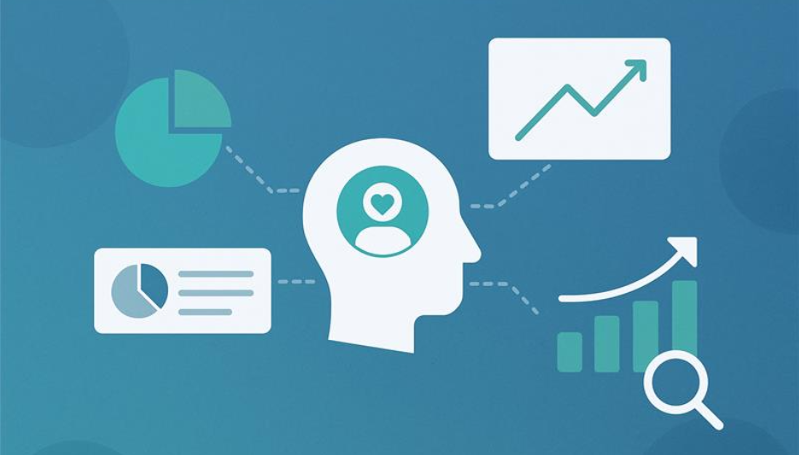
Predictive analytics uses machine learning on your historical fundraising data to forecast donor behaviour and campaign outcomes. By finding patterns in who donated, when, and in response to what, AI models can predict things like: Which donors are at risk of lapsing? Who is likely to respond to the upcoming appeal? Which new sign-ups have high lifetime value potential? Armed with these predictions, charities can take proactive steps. For example, if the system flags that a normally annual donor hasn’t given in 18 months and is likely to lapse, your team can send a tailored “we miss you” message or a special offer to re-engage them. Or if an AI model scores a batch of new donors as having high major gift potential, you can funnel them into a VIP stewardship track. Essentially, predictive analytics lets you focus your retention efforts where they’ll matter most and not miss opportunities hidden in your data.
Potential Impact
High – Improving donor retention and reactivating lapsed donors has a direct, compounding effect on lifetime value and revenue. By catching would-be lapses before they happen, charities can significantly lift their 12-month or 24-month donor retention rates. For instance, Parkinson’s UK worked with data scientists to build a predictive model for direct mail: it identified which supporters were most likely to respond to a fundraising letter. Using these AI insights, their campaign raised nearly £485,000 in donations (over £405k net) – far more than previous mailings – by mailing the right people with the right ask. In another case, Greenpeace Australia used AI to predict which monthly givers might cancel; by calling those folks, they saved an estimated 64 donors in one month (worth ~$23k) and achieved a 2.13× ROI on the retention campaign. These examples show how predictive analytics can uncover “hidden gold” in your supporter base – preventing churn and identifying future major donors, which in turn drives substantial revenue growth toward your goals.
Effort Required
Medium – You’ll need solid data infrastructure and possibly data science expertise, though note that many fundraising CRM systems now offer built-in predictive features. Setting up predictive analytics involves consolidating your donor data (transactions, interactions, demographics) and training models, either using off-the-shelf tools or custom algorithms. An initial project might be done with a consultant or AI provider (e.g. packages from vendors like Dataro or DonorSearch AI), which can often integrate with your CRM. After deployment, the model must be updated with new data and retrained periodically to stay accurate. Also, budget some effort for change management – fundraisers and marketers may need to learn to trust and use the “propensity scores” or recommendations the AI provides, which may require internal training and small pilot tests to demonstrate the value.
Teams Involved
- Data Science / Analytics: Develops or configures the predictive models, interprets the results, and works with the team to refine accuracy. They’ll likely lead any collaboration with an AI vendor or consultant.
- Fundraising / Donor Retention Team: Uses the predictions to shape strategy – e.g. deciding which donors get a personal call, or who should be included/excluded in a campaign. This team provides feedback on whether the predictions align with real-world experience.
- Marketing: Aligns campaign targeting with AI insights (for example, adjusting email or advertising audiences based on who the model deems most likely to give).
Finance / Leadership: Monitors the ROI of these efforts – since predictive analytics is meant to improve efficiency, leadership will want to see metrics like increased retention rate, average gift size, or reduced costs per dollar raised. This helps secure buy-in for expanding AI initiatives.
4 – AI-Optimised Donation Flow & A/B Testing
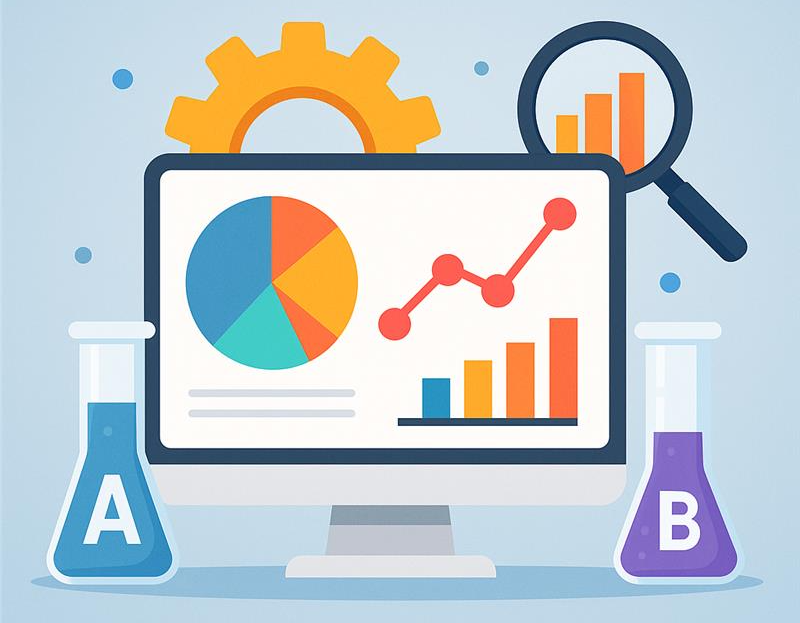
This initiative involves using AI and continuous experimentation to improve your online donation experience and boost conversion rates. Concretely, it means implementing smart donation forms or checkout processes that adapt in real-time to donor behaviour. For example, instead of a static donation page, you might use a platform like Fundraise Up that employs machine learning to adjust suggested donation amounts based on each donor’s giving history and profile. If a donor usually gives £50, the form might intelligently suggest £60 as an upsell, whereas for another donor, £20 might be the optimal ask – all decided by AI. AI-optimised flows also include features like automatic retrial of failed payments (choosing the best time to retry a declined card), and even chatbot pop-ups on the donate page if someone lingers without completing (to answer questions and “rescue” the donation). Additionally, AI-driven A/B testing can constantly experiment with different layouts, images, or call-to-action text on donation pages – learning over time which combination leads to the highest completion rate and average gift. In short, the donation page continuously “learns” and improves itself, much like an e-commerce checkout optimising for sales.
Potential Impact
Medium-High – Even small increases in conversion rate can yield a huge boost in funds when scaled across thousands of donors. By reducing friction in the giving process (fewer clicks, faster loads, mobile-friendly design), more people who click “Donate” will actually finish donating. AI optimisation has shown impressive gains – for instance, charities using Fundraise Up’s intelligent forms saw about 10–15% higher donation revenue overall, thanks to tailored ask amounts and nudges. Similarly, AI-triggered prompts can convert a portion of one-time donors into recurring givers (Fundraise Up reports ~2.3% of one-time donors converting when gently prompted by AI at checkout). Features like adaptive fee coverage requests (asking donors to cover transaction fees at just the right moment) have led to 82% of donors opting to cover fees in some cases – meaning more net funds for the charity. Altogether, an AI-optimised donation flow could add an estimated 5–15% more donations by improving conversion and gift size. On a large fundraising base, that’s significant (imagine 10% of a £10M campaign – an extra £1M just by smarter UX!). Moreover, these tools often improve donor satisfaction – donors get a smoother, even personalised giving experience that leaves a positive impression of your charity.
Effort Required
Medium – Implementing an AI-driven donation flow may involve adopting a new fundraising platform or embedding new widgets into your site. Many modern donation platforms (Fundraise Up, GoFundMe Charity, etc.) offer these optimisation features out of the box. It could be as simple as adding a snippet of code to your donation page or using a WordPress plug-in provided by the vendor. Technical implementation is usually straightforward, but you’ll want to invest time in testing and tweaking the settings. If building in-house, the effort is higher (you’d need web developers and data scientists to create custom algorithms). Either way, expect an iterative process: you’ll launch the optimised forms, review analytics (which the platform often provides via dashboards or A/B test reports), and continuously refine. No significant ongoing human labour is needed for the AI aspects – the system learns automatically – but you should monitor results and ensure everything stays on-brand and functional.
Teams Involved
- Digital Product / Tech Team: Leads the integration of the smart donation form or platform into your website or app. They ensure it’s working correctly, loading fast, and secure. They may also set up any A/B tests or configure the AI settings (with vendor support if using a third-party tool).
- Data Analysis: Reviews the conversion metrics and A/B test outcomes. This could be a digital analyst or even the fundraising team looking at the dashboard. They interpret results and suggest tweaks (e.g. “Version B of the page is doing better on mobile, let’s use that moving forward”).
- Marketing: Provides input on messaging and design – even though AI might be testing different wording or images, you set the initial creative options. Marketing ensures any automated suggestions align with the campaign’s tone and brand guidelines.
Design / UX: Works with the tech team to make sure that any page variations still meet usability and branding standards. For instance, if the AI suggests removing a form field to improve conversion, the UX team signs off that it won’t hurt data collection too much. In summary, they maintain a good balance between optimisation and user experience quality.

5 – Generative AI for Content & Storytelling
Generative AI tools (like GPT-4 for text or DALL-E for images) can be a game-changer in scaling up your content creation and storytelling capacity. For charities, compelling content – be it a campaign story, a donor thank-you letter, social media post, or an infographic – is crucial for engaging supporters. Now, AI can assist by producing first drafts or creative ideas in a fraction of the time it would take a human. Imagine an “AI writing assistant” that helps campaign creators craft a moving narrative for their crowdfunding page: the user inputs key points (who the campaign helps, why funds are needed, a personal anecdote), and the AI generates a well-structured story that can then be edited and refined. The charity’s marketing team might use generative AI to quickly tailor a standard appeal into multiple versions – one that speaks to younger donors in a casual tone, another that emphasises religious aspects for faith-based audiences, etc. On the visual side, AI image generators could create custom graphics or illustrations for campaigns if you lack design resources. The goal isn’t to replace human creativity, but to augment your team – giving you a starting point, new ideas, or accelerating tedious parts of writing and design.
Potential Impact
Medium – While generative AI might not directly raise funds by itself, it greatly increases your output and personalisation of content, which in turn can lead to better donor engagement and more successful campaigns. Effective storytelling is often the difference between a donor clicking “Donate” or bouncing away. With AI, even small charities can produce polished, emotionally resonant stories and keep content fresh across channels. This levels the playing field and can increase conversion rates on campaign pages and response rates to communications. For example, natural language generation (NLG) technology can turn donor data into personalised thank-you letters or impact reports at scale. One fundraising firm noted that NLG allows organisations to create individualised donor stories that highlight each person’s impact, maintaining a high level of personal touch while saving time and resources. By automating first drafts of routine communications (e.g. monthly newsletters or event invites), staff can reallocate time to strategy and relationship-building. The net effect is more frequent and targeted engagement with supporters, which drives donations and retention indirectly. Plus, AI-generated content ensures you’re never at a loss for words or visuals – important for keeping up in the fast-paced digital marketing world.
Effort Required
Low – Accessing generative AI tools is fairly easy and inexpensive. Many are available via web interfaces or simple API integrations. The main effort is training your team to use them effectively and setting guidelines (for accuracy and tone). Staff should review all AI outputs – you’ll need a human in the loop to fact-check and tweak wording for authenticity. Initial experimentation (trying out tools like ChatGPT for writing, or Midjourney for images) can be done in-house with minimal cost. If desired, more custom solutions (like integrating an AI writer into your campaign platform for users to access) would require some product development, but even that can leverage existing AI APIs. It’s wise to create an internal policy on AI-generated content: e.g. how to avoid biases, ensure data privacy if you input donor information, and not rely on AI for anything sensitive without review. In summary, generative AI adoption is more about change management than technical lift – getting your team comfortable with co-creating content alongside AI and establishing quality control.
Teams Involved
- Marketing/Communications: This team will likely be the primary user of generative AI for crafting campaign stories, social media content, press releases, etc. They will also enforce brand voice and messaging consistency by editing AI drafts.
- Product / Tech: If you integrate AI tools into your platform (for example, giving campaign owners an “AI content assistant” on your crowdfunding site), your product team will handle that implementation. They’ll choose vendors (OpenAI, etc.), set up APIs, and ensure the feature is user-friendly.
- Customer Success / Training: Since campaigners or fundraisers might be end-users of these AI tools, someone needs to educate them. Your support or success team can provide how-to guides or workshops on using AI for storytelling, ensuring that users get the most out of it.
Legal / Compliance: Reviews guidelines for AI content to avoid issues (e.g. accidentally generating misinformation or insensitive phrasing). They might also ensure any licensing (for AI-generated images or text) is compatible with your use. Setting some ground rules (like “we do not input personal data into free AI tools”) helps maintain ethical standards.
6 – AI-Assisted Grant Writing & Major Donor Proposals
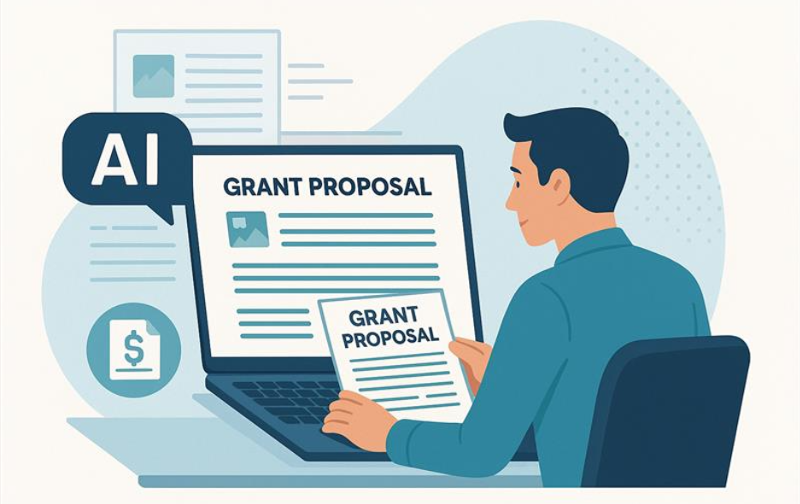
Applying for grants or crafting proposals for major donors can be an intensive, time-consuming process for charities. AI-assisted grant writing aims to ease that burden by using AI to draft and refine proposal content. Imagine feeding an AI the key details of a project – objectives, budget, impact stats, beneficiary stories – and getting a decent first draft of a grant application or a corporate sponsorship proposal. The AI can ensure the narrative hits the typical points funders look for, and even adjust tone or emphasis based on the grant’s focus area. LaunchGood (or any platform facilitating fundraising) could even offer an “AI Grant Writer” service to campaign creators seeking large funding: campaigners input their raw data, and the system outputs a structured proposal or impact report which they can then customise. Likewise, for major donor outreach, AI could help personalise pitch decks or briefing documents, highlighting the aspects of a campaign most likely to resonate with a particular donor (based on what we know of their interests). The end goal is to help charities produce high-quality, persuasive proposals faster and increase their win rate for big funding opportunities.
Potential Impact
Qualitative (indirect) – While hard to quantify, helping charities win more grants or secure major gifts has a huge payoff. You can think of this initiative as multiplying the effectiveness of your fundraising team. If AI-assisted writing enables you to submit 10 proposals in the time it used to take to do 5, you’ve essentially doubled your chances of getting funding. Moreover, if the quality of each proposal is higher (well-structured, hitting funder keywords, free of errors), the success rate should improve. This means more large infusions of funds for key projects, contributing to overall growth. It also positions your platform or organisation as more than just a crowdfunding site – it becomes a broader fundraising facilitator, helping campaigns tap every revenue avenue. For instance, if a few flagship LaunchGood campaigns win substantial foundation grants thanks to better applications, that pushes the needle toward the $2B total raised goal. It can also improve campaign outcomes on the platform (campaigns hitting their targets because they got external grant money). Even though the impact is indirect, it strengthens the ecosystem: campaigners succeed more often, which attracts more campaigners and donors, fueling growth.
Effort Required
Medium – The technology piece is not too complex (it’s an extension of generative AI for a specific format), but creating a truly useful AI grant-writing tool might require fine-tuning AI models on non-profit-specific writing. Off-the-shelf AI (like GPT) can do a decent job with generic prompts, but to make it really effective, you might combine it with templates or training data from successful proposals. This means potentially curating examples of past grants to train a model or programming prompts that guide the AI. Also, some human expertise is needed: perhaps a staff member or consultant with grant experience to oversee the outputs and improve them. If offering this as a service to your users, there’s an element of product development: integrating it into your platform, adding fields for input, etc. However, many organisations are already using AI writing assistants individually (e.g. to brainstorm wording), so even an internally used AI for your fundraisers could start small with readily available tools. Plan for an iterative approach: pilot AI on one or two proposals, measure quality and results (did those proposals make it to final rounds more often?), then expand usage.
Teams Involved
- Product Development: If building an in-platform feature (for LaunchGood or similar), the product team and developers will design how campaigners interact with the AI tool and ensure a smooth user experience.
- Marketing / Outreach: Promotes the availability of this tool or service to campaign owners (“Need help writing grant proposals? Our AI tool can draft it in minutes”). This can be a selling point to attract high-value campaigns to your platform.
- Fundraising / Partnerships: For internal charity use, your fundraising team would use AI to draft proposals, then refine and tailor them. Also, your partnerships team might use AI drafts when approaching corporate sponsors or writing MOUs, speeding up the documentation.
- Customer Success: If offered to users, your support team might assist campaigns in using the AI grant writer effectively – maybe even reviewing the AI-generated drafts and suggesting improvements (a value-add service).
Strategy/Leadership: High-level buy-in is needed because grant writing often involves sensitive positioning. Leadership should ensure that any AI-generated proposals align with the organisation’s mission and promises, to avoid over-claiming or misrepresentation. Essentially, someone senior should sign off on the final proposals, AI-assisted or not.

7 – Automation of Admin Tasks (CRM Updates, Receipts, Compliance)
As a charity grows, so does the volume of routine administrative tasks – processing donations, issuing receipts, updating donor records, monitoring compliance checkpoints, and so on. Automation (sometimes using AI, sometimes simple scripts or integrations) can handle a huge chunk of this busywork behind the scenes. For example, when a donation comes in, an automated workflow can instantly log the gift in your CRM, charge the payment, generate a tax receipt or thank-you email to the donor, and update a fundraising thermometer – all without anyone pressing a button. Similarly, mundane tasks like daily data cleaning (merging duplicate contact records) or checking campaign content for compliance (flagging keywords that might violate guidelines) can be delegated to AI. Robotic Process Automation (RPA) bots can even navigate legacy systems to copy-paste data from one to another, if needed. By automating repetitive processes, you ensure consistency, speed, and free your human team to focus on complex, value-add activities (like engaging donors, not typing data). Crucially, this also means your operations can scale up (to 10 million users, say) without a linear increase in headcount or manual workload.
Potential Impact
Medium – The biggest benefit is efficiency and scalability. Automation reduces overhead costs as you grow – you don’t need to hire one admin person for every X donors added. It also reduces human error (donor records are updated correctly, receipts are always sent on time), which improves professionalism and donor trust. Donors get immediate confirmation and acknowledgement of their gifts, enhancing their experience. Meanwhile, your staff can concentrate on strategic work or personalised interactions that truly require a human touch. This ensures that growth (e.g. doubling donations) doesn’t swamp your team or compromise service quality. In practice, charities that implement RPA and workflow automation see significant time savings. In Atlanta, several non-profits used RPA bots to automate donor data management and acknowledgement; one organisation cut its administrative processing time by 50% by automating data entry and donor tracking. The bots handled tasks in minutes that used to take hours, like pulling in donor info from multiple sources, updating records, and sending out prompt thank-you notes. Faster receipting and consistent follow-up also bolster donor satisfaction – everyone gets their tax receipt and thank-you immediately, no one falls through the cracks. Overall, admin automation is about building a resilient infrastructure that can handle growth spurts (like a viral campaign influx) without breaking. This stability and efficiency support the ambitious fundraising and user targets in the long run.
Effort Required
Low to Medium – Many administrative tasks can be automated with fairly straightforward solutions. Sometimes it’s as simple as using built-in features of your CRM or donation platform (e.g. auto-sending emails or exporting data to Finance). There are also “no-code” automation tools (Zapier, Microsoft Power Automate, etc.) that let non-developers create workflows between apps. Implementing RPA for more complex processes might require an RPA developer or IT person to map out and script the tasks, but even that is often a matter of weeks per process. The key effort is identifying which tasks are worth automating – basically, process mapping your routine workflows and pinpointing the pain points or time sinks. Start with tasks that are rule-based and frequent (like weekly report generation or nightly data syncs). Compliance checks using AI (for example, an AI scanning campaign descriptions for prohibited content) might require training an AI model on examples of what to flag, which is a bit more involved but doable with existing AI services. Maintenance is relatively light: once set up, these automations just need occasional monitoring and updates if your systems change. In short, the barrier to entry is low – even small charities can automate piecemeal, and the tools are often user-friendly.
Teams Involved
- Operations / Finance: Likely to champion receipting automation, financial reconciliations, and reporting workflows. They ensure that automated receipts meet legal requirements and that financial data flows correctly to accounting.
- IT / CRM Admin: Handles technical setup – connecting systems via APIs or RPA, maintaining the integrations. They also ensure data integrity as information is auto-transferred between platforms.
- Compliance / Legal: Works with IT to implement automated checks (like screening donations against anti-fraud or anti-money-laundering lists, or ensuring campaigns adhere to terms). They define the rules that the automation follows and review flagged items.
- Support / Donor Services: Benefits from automation (like fewer manual emails to send). They might help identify repetitive inquiries or tasks to automate. Once automation is in place, they can focus on higher-level supporter care.
Leadership: Needs to endorse a culture of automation – encouraging teams to adopt new tools and trust the processes. Leaders also set the expectation that scaling up should not mean burning out staff with manual work, but rather investing in smart systems.
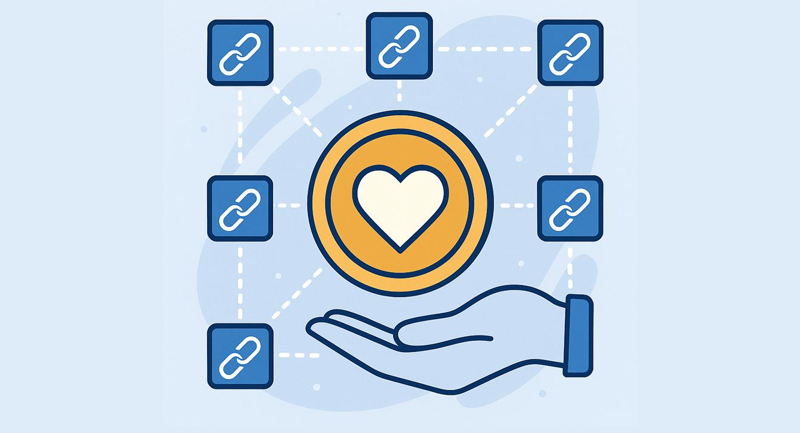
8 – Blockchain for Transparent Giving
Blockchain technology offers an innovative way to enhance transparency and trust in charitable giving. At its core, a blockchain is a secure, decentralised ledger – every transaction is recorded publicly and cannot be easily altered. For charities, this means donations can be tracked in an open and verifiable manner. In practice, a charity (or a platform like LaunchGood) could issue a unique blockchain record for each donation, which donors might later follow to see when the funds were transferred to the field and even, in theory, how they were spent if partnered organisations update the chain. Smart contracts (self-executing code on the blockchain) could also be used to add conditions to donations: for example, a donation could be programmed to release to the campaign organiser only when a certain milestone is met (say, a project progress report is submitted), automating accountability. For donors, this level of transparency is reassuring – it’s like having a public audit trail for their contributions. For organisations, it can reduce fraud and misuse, since all parties know the transactions are recorded on a public ledger. Additionally, embracing blockchain positions a charity as forward-thinking, possibly attracting a tech-savvy donor segment (and cryptocurrency donations, which are increasingly popular).
Potential Impact
Low-Medium – In the immediate term, blockchain features are more about strengthening donor confidence and brand trust than about driving a large volume of new donations. Not every donor will check a blockchain record of their gift, but the promise of transparency can be a selling point. It might sway sceptical donors or larger funders who require stringent tracking. Over time, as society leans more into transparency, early adopters could gain an edge. There have been pioneering efforts: UNICEF’s Innovation Fund launched a crypto initiative where they accept and disburse funds in cryptocurrency, allowing donors to see exactly how over $10 million in donations flow to projects via public blockchain records. Platforms like BitGive’s GiveTrack similarly let donors follow their money to the project outcome in real-time. These examples show that blockchain can demonstrably increase openness, which is vital in the charity sector (where trust is paramount). For growth, this could indirectly lead to more donations – donors are more inclined to give when they trust that their money is used as promised. Blockchain could also open up new funding streams (e.g. appealing to cryptocurrency holders or younger donors interested in tech for good). While it may not boost fundraising totals overnight, it enhances the credibility and sustainability of fundraising – preventing scandals and reinforcing donor loyalty, which is foundational for long-term growth.
Effort Required
Medium – Implementing blockchain solutions has a learning curve and some costs. It involves deciding on a blockchain platform (Ethereum is common, but there are others designed for non-profits), and possibly hiring or contracting blockchain developers to build the needed functionality (like a donation tracking dashboard or smart contract system). Integration with your existing systems is another aspect – e.g. linking donation records in your database with blockchain transactions. There’s also a user education piece: you may need to explain to donors how to use the transparency features (not everyone is familiar with blockchain explorers or crypto wallets). Start small with a pilot program: perhaps track one campaign’s donations on a blockchain as a proof of concept. Ensure you address regulatory aspects (cryptocurrency and data privacy regulations vary by country). The initial build might take a few months of development and testing. Once running, maintenance is not too onerous but you’ll need to keep an eye on transaction costs (fees for using blockchain) and updates in blockchain tech. An alternative to building from scratch is partnering with existing platforms – as mentioned, organisations like GiveTrack offer ready-made solutions for charities to use blockchain with less technical overhead.
Teams Involved
- Tech / Blockchain Developers: Core to setting up the blockchain infrastructure, writing smart contracts, and ensuring security. If those skills aren’t in-house, it might involve external blockchain consultants.
- Compliance / Finance: Must be closely involved to navigate the regulatory landscape (e.g. accounting for crypto assets, ensuring transparency doesn’t conflict with donor privacy laws, etc.). They will also consider how to reconcile blockchain records with traditional financial reports.
- Marketing / PR: Communicates this innovation to the public. A key benefit of blockchain is donor perception, so marketing should highlight the new transparent giving feature in campaigns and press releases. They might also gather feedback from donors on whether this increases trust.
- Product Management: If integrating into a platform like LaunchGood, product teams design how donors and campaigners interact with the blockchain features (for example, adding a “track your donation” button linked to a blockchain explorer). They focus on user experience so that even non-technical users can benefit from the transparency.
Donor Support: Need to be ready to answer donor questions about how it works (“I saw my donation has a transaction hash, what does that mean?”). They might produce simple FAQs or guides to help donors understand the new system.

9 – AI & Data-Driven Fraud Detection
As online fundraising grows, so does the risk of fraud – whether it’s stolen credit cards being tested on donation forms, fake campaigns trying to scam donors, or other suspicious activities. AI-powered fraud detection helps protect both the platform and donors by monitoring transactions and user behaviour for anomalies. Machine learning models can be trained on historical data to recognise patterns that look “off” – for example, an unusually large number of donations coming from one card in a short time, or a campaign that spikes in donations from a single IP address, or repeated refund requests by the same user. Unlike static rules, AI can adapt to new tactics fraudsters use, flagging subtle signals that a human reviewer might miss. When a potential issue is detected, the system can automatically pause the transaction, block the user, or alert a human trust & safety team to investigate, depending on severity. Payment processors like Stripe already employ AI for fraud scoring in the background, but having your own layer of fraud detection tuned to your platform’s nuances provides extra security. It ensures that legitimate donors and campaigns are safe, and fraud attempts are stopped early – preserving funds and your organisation’s reputation.
Potential Impact
Medium – The direct benefit is preventing losses and avoiding crises. A single high-profile fraud incident can severely damage donor trust and slow down growth (people become hesitant to give if they hear money was misused). By catching fraudulent transactions, you also save money by avoiding chargeback fees and refunds. For example, Fundraise Up (a donation platform) uses AI to identify about 1.3% of transactions as fraudulent and can block 98.8% of those risky donations before they are processed by the payment gateway. That kind of pre-emptive filtering is invaluable – it means the vast majority of fraud is stopped in real time, with only a tiny fraction possibly slipping through to be handled by conventional means. Additionally, strong fraud prevention gives confidence to donors and campaigners; they know your platform is safe and actively monitored. It’s an often overlooked driver of growth: trust. If donors feel secure (their card data won’t be misused, their funds will reach genuine causes), they are more likely to continue using the platform and even recommend it to others. So while fraud detection doesn’t boost revenue like a new fundraising feature might, it protects your growth from setbacks and underpins a trustworthy brand.
Effort Required
Medium – Setting up AI fraud detection involves access to a lot of transaction and user data, and training models to distinguish normal vs. suspicious patterns. Many payment platforms offer some fraud tools out of the box (e.g. Stripe’s Radar or PayPal’s fraud filters), which you should definitely use. On top of that, you might implement additional monitoring tuned to your context – for example, an AI that analyses campaign behaviour on LaunchGood to spot if a fake charity campaign might be present (scam campaigns often have telltale signs in their text or funding patterns). Developing a custom machine learning model for fraud might require a data scientist or using a fraud detection service API. You also need a workflow for what happens when something is flagged: who reviews it? Do you auto-refund or block? Those policies need to be defined in advance. Testing is crucial – you want to minimise false positives (flagging legitimate donors incorrectly), which can frustrate users. Over time, the system can be refined with feedback. Additionally, ensure compliance with any financial regulations and data privacy when monitoring transactions. It’s an ongoing effort: fraud tactics evolve, so your models and rules should update periodically. However, much of the heavy lifting can be outsourced to third-party AI services if you prefer, which lowers in-house effort.
Teams Involved
- Tech / Data Science: Develops or integrates the fraud detection algorithms. They will handle data pipelines for real-time analysis and work on model accuracy. They also coordinate with payment gateways’ fraud systems.
- Trust & Safety / Compliance: Defines the rules and oversees the process when fraud is detected. They might form a small review team to manually investigate flags (especially to decide if a campaign is fraudulent). They also ensure the system complies with legal standards (like notifying banks in case of card fraud, etc.).
- Customer Support: Interfaces with users when false positives occur – e.g. if a legitimate donor gets blocked, support will help resolve and reassure them. They may also communicate with donors if a campaign was taken down for fraud, etc. It’s sensitive, so comms need to be handled carefully to maintain trust.
- Finance: Stays in the loop because fraud has financial implications (chargebacks, refunds). They will track any losses prevented or costs incurred due to fraudulent attempts. In some cases, finance might lead on selection of anti-fraud tools as part of risk management.
Executive / Legal: High-level oversight, since fraud incidents can be high-profile. Legal might coordinate with law enforcement if needed. Executives will want regular reports on fraud metrics (number of attempts blocked, etc.) as part of governance and to assure the board/stakeholders that the platform is safe.
How AI and Automation Drive Growth
Each of the initiatives above contributes to growth in distinct but complementary ways. Together, they create a virtuous cycle: better donor experiences, deeper engagement, and streamlined operations all feeding into more sustainable fundraising. Here are the key growth benefits linked to these AI and automation efforts:
1 – Higher Conversion Rates
AI tools remove friction from the giving process and assist donors in real time. For example, chatbots answer questions instantly, which reduces donation page drop-off and nudges hesitant donors to complete their gifts. Likewise, AI-optimised donation forms adapt to donor behaviour, resulting in more completed donations and even larger average gifts (reports show a 10–15% increase in donation revenue with dynamic ask amounts). When more website visitors turn into donors, your campaigns raise significantly more money without any extra marketing spend.
2 – Improved Donor Retention & Loyalty
Personalisation and predictive analytics directly boost retention by keeping donors engaged and appreciated. AI-driven outreach gives donors content that matters to them, making them more likely to stick around – as seen when tailored AI emails tripled donations in one campaign by resonating with donors’ individual journeys. Predictive models help you intervene before donors lapse (e.g. flagging those at risk and prompting timely follow-ups), which has saved charities substantial sums in retained donations. Higher retention means you’re not constantly replacing lost donors; instead, more supporters give year over year, steadily growing lifetime value.
3 – Greater Fundraising Revenue
By using AI to identify high-value opportunities (like major donor prospects or ideal grant targets) and automation to capitalise on them quickly, charities can unlock new revenue streams. Predictive analytics guided Parkinson’s UK to an extra £405k+ net in one mailing, showing how data-driven targeting makes campaigns far more lucrative. AI-assisted grant writing could mean landing that six-figure foundation grant that was previously out of reach. These technologies essentially amplify your team’s ability to bring in money, whether through many small donations or a few big wins.
4 – Scalability and Efficiency
Automation ensures that as your supporter base and donation volume grow, your operations can handle it smoothly without a commensurate rise in costs or workload. Routine tasks that once bogged down staff (sending receipts, updating CRMs, vetting content) are handled error-free at computer speed. The result is a lean organisation that can manage, say, double the number of campaigns or donors with the same headcount. This scalability is crucial for ambitious growth goals. One non-profit’s experience in automating donor admin saw a 50% time reduction in backend processing – freeing staff to focus on growth initiatives rather than paperwork. Across the board, AI and RPA reduce manual labour, cut overhead, and improve data accuracy, which collectively allow you to reinvest resources into further growth and innovation.
5 – Enhanced Donor Trust and Engagement
AI and automation also help strengthen the relationship with donors through reliability and transparency. Blockchain tracking, for instance, offers unprecedented openness about where donations go, which can increase donor confidence in giving. When donors can verify impact in real time, they feel more connected and empowered – and a trusting donor is more likely to give again (and to give more). Similarly, AI-driven fraud detection shields donors from scams and your charity from reputational harm, maintaining a safe environment for generosity. By proactively preventing fraud and ensuring compliance, you avoid incidents that could erode public trust. In an era where trust is a currency of its own, these technologies help assure supporters that your platform or organisation is safe, transparent, and accountable. A solid reputation for trustworthiness and efficiency will attract more users and partners, fueling a growth flywheel that is hard to beat.
In essence, AI and automation initiatives drive growth not just by increasing the top-line numbers (more donations, higher conversion), but also by fortifying the engine that makes growth sustainable (donor loyalty, operational resilience, and trust). Charities that leverage these tools effectively are seeing results akin to the private sector’s digital disruptors – higher ROI on campaigns, faster innovation cycles, and the ability to scale impact rapidly. For your charity, adopting even a few of these initiatives can translate into measurable improvements within months and game-changing outcomes over a few years.
Conclusion & Call to Action
AI and automation are no longer futuristic buzzwords – they’re here now, proving their value in charities and non-profits worldwide. From the AI chatbot that never sleeps, to predictive models that pinpoint your next big donor, to automated systems that keep your operations running like clockwork, these technologies empower charities to punch above their weight. They allow you to focus on what truly matters – your mission and your relationships – while the heavy lifting of data crunching and routine execution is handled by intelligent systems. Importantly, AI and automation also future-proof your organisation: as donor expectations evolve and the digital landscape shifts, charities equipped with these tools can adapt quickly and continue to thrive.
Is your charity ready to embrace the AI revolution? Whether you’re looking to personalise donor engagement, streamline your processes, or explore cutting-edge ideas like blockchain transparency, our team at AMCM Agency is here to help. We specialise in guiding charities through digital transformation with a human touch – ensuring that technology adoption aligns with your mission and enhances (never replaces) the human empathy at the heart of fundraising. From strategy development to hands-on implementation, we support you every step of the way in adopting AI and automation solutions that deliver real growth.
What’s Next
Don’t wait for others to set the pace. Act now to integrate AI and automation into your growth strategy, and watch your charity’s impact soar. Get in touch with AMCM Agency today to discover how we can help future-proof your operations and accelerate your organisation’s journey to sustainable growth and greater good. Together, let’s harness the power of intelligent innovation to amplify your cause.
If you’re ready to future-proof your fundraising through AI automation, we’re here to help you plan, prioritise, and deliver it. Together, we can make giving simpler, smarter, and more impactful for everyone who supports your mission.
👉 Download AMCM Agency media pack for Charities or contact us below.


