State of Influencer Marketing for Islamic Charities
Trends, Campaign Insights and a Practical Playbook for Modern Faith-Based Fundraising
Introduction: What is Influencer Marketing?
Influencer marketing is a strategy where organisations partner with individuals who have a dedicated online following and credibility in a certain niche. These influencers use their platforms (social media, blogs, etc.) to promote the organisation’s message, campaigns, or services to their audience. Unlike traditional celebrity endorsements, influencer marketing leverages everyday content creators – from YouTube vloggers and Instagram personalities to TikTok stars and community activists – whose voices resonate with specific communities. For Islamic charities, influencer marketing involves collaborating with Muslim content creators or public figures who share Islamic values or have a strong connection with Muslim audiences. This can humanise charity campaigns and tap into the trust influencers have built with their followers.
In essence, influencers serve as relatable ambassadors. They might create posts, videos, or stories about a charity’s campaign, encouraging their followers to donate or get involved. Because followers often view influencers as peers or role models rather than distant celebrities, the influencers’ authentic advocacy can carry more weight. For example, a popular Muslim travel vlogger showing how a charity is providing clean water in Africa can make the cause feel more real and urgent to viewers. In summary, influencer marketing harnesses word-of-mouth in the digital age – turning engaged social media voices into champions for charitable causes.

Top Channels for Influencer Marketing
Islamic charities can utilise a range of social platforms and channels for influencer marketing, each with its strengths:
One of the most popular channels for influencers, Instagram is ideal for visual storytelling. Muslim lifestyle and modest fashion influencers frequently utilise Instagram posts, carousels, and Stories to showcase their charity initiatives. An Islamic charity can partner with an influencer to share before-and-after photos from field projects or run interactive Q&A stickers about a cause. Instagram’s reach among young Muslims is significant, and features like the donation sticker and swipe-up links (for accounts over 10k followers) make it easy to direct followers to donation pages.
YouTube
Many Muslim influencers and content creators have thriving YouTube channels. YouTube allows longer-form content – perfect for vlogs from charity field trips, interviews, or mini-documentaries about beneficiaries. Charities can sponsor videos or collaborate on content showing the impact of donations (for example, a YouTuber documenting their experience delivering food packs in Gaza). The platform’s global reach and the fact that videos can be easily shared across other social media make YouTube a top channel for in-depth engagement.
TikTok
TikTok’s short, viral-friendly videos are increasingly popular with a younger demographic. Muslim TikTok influencers create content ranging from comedy sketches to educational clips about Islam. Charities can tap into this by involving influencers in creative challenges or heartfelt short videos related to campaigns (e.g., a 30-second video about providing water in Ramadan). TikTok’s algorithm can expose content to millions beyond the influencer’s followers if it gains traction. The casual, trend-driven nature of TikTok also allows charities to appear in a fresh, contemporary light.
While influencer culture on Facebook is less pronounced than on other platforms, it remains a key channel, especially for reaching older audiences and diaspora communities. Many Muslim public figures, scholars, and activists have large followings on Facebook. Islamic charities often broadcast live appeals via Facebook Live, sometimes co-hosted by influencers or community leaders. Facebook Groups and community pages (like local mosque groups or Muslim student associations) can also act as micro-influencer channels where trusted admins share charity campaigns.
Twitter – X
Twitter is used by many journalists, activists, and thought leaders in the Muslim community. An influencer on Twitter (for instance, a prominent Muslim author or Imam) might not do “campaign posts” in the Instagram sense, but a supportive tweet from them can drive significant traffic and credibility. Charities can engage Twitter influencers to share campaign hashtags or participate in Twitter chats about issues (like refugee relief or poverty in Muslim regions). It’s a great platform for concise messaging and tapping into trending conversations, though the fast-moving feed means messages have a short lifespan.
Other Channels
Depending on the region and community, other platforms can be influential too. YouTube Shorts and Instagram Reels offer TikTok-style quick videos. Snapchat remains popular among certain demographics (for instance, Gulf countries) – a Muslim charity might sponsor a Snapchat story takeover by an influencer during Hajj or a fundraising event. LinkedIn might even be useful if the charity is targeting professional Muslims or corporate partners through thought leadership posts by influencers in the philanthropy space. Lastly, podcasts are emerging – an Islamic charity could appear as a guest on a popular Muslim-hosted podcast, leveraging the host’s influence to discuss their cause in depth.
Each channel has its unique style and audience segment. Islamic charities should choose channels that best match the campaign’s target demographic and content format. Often, a multi-channel approach works best – for example, an influencer might post a YouTube video for detailed storytelling, then promote that video via short clips on Instagram and TikTok, and finally do a live Q&A on Facebook or Twitter. By meeting Muslim audiences where they already consume content, charities increase the chances of their message being heard and acted upon.
Influencer Campaign Example with Islamic Charities
To understand how influencer marketing plays out for Islamic charities, let’s look at some campaign examples from the last 2–3 years. These case studies include both successes and a couple of instructive failures, each with campaign details and key lessons:
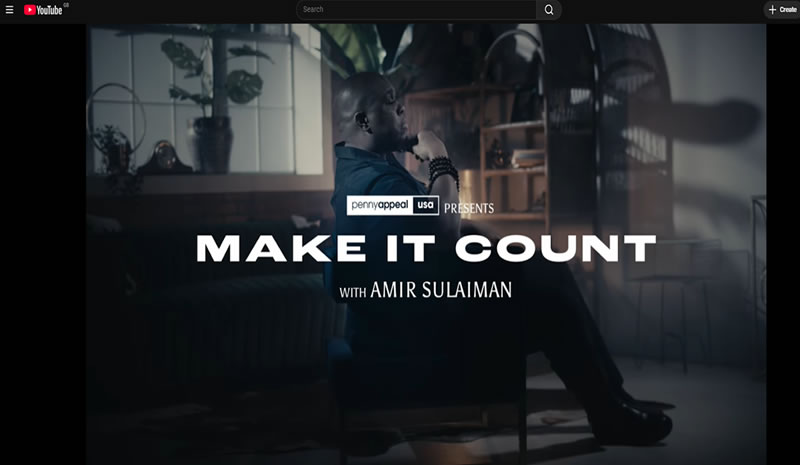
1 – “Make It Count” – Ramadan 2022 (Penny Appeal USA)
- Organisation: Penny Appeal USA
- Influencer(s): Amir Sulaiman (Grammy-nominated Muslim poet)
- Channel: YouTube & Instagram
- Format: Spoken-word poetry video. Amir Sulaiman wrote and performed an inspiring poem for Penny Appeal’s Ramadan campaign. The emotive video was shared on social platforms during Ramadan.
- Outcome: The collaboration struck a chord emotionally; the video was widely shared in the Muslim community, enhancing the charity’s visibility (exact donation figures weren’t public, but engagement spiked).
- Key Lesson: Creative content by a respected Muslim artist can deeply resonate – storytelling through art builds a strong emotional connection with potential donors.
- Learn More: Penny Appeal USA 2022 – YouTube Video

2 – Ramadan 2021 “Reimagining Ramadan” (Penny Appeal Canada)
- Organisation: Penny Appeal Canada
- Influencer(s): A group of Muslim content creators, including a spoken-word artist, a female entrepreneur, and a community activist.
- Channel: Digital multi-platform (Facebook, YouTube, TV).
- Format: Personal story videos and ads. This integrated campaign challenged stereotypes by featuring diverse Muslims talking about what Ramadan means to them.
- Outcome: It doubled the previous year’s donations, raising approximately $3.6 million in Ramadan 2021 and attracting 4,000 new donors. Penny Appeal Canada saw a +365% growth in revenue versus Ramadan 2020, an award-winning result.
- Key Lesson: Authentic storytelling that highlights Muslim diversity can significantly broaden a charity’s appeal. Investing in high-quality creative narratives – amplified by influencers – helped unlock a new phase of growth.
- Learn More: Campaign Link
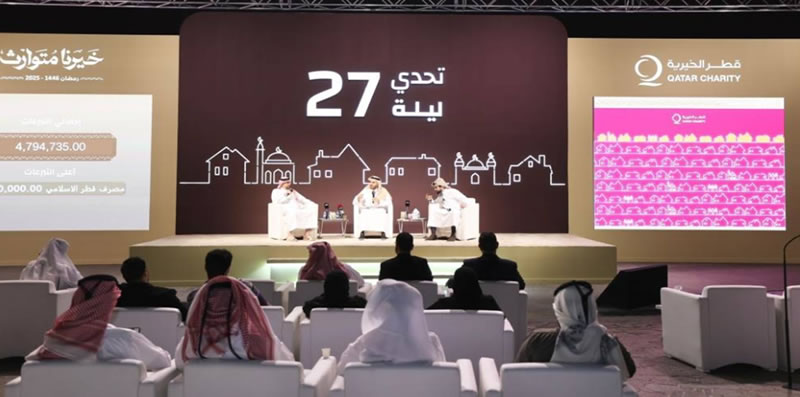
3 – 27thNightChallenge 2023 (Qatar Charity)
- Organisation: Qatar Charity (global NGO based in Qatar).
- Influencer(s): Abdulla Al-Ghafri, Dr Abdulrahman Al-Harami, Mohamad Adnan – popular Muslim social media figures in Qatar.
- Channel: YouTube (Live) and traditional media.
- Format: Live-streamed fundraising telethon on YouTube, timed for the 27th night of Ramadan. These influencers hosted a three-hour live event at a mall, rallying donations for housing refugees.
- Outcome: The campaign was a blockbuster success – it raised over QAR 220 million (about £50 million) in just one night, far surpassing the initial target of QAR 40 million. Donations poured in from viewers, and even media outlets covered the event, which reached millions.
- Key Lesson: Combining influential hosts with the spiritual significance of Ramadan’s 27th night created urgency and trust. A well-publicised live campaign can galvanise an entire community – in this case, the influencers’ credibility and excitement helped unlock unprecedented generosity.
- Learn More: Qatar Tribune News
4- Global Ambassador Challenge (Charity Right, 2022)
- Organisation: Charity Right Australia (feeding programs for children).
- Influencer(s): 40+ micro-influencers across the Muslim world.
- Channel: Instagram, personal blogs, WhatsApp groups.
- Format: A coordinated “Ramadan Ambassador” challenge. Charity Right recruited Muslim bloggers and Instagrammers – many with small but loyal followings – to post about hunger relief and encourage donations. They were not paid, but motivated by the cause.
- Outcome: Within one month, over 40 influencers participated for free. The campaign raised an estimated $50k–$100k USD in donations, achieving a high Return on Ad Spend (ROAS ~7.5) despite minimal cost. The combined social media posts reached about 144,000 people at an extremely low cost per reach. Charity Right also gained 500+ new Instagram followers and built an ongoing network by retaining the top 15 influencers as an ambassador team.
- Key Lesson: Even smaller influencers can make a big impact when mobilised in numbers. For new or smaller charities, it’s possible to find passionate micro-influencers willing to promote for free. Providing them with guidance and a sense of community (e.g. a WhatsApp group for ambassadors) helps maintain enthusiasm. This case also highlights cost-effectiveness – influencer marketing can bring donations at a fraction of the cost of traditional advertising.
- Learn More:The Setters Case Study
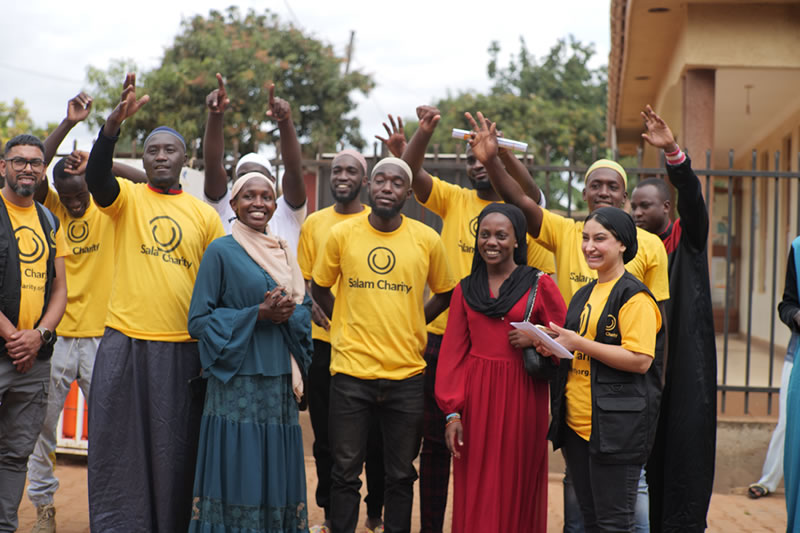
5 – Volunteer Vlog Trip (Salam Charity UK, 2023)
- Organisation: Salam Charity (UK).
- Influencer: Dr Sophina Khan – a social media influencer and NHS anaesthetist.
- Channel: Instagram.
- Format: Travel vlog and photo diary. Salam Charity took Sophina as a volunteer on a distribution trip to Uganda and dubbed her a Salam Ambassador. She helped deliver food and hygiene kits and posted heartfelt Instagram content about meeting beneficiaries.
- Outcome: Sophina’s posts, showing her personal experience and emotions (“with so little, they have the biggest smiles,” she wrote), received thousands of likes and comments from her followers. While hard to quantify donations directly, Salam Charity saw a boost in followers and inquiries during and after the trip. The authenticity of a firsthand account made supporters feel connected to the impact.
- Key Lesson: Involving influencers directly in field work can yield powerful, genuine advocacy. Rather than just speaking about the charity, the influencer became part of the story. This not only produced compelling content but also strengthened the influencer’s own commitment – turning them into a long-term advocate. Such immersive collaborations foster deep trust with audiences, who see the influencer “walking the walk.”
- Learn More: Salam Charity
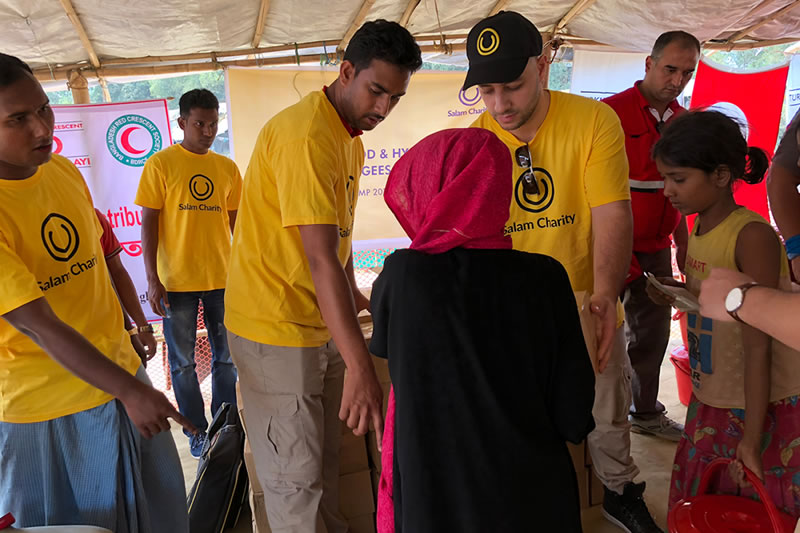
6 – Rohingya Refugee Appeal with Maher Zain (2019–2021)
- Organisation: Salam Charity (UK) in partnership with Turkish Red Crescent.
- Influencer: Maher Zain – a globally famous Muslim singer and humanitarian.
- Channel: Facebook and YouTube.
- Format: On-site visit and documentary. Although slightly beyond the 3-year window (initial visit in 2018), the campaign’s effects continued as Maher Zain remained an active ambassador. He visited Rohingya refugee camps in Cox’s Bazar, Bangladesh, and later delivered aid in person. A video of his trip was published, where he shared reflections and urged support: “Seeing their plight in person left me speechless… it is our duty to help,” he said.
- Outcome: Maher Zain’s involvement drew massive attention to Salam Charity’s Rohingya fund – the video and posts were shared widely in the Muslim world. Fundraising events headlined by Maher Zain consistently sold out. Salam Charity noted a significant uptick in donations around those campaigns (exact figures confidential). Perhaps more importantly, the collaboration gave the charity a credibility boost; being supported by a platinum artist put Salam Charity on the map for many new donors.
- Key Lesson: High-profile Muslim public figures can dramatically amplify a campaign’s reach. Their star power attracts media coverage and lends authority. However, it works best when the figure is genuinely invested in the cause (as Maher Zain was). Authenticity is key – audiences can tell when an influencer truly cares versus a superficial tie-in.
- Learn More: Salam Charity
7 – “A Ramadan for Change” – Ramadan 2022 (Muslim Aid UK)
- Organisation: Muslim Aid (UK).
- Influencer(s): Multiple UK Muslim influencers (including an Islamic Finance Guru for a wills campaign, and popular figures on Islam Channel TV).
- Channel: Television and Social Media.
- Format: Live TV appeals + social media content. Muslim Aid returned with its annual live charity appeals on Islam Channel (a popular UK Muslim TV station) after a COVID hiatus. They integrated social media by having leading Muslim Instagram personalities share and amplify the campaigns online. Influencers attended a charity iftar at The Shard and posted from the event, and Muslim Aid partnered with Islamic Finance influencers to offer services like free Islamic wills (which they promoted online).
- Outcome: The Islam Channel live appeal shows (where influencers and presenters urged viewers to call in donations) raised hundreds of thousands of pounds during Ramadan. Meanwhile, the social media push helped reach younger donors who might not watch traditional TV – Muslim Aid’s message was “all over” UK Muslim social feeds that month. The charity reported the campaign as a “roaring success” in engaging both offline and online supporters.
- Key Lesson: A multi-channel approach combining traditional media and influencer-driven social media can maximise impact. The credibility of familiar TV personalities plus the relatability of social influencers created a broad appeal. Also, offering something useful (like free will writing) via an influencer partnership provided added value that drew positive attention to the charity.
- Learn More: Muslim Aid News
8 – FastaThon Challenge (LaunchGood, 2023)
- Organisation: LaunchGood (a Muslim crowdfunding platform) supporting various charities.
- Influencer(s): A rotating roster of Muslim motivational speakers and imams (e.g., Imam Omar Suleiman, Ustadh Wahaj Tarin) and popular Muslim YouTubers.
- Channel: Instagram Live and YouTube.
- Format: Daily live fundraiser series in the last 10 nights of Ramadan. Each night, a different influencer hosted a live stream during suhoor hours, sharing Islamic reminders and highlighting a charity campaign on LaunchGood. For example, one night a YouTuber might champion a Gaza relief fund, the next night an imam would promote an education fund, creating a “challenge” to see which night raises the most.
- Outcome: By varying hosts, the campaign kept audiences engaged over 10 nights and cross-pollinated audiences (each influencer brought their followers, who were exposed to the other hosts too). Several of the nights’ campaigns hit their targets within the live session. In total, the collective effort raised over $1 million across various projects.
- Key Lesson: Consistency and variety – having an ongoing series with fresh faces prevented fatigue and built anticipation (“who’s hosting tonight?”). The spiritual timing (late Ramadan nights) aligned well with when Muslims are most generous. For charities, partnering with a crowdfunding platform and multiple influencers can create a multiplier effect, sustaining momentum and reaching different demographics with each session.
- Learn More: Launch Good Instagram
9 – “Honest Signposts” Zakat Campaign (NZF Canada, 2022)
- Organisation: National Zakat Foundation (Canada).
- Influencer(s): Local Muslim YouTubers and an Islamic scholar (Sh. Abdullah Hakim Quick).
- Channel: YouTube and Community Webinars.
- Format: Educational influencer videos. To encourage zakat among young Canadian Muslims, NZF produced a series of short videos where a popular Muslim vlogger explains a scenario (like “How my Zakat helps a neighbour pay rent”) and an Islamic scholar clarifies the religious dimension. These were shared on YouTube and Instagram, and the influencers did live Q&A sessions on Facebook.
- Outcome: The campaign helped demystify Zakat for a new generation. NZF reported a surge in first-time Zakat payers using their platform that year. One explanatory video garnered 50,000+ views (huge for a niche topic in Canada) and many comments thanking them for the clarity.
- Key Lesson: Influencers can be educators. By blending youthful personalities with knowledgeable scholars, the campaign engagingly delivered substance. This shows that influencer marketing for charities isn’t only about emotional appeals – it can also effectively drive understanding and behaviour change (like fulfilling Zakat), which in turn increases charitable giving.
- Learn More: National Zakat Foundation Canada

10 – #PalestineLives (Human Concern International, 2021)
- Organisation: Human Concern International (Canada).
- Influencer: Khaled Beydoun – a well-known Muslim author and activist.
- Channel: Twitter and Instagram.
- Format: Advocacy campaign. During escalations in Palestine (May 2021), HCI partnered with influencers like Beydoun to highlight humanitarian needs in Gaza. He wrote threads on Twitter about the suffering and included donation links, and did Instagram live sessions with HCI field staff.
- Outcome: This collaboration blurred activism with fundraising. The hashtag #PalestineLives trended among Canadian Muslims. HCI saw a spike in donations for its Gaza relief fund, especially whenever an influencer’s post went up. In one weekend, Beydoun’s tweets reached hundreds of thousands, and HCI raised well over CA$100,000 for emergency aid.
- Key Lesson: Timely, cause-driven influencer engagement can amplify emergency appeals. When a crisis dominates the news, people look to voices they trust for guidance – by equipping those voices with a concrete way to help (a charity link), the campaign converts awareness into action. It also underscores the importance of agility: HCI moved quickly to leverage influencer voices while the topic was hot.
- Learn More:Human Concern International (Canada)
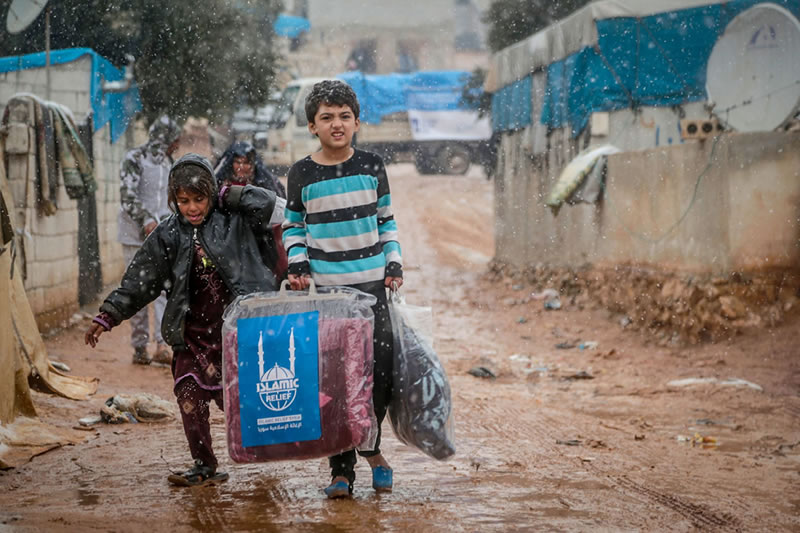
11 – “Sound of Light” Virtual Tour (Islamic Relief USA, 2021)
- Organisation: Islamic Relief USA.
- Influencer(s): Muslim artists and YouTubers, including comedian Baba Ali and singer Raef.
- Channel: Zoom/YouTube (virtual event).
- Format: Online charity concert during COVID-19 lockdowns. With physical fundraising dinners off the table, IRUSA organised a virtual concert series named “Sound of Light” in Ramadan. Influencers like Baba Ali hosted segments of the live-stream, mixing comedy sketches with appeals, and artists performed nasheed songs from home studios. The event link was shared widely by the influencers involved.
- Outcome: Despite being a new format, the virtual tour was successful in engaging donors stuck at home. Thousands tuned in live; one show had over 10,000 concurrent viewers. Fundraising during the streams met or exceeded targets – IRUSA raised several hundred thousand dollars through donations that viewers made online while watching. The virtual concerts also garnered media attention as an innovative approach.
- Key Lesson: In challenging circumstances (like a pandemic), influencer marketing can pivot to virtual experiences. By providing entertainment aligned with Islamic values and weaving in the fundraising message, charities can keep donor communities involved remotely. The key is to use influencers who are skilled at live engagement and to create a professional, TV-quality feel even online.
- Learn More: Islamic Relief USA YouTube
12 – Safe Space Champions (Nisa Homes + Influencers, 2022)
- Organisation: Nisa Homes (a network of shelters for Muslim women, supported by Islamic Relief Canada).
- Influencer(s): Sundus (a hijabi lifestyle YouTuber) and Boonaa Mohammed (a poet).
- Channel: Instagram and community events.
- Format: Campaign for domestic violence awareness. Nisa Homes launched a campaign highlighting domestic abuse issues in the Muslim community. Influencers were engaged to speak up about this typically taboo subject. Sundus made an emotional YouTube video sharing an anonymous survivor’s story and plugged Nisa Homes as a resource. Boonaa performed a spoken word poem on Instagram Live about protecting our sisters and urged donations.
- Outcome: The campaign broke through the silence on a sensitive topic. Nisa Homes saw a notable increase in helpline calls (women seeking help) after these influencers’ posts, indicating improved awareness. Donation-wise, thousands of dollars were raised to support the shelters, and several community organisations reached out to collaborate with Nisa Homes after seeing the campaign.
- Key Lesson: Influencers can lend voices to sensitive or stigmatised issues that charities work on, helping normalise conversations around those issues. Authenticity was crucial here – the influencers approached the topic with care and personal perspective, which made their followers more receptive. For the charity, having respected community figures validate their work built trust with an audience that might have been sceptical or unaware.
- Learn More: NISA Homes
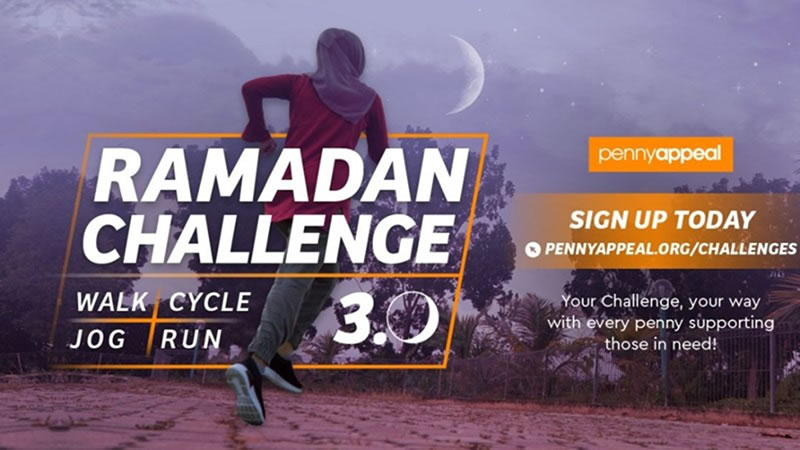
13 – #Miles4Meals Ramadan Challenge (Penny Appeal UK, 2023)
- Organisation: Penny Appeal (UK).
- Influencer(s): Haroon Mota (a Muslim charity marathon runner) and other fitness influencers.
- Channel: Twitter & Instagram.
- Format: Fitness fundraising challenge. Penny Appeal encouraged supporters to run or walk during Ramadan and seek sponsorships for meals to feed the hungry. Haroon Mota – known for running marathons while fasting – acted as the face of the campaign. He posted his daily miles on Instagram, offered motivational tips, and tagged others to join using the hashtag #Miles4Meals. Several Muslim fitness Instagrammers and even imams joined the challenge, posting their progress and linking to Penny Appeal’s donation page.
- Outcome: The campaign turned personal fitness goals into a collective fundraising movement. Over Ramadan, participants logged thousands of miles. Penny Appeal converted those into donations, with an estimated £50 per mile sponsorship in many cases. By Eid, over £100,000 was raised, translating into tens of thousands of meals for communities in need. It also gained PR coverage in Muslim lifestyle blogs for its unique approach.
- Key Lesson: Gamification and peer challenge can greatly boost engagement. By leveraging an influencer in the fitness niche, the charity tapped into a different segment of the community. The friendly competition and public tagging created a ripple effect – each participant became a micro-influencer to their own friends. It shows that influencer campaigns need not always be about one person broadcasting a message; they can invite the entire community to take part, with influencers setting the example.
- Learn More: Penny Appeal UK Instagram

14 – Hajj Live Stream Appeal (Human Appeal & TikTokers, 2022)
- Organisation: Human Appeal (UK).
- Influencer(s): Two British-Muslim TikTok personalities performing Hajj (pilgrimage).
- Channel: TikTok and YouTube Live.
- Format: Real-time charity appeal during Hajj. Human Appeal supported two young influencers on their first Hajj journey (arranged pre-COVID when visas were easier). In 2022, when Hajj resumed, these influencers live-streamed parts of their experience (within respectful limits) and talked about the importance of charity as a pillar of Islam. Each day, they highlighted a different Human Appeal project (water wells on the Day of Arafat, orphan sponsorship when in Mina, etc.), asking viewers to donate as a form of sadaqah while they were on this holy journey.
- Outcome: The novelty of seeing aspects of Hajj through youthful eyes drew a large audience – their TikTok live sessions had thousands of viewers, and the archived vlogs on YouTube gained over 100k views combined. Human Appeal reported that donations during the Hajj week were significantly higher than average, attributing it to the combined spiritual inspiration of Hajj and the personal connection viewers felt with the influencers.
- Key Lesson: Timing a campaign with a spiritual season (Hajj, Ramadan, etc.) and using influencers to personalise that experience can deeply move audiences. People watching felt almost a part of the journey, and giving charity was presented as a natural extension of that spiritual high. It exemplified how influencer content can transcend mere marketing and become a shared community experience.
- Learn More: Penny Appeal UK Instagram
15 – “Epic Eid” Collaboration (Multiple Charities, 2023)
- Organisation: A coalition of Islamic charities (including Islamic Relief, Muslim Aid, and Penny Appeal).
- Influencer(s): Ameerah Omar (popular modest fashion blogger), and Khaled & Sal (comedy duo).
- Channel: Instagram Reels & Facebook.
- Format: Cross-charity Eid campaign. Rather than competing for donor attention, several UK charities teamed up to create a fun viral campaign for Eid. They produced a short comedy skit, Reel, featuring the influencers humorously showing different ways people celebrate Eid around the world, with each scene subtly wearing a shirt or badge of a different charity. The message at the end encouraged viewers to give any leftover zakat or sadaqah on this joyous day to any charity of their choice (with a link hub listing all the participating orgs).
- Outcome: The collaborative video was a hit – it was shared widely in the Muslim online community for its relatable humour. Importantly, it drove traffic to the campaign hub, where people could pick a cause/charity that resonated with them. All participating charities reported a post-Eid bump in donations. The campaign also built goodwill among the charities and supporters, seeing unity rather than competition.
- Key Lesson: Influencer marketing can be used in a spirit of collaboration, not just competition. By pooling resources to work with high-profile influencers, even big charities benefited from a shared viral moment. The audience appreciated the unified message and lack of a hard sell, which in turn built trust. For the influencers, being part of a community-wide effort likely increased their willingness to participate (as they weren’t favouring one charity over another). This case suggests that creative, unity-focused campaigns can amplify the overall pie of generosity.
16 – Zakat Tech Influencer Campaign (Indonesia, 2022)
- Organisation: Dompet Dhuafa (Indonesian Islamic charity).
- Influencer(s): Raditya Dika (a famous Indonesian YouTuber) and local Islamic finance bloggers.
- Channel: YouTube and Twitter.
- Format: Fintech meets influencer. Dompet Dhuafa rolled out a new mobile app for zakat calculations and donations. To promote it among the young, tech-savvy crowd in Indonesia, they partnered with Raditya Dika, who created a humorous yet informative YouTube video about trying to calculate his zakat via traditional means (featuring comedic sketches of confusion), then discovering the app, which simplifies it. On Twitter, fintech bloggers shared referral codes and screenshots of the app, challenging their followers: “Have you calculated your zakat yet? I did mine in 5 minutes!”
- Outcome: The campaign generated tens of thousands of app downloads within the first month. The YouTube video by Raditya garnered over 1 million views in a week, landing on Indonesia’s trending list, and Dompet Dhuafa saw a marked increase in smaller zakat contributions (suggesting new, young users). The app itself gained popularity, likely ensuring a recurring annual user base.
- Key Lesson: Match the influencer to the campaign goal. Here, a tech-savvy comedian was perfect to demystify an Islamic finance product entertainingly. By turning what could be a dry topic (calculating zakat) into shareable content, the charity brought more youth into the habit of giving. It also highlights how influencers can drive product adoption (app downloads), which then facilitates an ongoing charitable giving infrastructure.
17 – Fake Charity Scandal (Cautionary Tale, 2025)
- Organisation: N/A (Independent influencer-run campaign).
- Influencer: Saleh Al Jafarawi (“Mr FAFO”), a Gazan social media personality.
- Channel: Instagram & TikTok.
- Format: Personal fundraiser. This is an example of a failed or problematic “influencer campaign.” Saleh, a popular Gazan influencer, claimed to be raising money for a charity to help orphans in Gaza. He used emotional videos and live streams to solicit funds directly to his own accounts, amassing around $10 million from followers worldwide. However, in 2025, it was revealed that the campaign was fraudulent – the Palestinian Health Ministry accused him of embezzling the funds, and many speculated the money was diverted elsewhere.
- Outcome: Donors were outraged and felt betrayed; none of the money reached legitimate charities or the intended beneficiaries. It became a scandal in the community, reported in news outlets, and “MMrFAFO” was arrested. Reputable charities had to distance themselves, and public trust in online fundraising took a hit.
- Key Lesson: This case underscores the importance of vetting and transparency. Not every influencer initiative is positive – charities and donors must ensure that campaigns are legitimate. For donors, it’s a reminder to give through trusted organisations or verified platforms, rather than individuals who lack oversight. For Islamic charities, it’s a lesson to communicate clearly about how funds are handled, and perhaps to collaborate on establishing community standards or verification badges for influencer-led fundraisers. One bad actor can cast doubt on many well-intentioned efforts, so maintaining public trust through ethical practices is paramount.
18 – “Food For Gaza” Instagram Telethon (2023)
- Organisation: UK Islamic Mission + Charity Right + RestlessBeings (joint emergency appeal).
- Influencer(s): Ikramah (@ikramamakhdoom – a British Pakistani influencer) and others like him with family ties to affected regions.
- Channel: Instagram Live.
- Format: Multi-account live relay. In response to an emergency in Gaza, several small charities came together and ran an Instagram Live telethon. One influencer would go live, talk about the crisis for 15 minutes, maybe share a video from the ground, then “pass” the live session to another influencer’s account via collaboration. This hopper went on for a few hours one evening. Viewers were encouraged to donate via a single LaunchGood link.
- Outcome: The innovative use of Instagram’s collaboration feature kept an audience of young Muslims engaged for hours, as they bounced between their favourite influencers’ segments. The campaign raised a substantial amount overnight (e.g. £200k) and equally importantly, spread awareness to tens of thousands as each influencer alerted their follower base when it was their turn to go Live. It showcased unity and urgency in a dynamic format.
- Key Lesson: Use platform features creatively. Instagram’s joint live and handover features allowed multiple influencers to effectively host a “telethon” without any TV studio – just their phones. It was cost-free and efficient. The constant change of host kept content fresh and tapped into multiple fan bases. This example also highlights that collaboration and coordination among influencers (and charities) can amplify reach significantly.
19 – Refugee Storytelling with Sham Idrees (2022)
- Organisation: Islamic Relief Canada.
- Influencer: Sham Idrees – a Pakistani-Canadian YouTuber.
- Channel: YouTube vlog.
- Format: First-person narrative. Sham Idrees partnered with Islamic Relief to visit a Syrian refugee settlement in Jordan. He filmed his journey meeting refugee families, distributing relief packs, and listening to their stories. The vlog was edited into a 20-minute YouTube video titled “Spending a Day with Syrian Refugees. Sham also did Instagram Stories during the trip for real-time engagement.
- Outcome: The YouTube video received an overwhelmingly positive response, with over 150,000 views and heartfelt comments. Viewers mentioned it opened their eyes to refugees’ struggles. Following the video, Islamic Relief saw a spike in web traffic and donations specifically earmarked for Syria – many donors cited Sham’s video as how they found out about the campaign.
- Key Lesson: Immersion creates empathy. When an influencer physically goes to the field, their audience experiences the cause more vividly through them. Sham Idrees’ casual, personal style (as opposed to a polished corporate video) made viewers feel “I’m right there with him. For charities, empowering influencers to create content in their own authentic voice, even if it’s not glossy, can be far more impactful than a standard appeal. It puts a human face on both the beneficiary and the messenger.
20 – Influencer Iftar Live (South Africa, 2023)
- Organisation: Penny Appeal South Africa.
- Influencer(s): Hasina Gani (local TV presenter) and Mogamat “Mo” Miller (radio personality).
- Channel: Facebook Live.
- Format: Virtual community iftar and fundraiser. With South Africa’s Muslim community spread out, Penny Appeal SA held a nationwide “virtual iftar” event during Ramadan. Influencers hosted it live on Facebook: viewers tuned in as the hosts chatted about Ramadan experiences, answered questions, and spotlighted Penny Appeal projects (like water wells in rural SA and orphan support). They timed it so that just before Maghrib (sunset), they made a final heartfelt appeal for donations as everyone prepared to break their fast.
- Outcome: Hundreds of families tuned in from home, posting comments about what they were eating and where they were from – it felt interactive and communal. The sense of togetherness translated into generous giving; in that one evening, they raised enough rands to build several new wells and sponsor dozens of orphans. Many viewers remarked that it was a memorable iftar, knowing they contributed to charity before eating.
- Key Lesson: Don’t underestimate the power of local influencers and community spirit. Not all campaigns need global superstars; sometimes, a well-known local presenter who understands the community’s vibe can be incredibly effective. By making a fundraising event double as a community gathering (even virtually), charities can strengthen relationships and make giving a joyous collective activity rather than a duty.
These examples illustrate a wide spectrum of approaches – from big international productions to grassroots challenges – showing how influencer marketing is being innovatively applied in the Islamic charity sector. Each campaign had unique outcomes and lessons, but common threads emerge: authenticity, creative engagement, timely messaging, and the trust that influencers carry are key to success. Equally, the pitfalls (like fraud or misalignment) remind us that accountability and careful partner selection are paramount.
Top Influencer Marketing Platforms (for Muslim Audiences)
Finding the right influencers and managing collaborations can be challenging without the right tools. Fortunately, several platforms and services help organisations discover, vet, and coordinate with influencers. Below is a curated list of influencer marketing discovery and management platforms particularly useful for campaigns targeting Muslim audiences:
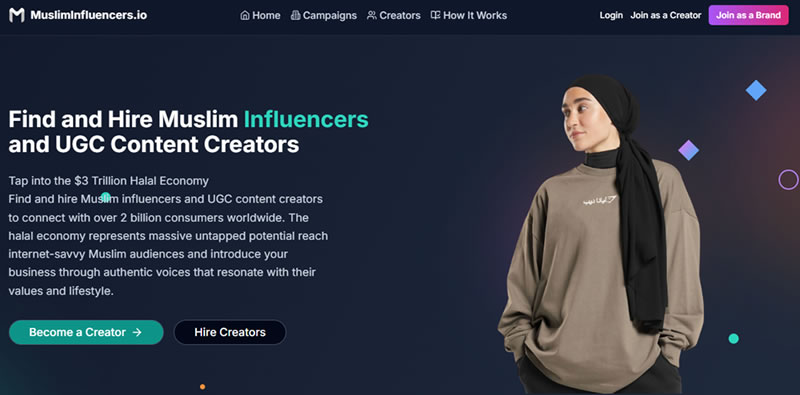
- A dedicated platform built specifically to connect brands and charities with verified Muslim content creators. It boasts a database of influencers across niches (fashion, finance, education, etc.) who have been vetted for authenticity.
- Main features: a searchable directory with filters for category, location, and audience size; transparent pricing or “starting rate” listed for each influencer (so organisations can quickly gauge who fits their budget); and a collaboration workflow that allows messaging and proposal sending through the platform.
Use case: A charity can log on and filter for, say, “Lifestyle influencers in Canada with 50k+ followers” and get a list of prospects to reach out to. The platform’s focus on Muslim creators ensures the recommendations align culturally and ethically (no worry about inadvertently approaching someone whose content conflicts with Islamic values).
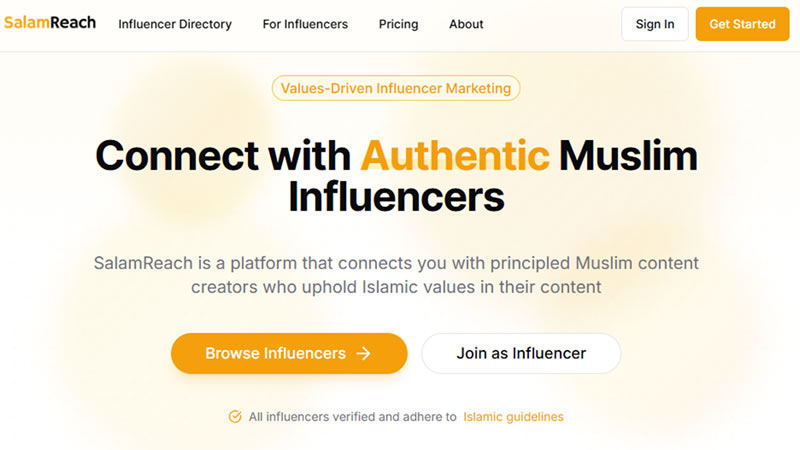
- An influencer marketplace with an Islamic ethos. SalamReach connects businesses (including non-profits) with principled Muslim content creators. Every influencer on SalamReach is verified to uphold Islamic guidelines in their content.
- Main features: You can browse influencers by category and see metrics like follower count and engagement. It provides tools to book collaborations, make payments, and track campaign performance all in one place. SalamReach emphasises “values-driven” campaigns – meaning it’s ideal for charities wanting to ensure brand safety and religious compliance.
Use case: An Islamic charity can use SalamReach to quickly find, for example, a list of Muslim parenting bloggers who adhere to modest content standards, then seamlessly arrange a campaign with them (such as promoting a children’s fund) through the platform’s dashboard.
M.I.N (Muslim Influencer Network)
- A network and agency (currently in development online) focused on helping brands capture the global Muslim market through influencer campaigns. While details are emerging, M.I.N is known to provide data insights and campaign management geared towards Muslim audiences.
- Main features: likely a mixture of consultancy and technology – offering analytics on Muslim consumer trends, and a roster of Muslim influencers under their management. They might assist with strategy, matching brands with the right influencer, and handling negotiations and contracts.
- Use case: A charity that is less familiar with influencer marketing can approach M.I.N for a more hands-on service – for instance, designing a Ramadan influencer strategy from scratch, picking ideal influencers, and executing the campaign with performance reports.
Generic Influencer Platforms with Niche Filters
- In addition to Muslim-specific platforms, mainstream influencer marketing tools can also be useful by allowing filtering for certain demographics or regions. Examples include Upfluence, AspireIQ, Heepsy, and Collabstr. These platforms have huge databases of influencers globally.
- Main features: advanced search filters (you can sometimes filter by country, language, keywords like “halal” or “hijab” to find Muslim influencers), campaign workflow management, and analytics to evaluate influencer performance. While they are not Muslim-audience-specific, they’re useful for Islamic charities looking for a broad sweep. For example, Upfluence might help find a list of “Instagram influencers in Nigeria with ‘Islam’ in their bio and engagement > X%”.
- Use case: A global Islamic charity might use a tool like AspireIQ to manage a large-scale campaign with dozens of influencers across different countries. They benefit from the platform’s CRM-like capabilities (contract templates, content approval systems, payment handling) to keep everything organised. They would just need to apply their own vetting to ensure the influencers align with Islamic values.
Each platform above caters to slightly different needs. If ease and cultural alignment are top priority, dedicated platforms like MuslimInfluencers.io or SalamReach are excellent – they’ve essentially done the homework on vetting and have a ready pool of Muslim-friendly influencers. If a charity needs a bespoke strategy or is aiming for a very specific audience, agencies or networks like M.I.N can lend their expertise. And if scale or variety is needed, tapping into mainstream platforms with the right filters can cast a wider net. Often, charities might use a combination: e.g., searching a mainstream tool for influencers in a new region where a Muslim-specific platform doesn’t have coverage, while relying on SalamReach for core markets.
Regardless of platform, charities need to look beyond just follower counts – checking engagement rates, audience demographics, and content style. These tools help gather that data. Also, the management features (like tracking clicks or setting up affiliate links for influencers) are invaluable for measuring outcomes, which is crucial for understanding ROI on a charity’s influencer campaign.
Managing Influencer Campaigns for Islamic Charities
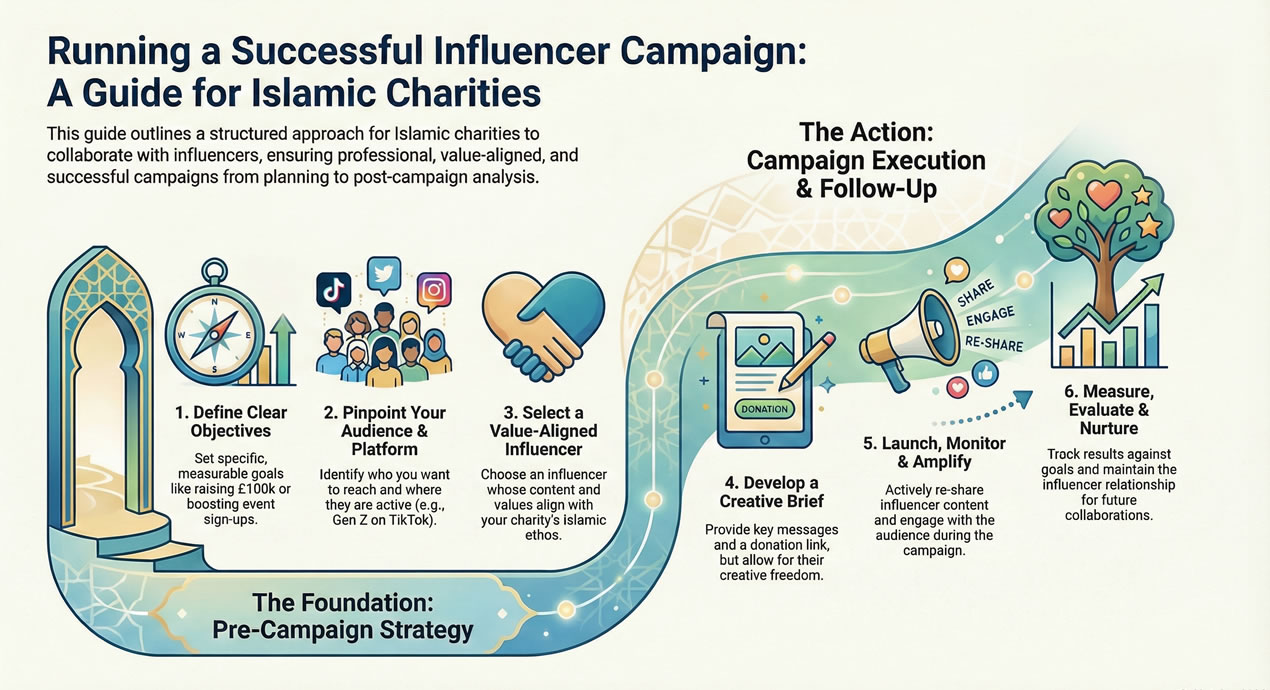
Having a plan and clear guidelines is essential when working with influencers. Islamic charities should approach influencer collaborations professionally and thoughtfully to get the best results and uphold their values. This section outlines how to manage influencer campaigns, covering planning, content formats, contracts and ethics, payment models, and influencer vetting & relationships.
Campaign Planning Steps
1 – Set Clear Objectives
Begin by defining what you want to achieve. Is the goal to raise £100k for a water project? Increase event sign-ups? Boost brand awareness among Muslim youth? Clear objectives (with KPIs, if possible) will guide all other decisions and allow you to measure success later.
2 – Identify Target Audience & Platforms
Pinpoint who you are trying to reach (e.g., British Muslim millennials, or Urdu-speaking diaspora, or Gulf donors). Research which social media platforms this audience uses most – that’s where your campaign should concentrate. For instance, to reach Gen Z Muslims, TikTok and Instagram might be more effective, whereas Facebook might work for older community members.
3 – Choose the Right Influencer(s)
With the audience in mind, find influencers who speak to them. Look at niche, follower demographics, geographic location, language, and engagement. For Islamic charities, alignment in values is key – the influencer should be someone the audience trusts and who doesn’t post content contradictory to Islamic ethos (no inappropriate content, etc.). It might be a well-known Imam, a Muslim lifestyle vlogger, a halal chef, or a modest fashion icon – depending on the campaign. Use the platforms mentioned above or your community networks to shortlist candidates.
4 – Develop the Campaign Message & Creative Brief
Frame the story you want to tell. Influencer campaigns work best when there’s a compelling narrative or challenge. Draft a brief for the influencer that includes the campaign message, key points to mention (e.g., “£50 feeds a family for a month”), any specific call-to-action (like a trackable donation link or a campaign hashtag), and content guidelines. However, allow room for the influencer’s own creative voice – you want their personality to shine through authentically, not a script. If it’s a larger campaign, plan content timelines (e.g., teaser post, main video, reminder Story on the last day).
5 – Coordinate Logistics & Agreements
Before launch, iron out all details. Agree on deliverables (number of posts, videos, live appearances), deadlines (ensure content goes out during optimal times, or specific dates like Ramadan 27th night), and provide any resources the influencer might need (info packs, imagery, visitation opportunities). At this stage, handle contracts (covered more below) – ensuring everyone is on the same page regarding expectations and compensation. Also, set up any tracking mechanisms – for example, provide a unique donation URL or discount code for the influencer so you can attribute donations that come via their campaign.
6 – Launch and Actively Manage
Once live, monitor the campaign closely. Share, repost, and amplify the influencer’s content through your channels as well to give it extra reach. Keep communication open with the influencer during the campaign – they might have feedback from their followers (“lots of people are asking X question”), which you can quickly address. Be ready to provide them with updated info or clarifications if needed. Essentially, treat it like a partnership – you’re in it together for the campaign’s duration.
7 – Measure and Evaluate
After the campaign, compile results against the objectives set. This includes hard metrics (donations raised, number of new donors, video views, click-throughs from the influencer’s link, social media engagement stats) and soft metrics (anecdotal feedback, any increase in volunteers or inquiries, improved brand sentiment). Calculate ROI if possible: for instance, if you spent £1,000 and raised £20,000, that’s obviously a great return. But also evaluate the intangible benefits – maybe you gained 2,000 new followers who may donate in future, or built a relationship with an influencer for long-term collaboration. Gather feedback from the influencer too – what did they hear from their audience? What ideas do they have for next time?
8 – Thank and Maintain Relationship
Don’t see the end of the campaign as the end of the relationship. Show genuine appreciation – a heartfelt thank-you note or a small gift (maybe a framed photo from the field with a note on how their effort helped) goes a long way. If the campaign was a success, consider engaging them for future projects, or even making them an official ambassador. Maintain periodic contact (not just when you need something) – it can be as simple as wishing them Eid Mubarak or congratulating them on personal milestones. Building a real relationship will make any future collaborations smoother and more sincere.
By following a structured planning process, Islamic charities can ensure their influencer campaigns run efficiently and effectively. The key is to be deliberate at each step – from choosing the right voice to crafting the right message – and to remain flexible and responsive throughout the collaboration.
Ideal Content Formats for Influencer Campaigns
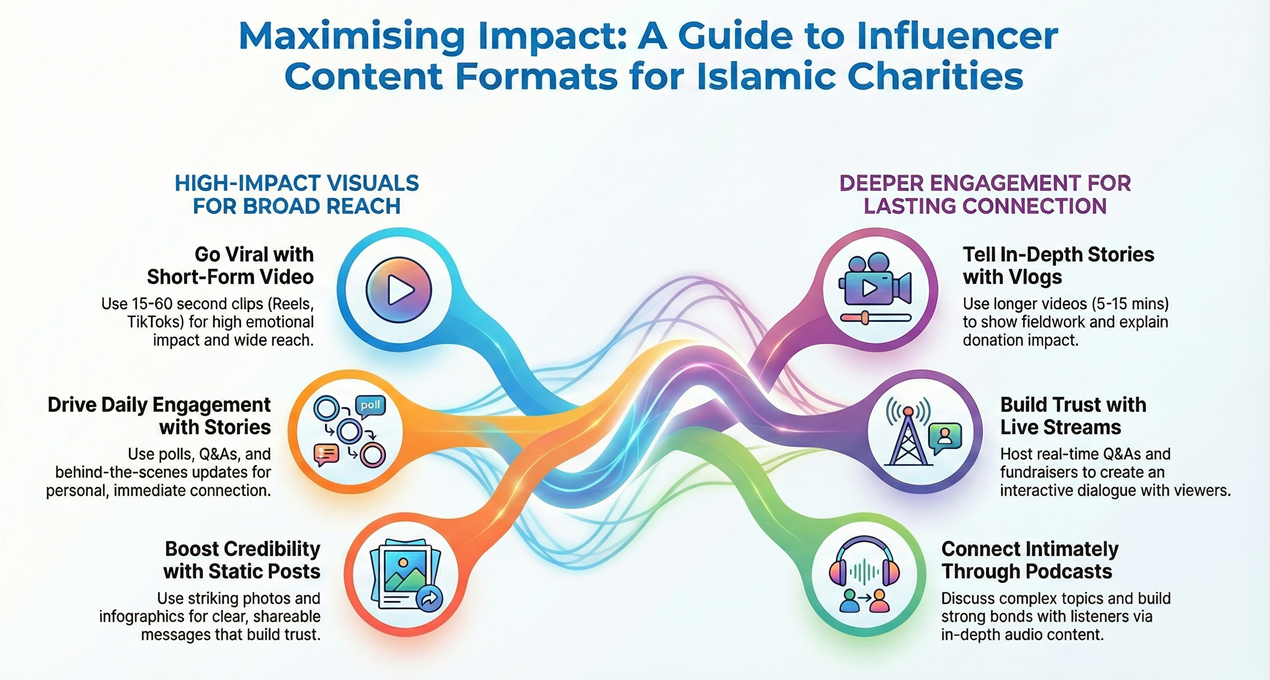
The format of content an influencer produces can greatly affect engagement and impact. Islamic charities should choose formats that match the platform and audience preferences, as well as suit the message of the campaign. Here are some ideal content formats and tips on using them:
1 – Short-Form Video
Arguably the most powerful format right now. This includes TikTok videos, Instagram Reels, YouTube Shorts, and Snapchat clips. Short videos (15 seconds to 1 minute) that are catchy and to-the-point can go viral. For example, an influencer might do a 30-second before-and-after transformation of a village that got a new well, set to inspiring nasheed music. Or a TikTok challenge where they act out “a day in the life of someone your charity helps.” Short-form videos are great for grabbing attention and emotional impact in a condensed time. They should have subtitles (many watch without sound) and a clear call-to-action at the end (e.g., “Learn more – link in bio”).
2 – Longer Videos / Vlogs
These are suited for YouTube or Facebook. They allow deeper storytelling, which is excellent for showing field work or personal journeys. A vlog might follow an influencer volunteering at a refugee camp, or an interview with a beneficiary family. Islamic charities often have rich stories; a longer video (5–15 minutes) lets the influencer unpack the context – perhaps explaining the Islamic teachings on charity, walking through how donations are used, and reflecting personally. Ensure these videos are well-edited to keep viewer interest (use visuals from the field, include the influencer’s genuine reactions). Though fewer people will watch a 10-minute video compared to a 1-minute one, those who do are highly engaged and more likely to donate.
3 – Live Streams
Live content on platforms like Instagram, Facebook, or YouTube is excellent for real-time engagement. Influencers can host live Q&As about a campaign, do fundraising pleas in a telethon style, or even take viewers live “on the ground” if they are at an event or site (signal permitting). Lives are powerful for building trust – viewers can ask questions in the moment and get answers, creating a dialogue. For instance, during Ramadan, an influencer might go live every night in the last 10 nights to make dua (prayers) and gently remind viewers to donate before Eid – a very interactive spiritual experience. One tip: have a moderator from the charity present (even if off-camera) to feed the influencer key points or moderate comments.
5 – Stories and Daily Updates
Temporary content, such as Instagram Stories, Facebook Stories, or Snapchat updates, is great for sharing behind-the-scenes and day-to-day campaign updates. An influencer could do a “takeover” of the charity’s Instagram Story for a day, sharing snippets of their routine and weaving in messages about the campaign (“It’s lunchtime – while I eat, I’m thinking about those who have no food. That’s why I partnered with Charity X…”). Polls, quizzes, and swipe-up links in Stories can also drive engagement (e.g., a poll: “Have you given zakat yet this year? Yes/No – if no, swipe up to see how Charity Y uses your zakat.”). Stories feel personal and immediate, which is useful for keeping the momentum over a campaign period.
6 – Static Posts and Infographics
Photos with captions on Instagram, Facebook, or Twitter, and infographics, can complement the flashy videos. Not all information conveys well in video; sometimes a simple before/after photo or a clear infographic (like a breakdown of how funds are used) can boost credibility. Influencers could share a photo of a beneficiary they met, with a heartfelt story in the caption. On Twitter, an infographic with a statistic (“1 in 5 children in X region go to bed hungry”) shared by an influencer can be retweeted widely. Ensure any text on graphics is easily readable on mobile. Static content is also more shareable across WhatsApp or community forums, which many Muslims use.
7 – Long-Form Posts (Blogs/LinkedIn/Facebook Notes)
In some cases, an influencer might have a blog or use LinkedIn or Facebook to write a longer reflection. For example, a Muslim travel blogger might write an essay about their experience visiting a Rohingya camp and publish it on their blog or as a LinkedIn article, detailing how it changed their perspective. While the audience for long reads is smaller, they can be very persuasive for that segment – particularly older professionals or those who prefer detail and nuance. Charities can encourage this by providing data and stories as fodder. A well-written piece can also be repurposed by the charity (quoted in newsletters, etc.).
8 – Podcast Features
If an influencer hosts a podcast or is willing to appear on one, this can be an effective content format. Audio allows for intimate storytelling and in-depth discussion. A charity representative could join the influencer in a podcast episode to chat about the cause. Or the influencer might dedicate one episode to discuss, say, “charity in Islam” and plug the campaign. Podcasts engage listeners for 30-60 minutes – perfect for complex topics like charity impact- and listeners often form a strong bond with the host, so their endorsement carries weight.
In choosing formats, it’s wise to use a mix. Start with something attention-grabbing (short video or a striking image), then provide avenues for those interested to dive deeper (through lives, long videos, or written content). Also consider the strengths of your influencer – some are fantastic on camera, others excel at writing meaningful captions or articles. Match the format to their forte.
Finally, ensure consistency in branding across formats: use the campaign hashtag everywhere, and ensure every piece of content, whatever format, tells people how to get involved (donation link, volunteer signup, etc.). Consistency doesn’t mean monotony – you can adapt the message to each format (the tone of a TikTok will differ from a blog) – but all formats should clearly tie back to the campaign’s purpose.
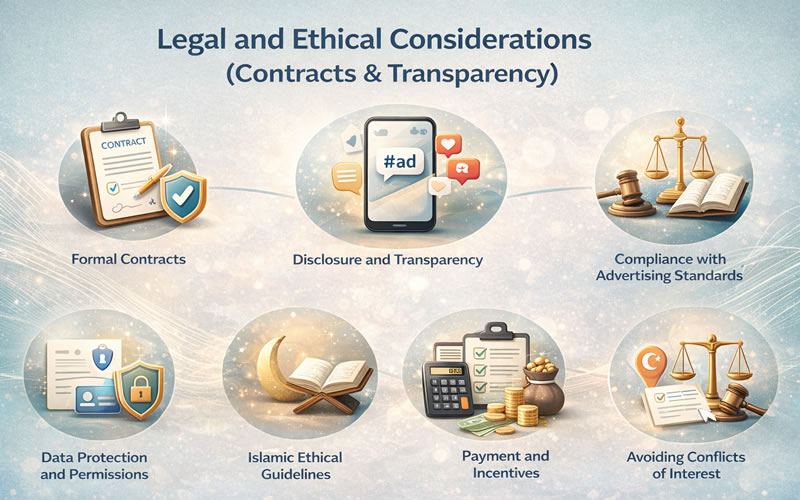
Legal and Ethical Considerations (Contracts & Transparency)
When partnering with influencers, Islamic charities must take care to handle legal and ethical aspects correctly, to remain compliant with regulations and true to Islamic principles of honesty. Key considerations include:
1 – Formal Contracts
Always have a written agreement or contract with the influencer. This should outline deliverables (what content, how many posts, on which platforms, by what dates), expectations (adherence to charity’s values, any messaging points, use of provided hashtags, etc.), and compensation terms (payment amount or structure, if any, or that it’s pro bono).
Also include clauses on confidentiality (e.g., if sharing sensitive info before public release) and usage rights (can the charity repost the influencer’s content on their own channels? Usually yes, specify that). A contract protects both parties – it ensures the influencer knows what they’re signing up for and the charity can enforce key points. In the UK and many countries, advertising standards require that if an influencer is paid or given gifts, this relationship must be declared – having it in writing ensures the influencer does so (commonly with “#ad” or “#paidpartnership” tags).
2 – Disclosure and Transparency
Ethically and legally, transparency is crucial. Muslim audiences may be especially sensitive to how charity funds are used – the last thing you want is scepticism that donations are being secretly siphoned to pay influencers. Therefore, if an influencer is being compensated or has any material connection, it should be openly disclosed. For example, the influencer can mention in a post, “I’m partnering with Charity X for this campaign, or use the built-in “Paid Partnership” label. This honesty upholds Islamic values of truthfulness and avoids misleading the public.
As LaunchGood noted, for Muslim charities, disclosing paid influencer relationships is both a legal necessity and a moral imperative, aligning with the principle of honesty in Islam. Transparency fosters trust: donors will know that any payment to influencers is a budgeted promotion cost, not a misuse of their specific donation.
3 – Compliance with Advertising Standards
Most countries have guidelines (often set by bodies like the ASA in the UK or FTC in the US) for influencer advertising. Ensure your campaign follows them. Besides disclosure, this means not making false or exaggerated claims. For instance, an influencer shouldn’t say “100% of your donation goes to the poor” if a portion is used for admin – unless that’s factually true. They shouldn’t guarantee things the charity can’t promise (“your donation will definitely get you paradise” – beyond acceptable religious encouragement!).
Provide influencers with accurate facts and figures to use. If using any beneficiary images or stories, ensure you have consent and are not violating privacy. Ethically, avoid “poverty porn” – content that is overly voyeuristic or demeaning to those you’re trying to help. Influencers should treat subjects with dignity; a contract can specify guidelines on this.
4 – Islamic Ethical Guidelines
Islamic charities have an added layer of ethical consideration – the content and partnership should align with Islamic values. That means the influencer’s content in the campaign (and ideally generally) should avoid haram elements. For example, music in videos should preferably be percussion/voice-only nasheeds or licensed music without inappropriate lyrics.
The influencer should dress modestly in campaign content out of respect for the cause (especially if visiting Muslim communities). Also, the campaign should avoid exploitative imagery – Islam emphasises maintaining dignity and privacy (awrah) even of those in hardship. Legal contracts might not spell all this out, but a conversation and mutual understanding should. If an influencer inadvertently does something problematic (say, uses a song with profanity in a TikTok about the charity), address it immediately and politely – often it can be edited or removed.
5 – Data Protection and Permissions
Ensure that any data sharing is compliant with laws like GDPR. If the influencer collects donations directly via a personal fundraiser, for instance, they should transfer donor info to the charity securely and not misuse it. It’s generally better to have donations go through the charity’s official channels to avoid data issues. Also, if involving any vulnerable persons (e.g., orphans featured in content), ensure proper consent and safeguarding measures. The influencer should be briefed on the charity’s safeguarding policies if they will interact with children or vulnerable adults during the campaign.
6 – Payment and Incentives
If paying the influencer, structure it clearly. Some charities pay a flat fee; others might propose a commission or performance-based reward (more on models in the next section). Whichever, record it and also consider how it may look publicly. Commission-based fundraising (influencer gets a % of funds raised) can be controversial – some argue it incentivises hard work, others feel uncomfortable that part of their donation goes to a fundraiser.
It’s legal if disclosed, but ethically, each charity must decide if it aligns with its values. Many Muslim charities avoid commission models due to the perception issue (preferring flat fees from marketing budgets). If you do use commission, be exceptionally transparent about it to avoid any accusations of dishonesty later.
7 – Avoiding Conflicts of Interest
Make sure the influencer isn’t concurrently doing something that conflicts with your campaign. E.g., if they promote a commercial product that undermines your message or are working with another charity with a similar appeal at the same time, that could confuse followers or dilute sincerity. A clause in the contract can ask them not to run competing charity promos during the campaign window. It’s also courteous to ensure the timeline works for them – don’t demand exclusivity beyond reason, but a bit of separation is good.
8 – Respecting Local Laws and Context
If the influencer campaign involves any on-site work abroad (visiting refugee camps, etc.), ensure all local legal requirements are met – permits for filming, following the host country’s NGO regulations, etc. Legally, the influencer should also be briefed on what they can/cannot say, especially if it touches on politically sensitive areas (some countries have restrictions on what can be portrayed or said). Ethically, be mindful of the cultural sensitivities of the local population being featured – certain gestures, dress, or camera practices might be inappropriate in some contexts.
In summary, a well-drafted agreement and an open conversation about ethics set the foundation for a smooth campaign. By disclosing partnerships, sticking to truthful messaging, and aligning actions with Islamic morals, the charity and influencer protect themselves and the trust of the public. Olivia Reid of RSPCA aptly said about influencer work: “It’s about building those good relationships and having clear lines of agreement, what we think is appropriate and where we think things aren’t appropriate. We have those conversations upfront.” This proactive approach is vital – it’s much easier to prevent problems than to fix them later in the public eye. When done right, legal and ethical diligence ensures the focus stays on the positive impact of the campaign.
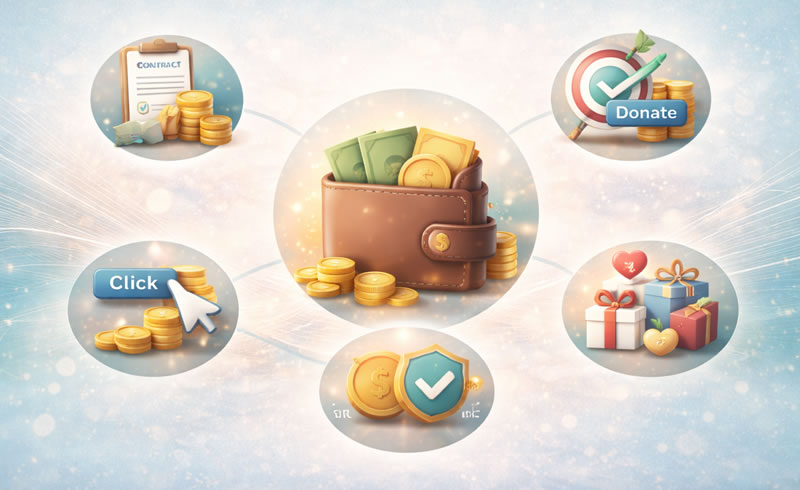
Payment Models: CPC, CPA, Fixed Fee, Hybrid
When engaging influencers, Islamic charities may encounter different payment models for compensation. Some influencers, especially those starting, may collaborate for free or on a volunteer basis (for the sake of the cause or Barakah). But many larger influencers will require payment or an incentive, since this is part of their livelihood. Below are common payment models and how they work, including considerations for charities:
Fixed Fee (Flat Rate)
This is a straightforward one-time payment for the influencer’s services. For example, a charity might pay £500 for an Instagram post and two Stories, regardless of performance.
- Pros: Simple and predictable – the charity knows the cost upfront. It’s easy to contract and budget.
- Cons: No direct incentive for the influencer to exceed expectations since they get paid the same regardless of outcome. However, a reputable influencer will still want a successful campaign for their own image. For charities, this model is often preferred to maintain clarity that marketing costs come from admin budgets. For instance, if a charity allocates £5k for a campaign, they might hire several mid-tier influencers at fixed fees within that amount. It’s clean and transparent.
CPA (Cost Per Action) / Commission
In this model, the influencer is paid based on results – typically a percentage of donations raised or a set amount per donation. “Action” could be a donation, a sign-up, etc., but for charities, it’s usually donations. For example, an influencer might receive 5–10% of all funds they bring in. This effectively makes the influencer a fundraiser on commission.
- Pros: Strong incentive for the influencer to actively push the campaign and bring in more donations, since their earnings depend on it. If the campaign flops, the charity doesn’t pay much.
- Cons: Ethical perception – donors might feel uneasy if they learn part of their donation is going to pay an influencer. As mentioned earlier, transparency is key when using this model. Some Muslim scholars have likened fundraisers earning commission to the concept of the historical Zakat collectors (who were allowed a portion for their work), which can be justified, but it must be disclosed to avoid misunderstandings. Charities must also ensure the percentage is reasonable and within any regulatory limits. If done, perhaps framing it as “marketing expense” rather than out of donations can ease concerns (e.g., covering it from general funds).
CPC (Cost Per Click)
This is less common in influencer deals, but essentially paying for traffic – e.g., £0.50 per click an influencer drives to the donation page. It’s more typical in affiliate marketing.
- Pros: The charity pays for engagement/interest rather than outcome, which can be good if awareness is a goal even without immediate donations.
- Cons: It can be tricky to track accurately (though unique URLs help). And clicks don’t equal donations – you might pay for 1000 clicks, but only 50 donate. If those clicks cost more than the donations’ value, you lose out. Most charities don’t use CPC with influencers; it’s more commonly used in ads. Influencers might not agree to it because they can’t control how many will click (they prefer flat or performance on donations).
In-Kind Benefits / Non-monetary
Sometimes, instead of money, charities might compensate with non-monetary rewards. For instance, offering the influencer an opportunity to travel on a charity field trip (covering their expenses) – some are happy to accept this as a form of compensation because it’s exciting content for them too. Or providing event tickets, publicity (featuring them in the charity’s own media), or even tokens of appreciation. For smaller influencers who are very cause-driven, a modest gift or simply covering their costs (e.g., if they attend a fundraising dinner, cover their travel and accommodation) is acceptable.
- Pros: Saves money and builds a more partnership feel. Many Muslim influencers are altruistic and might prefer not to take money from a charity if they can help it, so offering to at least cover their expenses or giving them an experience can be a middle ground.
- Cons: Not everyone can afford to work for free – especially full-time content creators. And in-kind doesn’t pay their bills. So this works mostly with micro-influencers or those who explicitly say they don’t charge charities. Always clarify – never assume an influencer will do it gratis; that could cause offence or misunderstanding.
Hybrid Models
A combination of the above can also be used. For example, pay a smaller flat fee plus a performance bonus if certain targets are hit. E.g., £200 upfront, and if they help raise over £10k, they get an extra £200. Or cover their travel to an overseas visit and additionally give them a smaller honorarium.
- Pros: Gives some security and incentive together. The influencer is guaranteed something, but also motivated to really help the campaign succeed to earn the bonus.
- Cons: Slightly more complex to administer. Need to define clear triggers for bonuses to avoid disputes (e.g., how to attribute donations to that influencer – typically via unique codes/links or during live streams, count those only). But for major campaigns, this can be worth the complexity.
For Islamic charities, the decision on the payment model may also involve internal policy or religious guidance. Some charities have a policy not to pay community fundraisers commission to avoid any question on intentions (preferring flat salary or voluntary). Others, recognising the modern digital landscape, do use commission but are careful to explain that no donation is taken directly – rather, the influencer is like a paid contractor from the marketing budget.
It’s also worth noting that micro-influencers (with smaller audiences) often may collaborate for free or a nominal amount if they are passionate about the cause, whereas macro-influencers (huge followings) will likely have set fees or require significant compensation. Sometimes, large influencers might donate their fee back to the charity – it has happened with celebrity ambassadors occasionally – but you should not bank on that unless they offer.
When negotiating, be respectful of the influencer’s work. If their usual rate is out of budget, it’s okay to politely explain that as a charity,y your budget is limited, and sometimes they will graciously lower it or do one piece pro bono. Highlight the intangible benefits to them: such as the positive public association, the content they’ll get to create, and the spiritual reward (for Muslim influencers, that matters – many will consider ajr (reward from Allah) as part of the compensation!).
In the contract/payment, clarify if the payment is subject to them achieving something (for commission) or not. If flat, pay promptly as agreed. If commission, provide transparent tracking – perhaps share a report of donations that came via their link. In all cases, emphasise disclosure: if they are paid, they must disclose as per regulations (even if they themselves might not want to shout “I got paid,” it’s non-negotiable legally).
Finally, whichever model, make sure it is accounted for as a marketing expense in your books, not taken from zakat funds (unless your scholars have explicitly allowed a portion of zakat for marketing – a debate beyond scope, but generally marketing costs come from other funds). Keep it ethical: the model should never pressure the influencer to use misleading tactics to get more money. For instance, if commission, ensure they still maintain honesty and don’t resort to exaggeration to close donations. The trust of donors is more valuable in the long term than a temporary boost in funds achieved through aggressive tactics.
Influencer Vetting and Relationship Building
Choosing the right influencer is as important as the content they’ll produce. Vetting ensures the influencer’s persona and following align with the charity’s values and goals, while relationship building ensures a long-term, fruitful partnership beyond just one campaign. Here’s how Islamic charities should approach both:
Vetting an Influencer:
1 – Alignment with Islamic Values
Since the charity has an Islamic ethos, the influencer should not frequently post content that contradicts those values. Do a thorough scan of their social media history. Are they respectful in language? Do they avoid promoting anything haram (like alcohol, inappropriate clothing, gambling, etc.)? Nobody is perfect, but pattern matters. For example, an influencer who regularly shares lewd jokes or revealing fashion would likely not be a good fit for a charity campaign about modesty or piety. Also consider their demeanour – are they known for online spats or drama? An influencer who engages in a lot of controversy might bring unwanted baggage.
2 – Credibility and Past Partnerships
Check if they have worked with charities or causes before, and how that went. If they have a track record of successful fundraising or advocacy, that’s a green flag. Conversely, if there were any public falling-outs or issues (e.g., they promoted a cause that turned out to be dubious, or they made insensitive comments during a campaign), be cautious. You can even ask them for references or examples of past work. Influencer marketing is partly about trust – both the trust their audience places in them and the trust you can place in them to represent you. On that note, character matters: many Islamic charities will quietly ask around the community about an influencer’s reputation (without resorting to gossip, of course) to ensure they aren’t unknowingly endorsing someone with major issues.
3 – Audience Demographics
Request insights or a media kit from the influencer. Many have statistics like what countries their followers are from, age groups, engagement rate, etc. Ensure that it matches your target donor base. For instance, if you’re fundraising in the UK for a UK-based project, an influencer whose following is 90% in another continent might not convert well (even if they are Muslim – practical issues like payment methods, local connection to the cause differ).
Similarly, if your project appeals more to sisters (e.g., a maternal health program), a female influencer with a predominantly female following might be more effective than a generic one. Also vet the engagement quality – sometimes large followings have low engagement or lots of spam/bot comments. It’s better to have an influencer with 50k followers who gets 5k likes per post and genuine comments, than one with 500k followers but only 1k likes (possible red flag for fake followers or weak influence).
4 – Content Quality and Professionalism
Evaluate how well they create content. Is their video editing slick or at least watchable? Do they write well if they blog? Basically, will they be able to deliver a message clearly and appealingly? Also, gauge their professionalism in communication with you during initial talks – if they’re responsive, punctual, and clear, that’s a great sign. If they’re flaky in the planning stage, they might let you down during the campaign.
5 – Compliance and Safety
Ensure they understand and will comply with relevant guidelines (as discussed under legal). If you feel uncertain, you can include a morality clause or an exit clause in your agreement (e.g., if the influencer has any major scandal or does something that violates core principles, the charity can terminate the partnership immediately).
Also, check if collaborating with them could alienate any part of your donor base. Sometimes influencers are polarising (even within the Muslim community, there are divisions). You might decide that the benefit outweighs that risk, but be aware. For instance, someone very politically outspoken might cause donors of a different political bent to shy away – decide if that’s acceptable for your mission or if you need a more neutral representative.
Building and Maintaining the Relationship:
1 – Treat Influencers as Partners, Not Just Promotion Channels
Right from the initial approach, have a collaborative attitude. Instead of “we want you to advertise our charity, frame it as “we admire the work you do and believe in the same cause of helping others – let’s work together to make a difference.” Involve them in brainstorming; ask for their ideas – they know their audience best after all. This respect and inclusion will make them feel invested. As the RSPCA’s influencer manager highlighted, building good relationships and having clear agreements upfront is crucial. When an influencer feels genuinely valued and not just “used” for their reach, they’ll naturally be more enthusiastic and go the extra mile.
2 – Communication is Key
Maintain open lines of communication. Early on, ascertain their preferred method – some like email for formal things, WhatsApp/Telegram for quick comms, etc. Be responsive to their queries and needs; likewise, set the expectation that they respond in a reasonable time. During campaigns, maybe set up a short check-in every few days (or daily during critical periods) to swap updates. If they’re new to charity work, they might need reassurance or prompt support (e.g., if someone asks them a tough question about the charity’s work, have an FAQ ready for them or be on standby to help answer). Over time, you’ll learn each other’s styles – some influencers require a bit of hand-holding, others are very independent.
3 – Offer Value to Them
Besides any financial compensation, think about what value you can add to the influencer. This could be tangible – such as featuring them on your high-traffic charity page (“meet our campaign ambassador”), which increases their exposure, or inviting them to events where they can network.
It could be experiential – like facilitating field visits, as mentioned, which give them life-changing experiences to share. Or educational – perhaps providing insights or stories they can use for content. For example, you might give an influencer exclusive footage or testimonies from your beneficiaries that they can weave into their own video. When they see the partnership is two-way, they’ll be more keen to continue it.
4 – Show Ethical and Professional Integrity
Influencers, like donors, will gauge the charity’s authenticity. If during collaboration they sense the charity is disorganised, or worse, not transparent, it may turn them off from future work. Especially Muslim influencers who care about the cause – they might ask questions about how funds are used, etc.
Be prepared to answer and provide assurances (even share annual reports or invite them to see projects firsthand). If an error happens (say the influencer posted an outdated stat because the brief had a mistake), own it, apologise, and fix it together. These actions build trust. Remember, the influencer’s reputation is somewhat tied to yours once they endorse you, so they need to trust you deeply.
5 – Respect Their Creative Freedom
Within the agreed guidelines, let the influencer inject their personality. Don’t micromanage every word unless something really problematic arises. Audiences can tell if something is overly scripted – it will undermine the authenticity, which is the core benefit of influencer marketing. If you’ve done your vetting right, you should feel comfortable with them having creative liberty. Provide them resources and messaging points, but ultimately allow them to present it in their style (humorous, emotional, intellectual, etc.). They’ll enjoy working with you more if they feel their creativity is respected, not stifled.
6 – Long-Term Engagement
After a successful campaign, consider formalising the relationship. Some charities have “Brand Ambassadors” or “Champion” programs – essentially a roster of influencers or public figures who commit to supporting the charity on an ongoing basis. For example, Islamic Relief might have a few key influencer ambassadors who appear at events, consistently share appeals during Ramadan, etc.
If your influencer proved reliable and passionate, invite them to be a long-term ambassador. This could involve a light arrangement like a memorandum of understanding rather than a full contract for each campaign. The benefit is consistency – their followers see that they genuinely support this charity over time, not just once for a fee, which increases credibility immensely. It also streamlines future campaigns as you don’t need to start from scratch in briefing or negotiation each time.
7 – Personal Touches
As mentioned, small gestures matter. Sending a Ramadan gift basket or a personalised thank-you letter from a beneficiary can solidify a bond. If the influencer hits a milestone (e.g., they got married or reached 100k subscribers), congratulate them. Essentially, cultivate a friendship (professional, but cordial).
Muslim communities are tight-knit, showing that Islamic warmth and brotherhood/sisterhood in your dealings is part of our values. At the same time, maintain professionalism – deliver on your promises to them, and expect the same. If they did a great job, perhaps endorse them to other organisations (if appropriate) – they will appreciate that you helped them grow as well.
8 – Handling Issues Gracefully
If something goes wrong – maybe the influencer made a mistake in content, or their behaviour slipped up publicly – address it privately and respectfully. Offer them a chance to correct it. Most influencers will correct or clarify errors if politely pointed out.
If the issue is serious (like a breach of contract or values), have an honest talk about how to move forward. Sometimes ending a partnership is necessary, but try to do it amicably and quietly, not in a blasting or bridge-burning way. The way you handle conflict can actually earn you more respect from the influencer if they see you operate with hikmah (wisdom) and compassion.
In summary, choose wisely and then invest in the relationship. An influencer campaign shouldn’t be a hit-and-run transaction; ideally, it’s the start of a symbiotic relationship where both the charity and the influencer thrive together while doing good.
Many successful Islamic charity campaigns have come from multi-year relationships – for example, certain YouTubers who repeatedly go on charity trips each year, or scholars who consistently front campaigns every Ramadan. These enduring collaborations mean audiences aren’t just one-off donors; they become part of the charity’s journey too, often because they follow that influencer’s journey with the charity year after year. This is hugely valuable for the charity’s sustenance.
By thoroughly vetting influencers and cultivating genuine relationships, Islamic charities can ensure that their influencer marketing efforts are not only effective in the short term but also sustainable and multiplying in benefit in the long term – building a network of loyal advocates for their cause.
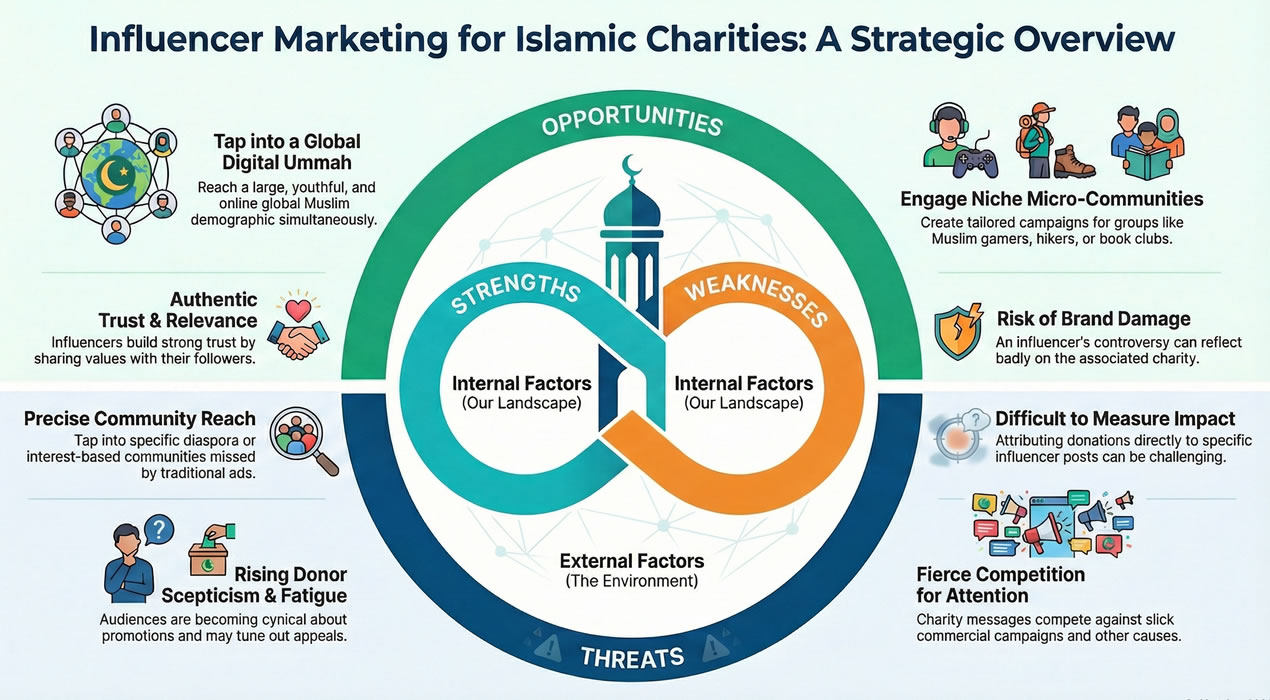
SWOT Analysis: Influencer Marketing for Islamic Charities
A SWOT analysis (Strengths, Weaknesses, Opportunities, Threats) helps summarise the internal and external factors affecting influencer marketing in the context of Islamic charities. Here are 5 key points in each category:
Strengths
- High Trust and Relevance: Muslim influencers often have a close rapport with their followers, who share similar values. When they advocate for a charity, their endorsement carries significant weight and authenticity, leading to strong trust in the charitable cause.
- Community Reach: Influencers can tap into specific communities (ethnic, linguistic, or interest-based) that traditional marketing might miss. For instance, a popular Somali Muslim YouTuber can mobilise the Somali diaspora for a Horn of Africa relief fund more effectively than generic ads.
- Engagement and Storytelling: Influencers excel at storytelling – they bring causes to life through personal narratives, emotional appeals, and interactive content. This higher engagement (likes, comments, shares) means campaign messages spread further organically, often attracting new supporters to the charity.
- Cost-Effective Awareness: Compared to big advertising campaigns, working with influencers can be relatively low-cost for the reach achieved (and sometimes even pro bono). A single viral post by an influencer can achieve awareness that might otherwise require a hefty media budget.
- Faith-Driven Motivation: Many Muslim influencers feel religiously motivated to support charity (sadaqah, zakat, etc.). This means they might be extra dedicated and creative in ensuring the campaign succeeds – it’s not just business, it’s seen as good deeds (hasanat) as well, which can amplify their effort and sincerity.
Weaknesses
- Limited Control over Message: By nature, influencer marketing means handing over some creative control. The charity’s message might be interpreted or delivered in ways not exactly as intended. There’s a risk of miscommunication or simplification of complex issues, which could lead to misunderstandings about the charity’s work.
- Reliance on Individual Personalities: If too much of a campaign’s success hinges on one person, any issues with that person (illness, schedule slip, or a misstep) can derail things. Additionally, over-reliance on the same big faces repeatedly might stagnate outreach as their audience might overlap or get fatigued.
- Measurement Challenges: Tracking the direct impact of influencer efforts can be tricky. Donations may come in from multiple channels, and attributing them to a specific post or influencer is sometimes imperfect. This can make it hard to evaluate ROI or decide which influencer was most effective, potentially weakening strategic decision-making over time.
- Brand Safety Concerns: An influencer might inadvertently engage in behaviour or speech that conflicts with the charity’s values. For example, if an influencer gets caught in a scandal or makes a divisive comment, it can reflect poorly on the charity by association. Islamic charities must be cautious, as any controversy can erode the hard-earned trust of donors.
- Resource Intensive (for Management): Building relationships, crafting campaign briefs, monitoring content, and engaging with influencers’ audiences requires time and effort from the charity’s team. For smaller charities, especially, managing even one influencer campaign can stretch staff capacity, meaning the “cheaper” marketing method might still incur high labour costs and opportunity costs on other work.
Opportunities
- Emerging Platforms and Formats: New social media platforms (or features like Reels, live audio rooms, etc.) constantly emerge. This offers fresh avenues where there’s less competition from traditional advertisers. For instance, being early adopters of a platform like Clubhouse (audio chat) with Muslim thought leaders could set a charity apart and attract young, tech-savvy donors.
- Global Muslim Demographic: The Muslim population is large, youthful, and increasingly online. Influencer marketing allows charities to cross borders digitally. A campaign in Ramadan can engage Muslims from London to Jakarta simultaneously – an opportunity to tap into a truly global donation stream, especially for urgent ummah-wide causes (Palestine, Rohingya, etc.).
- Collaboration and Cross-Promotion: Charities could team up with multiple influencers or even do joint campaigns with other organisations for the greater good. Influencers from different niches could cross-promote (e.g., a foodie influencer and a fitness influencer together promote a charity’s campaign in their own styles). These collaborations can attract a more diverse supporter base and create trending moments (two fanbases coming together for the first time over a good cause).
- Niche Micro-Communities: There are many niche Muslim communities online – from Muslim gamers, to hijabi hikers, to Islamic book clubs. Each niche likely has its micro-influencers. Charities have the opportunity to craft specialised campaigns targeting these specific interests (e.g., a charity challenge in a gaming livestream, or a charity hike event promoted by outdoorsy Muslim bloggers). By resonating with hobbies and interests, giving is integrated into everyday passions.
- Conversion of Influencer to Long-term Ambassador: There’s an opportunity not just to raise funds, but to gain champions. A successful one-off campaign might inspire the influencer to become a long-term partner or even a patron of the charity. This can lead to sustained benefits well beyond the initial project – essentially “locking in” a spokesperson for the cause who will carry on advocacy in various forms.
Threats
- Public Scepticism and “Influencer Fatigue”: As influencer marketing becomes more common, some segments of the public grow cynical about it. There’s a risk that donors might question influencers’ sincerity (“Are they doing it for the money/free trip?”). If the social media sphere gets saturated with charity appeals, people might start tuning them out, just as they do with ads.
- Regulatory Changes: Governments and social media platforms are continually evolving regulations around sponsored content and fundraising. A change in algorithm or advertising policy could reduce the reach of influencer posts (for instance, if platforms flag too much fundraising as “political” content requiring special approval). Additionally, rules like more stringent disclosure requirements might make campaigns feel more “commercial” and less heartfelt to audiences if not navigated creatively.
- Misrepresentation or Misinformation: If an influencer communicates something incorrectly about the charity or cause (even accidentally), it could spread quickly and damage the charity’s credibility or lead to controversy. In the fast-moving social media environment, a mistaken claim can escalate into a PR crisis before the charity has time to correct it. This is especially precarious if the topic is sensitive or has opponents (e.g., misunderstandings around how aid is delivered, or someone twisting the narrative politically).
- Competition with Secular Campaigns: Islamic charities are not only “competing” with each other for donor attention but also with secular causes and even commercial campaigns. For example, an influencer’s audience might be seeing a mix of messages – a charity appeal one minute, and a trendy brand promotion the next. The slickness and rewards (giveaways, etc.) of commercial influencer campaigns could overshadow charity messages. Additionally, in Ramadan, so many appeals run concurrently that even with influencers, breaking through to donor attention is a challenge – other charities might sign the same influencers for different days, potentially confusing or splitting donor responses.
- Unpredictable Public Reactions: Social media can be volatile. What an influencer says or does as part of a campaign could inadvertently offend some sensibilities or spark debate. For instance, showcasing impoverished communities might trigger discussions about “poverty porn” or “white saviorism” if not handled carefully. Or if an influencer is from a different sect or background, a minority of trolls could derail comment threads with off-topic arguments. These unpredictable reactions can threaten the positive vibe of a campaign and require crisis management.
By being aware of these SWOT points, Islamic charities can strategise to leverage strengths and opportunities – like using trust and community bonds to their advantage, and innovating with new platforms – while mitigating weaknesses and threats.
For example, to counter scepticism (threat), they can double down on transparency and have influencers show receipts of impact. To handle resource intensity (weakness), they might start with one pilot influencer campaign to build internal capacity before scaling up. The SWOT highlights that influencer marketing, while powerful, must be done thoughtfully and with adaptability in mind.
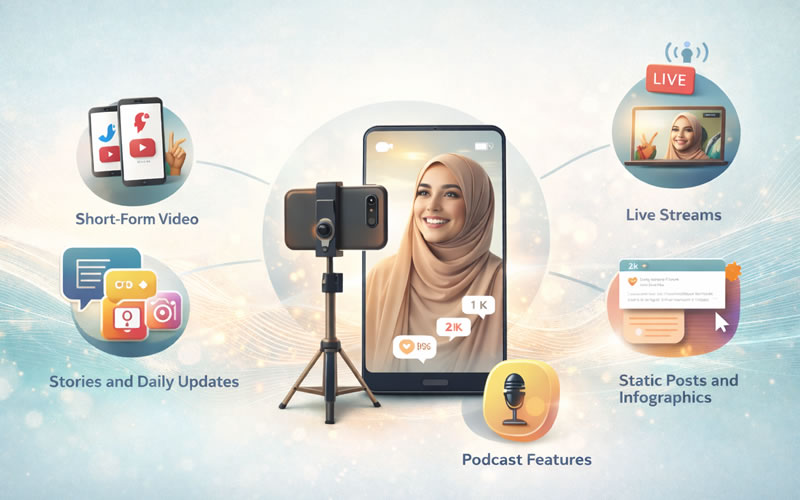
Top 100 Global Muslim Influencers
Below is a table of 100 notable Muslim influencers around the world. These individuals span various categories – from religion and education to entertainment, sports, fashion, and activism – and have significant followings on key channels. This list can serve as a starting point for charities to identify potential influencer partners relevant to certain audiences or regions.
| Name | Primary Channel | Category | Region/Country |
| Khaby Lame | TikTok | Comedy (Viral skits) | Italy / Senegal |
| Huda Kattan | Instagram/YouTube | Beauty (Makeup) | UAE / USA |
| Nuseir Yassin (Nas Daily) | Travel/Storytelling | Israel/Palestine (Global) | |
| Dina Tokio (Dina Torkia) | YouTube/Instagram | Fashion & Lifestyle | UK |
| Chunkz (Amin Mohamed) | YouTube | Entertainment/Comedy | UK |
| Ismail Ibn Musa Menk (Mufti Menk) | YouTube/Instagram | Islamic Scholar/Preacher | Zimbabwe |
| Sh. Omar Suleiman | Facebook/YouTube | Islamic Scholar | USA |
| Linda Sarsour | Twitter/Instagram | Activism & Politics | USA |
| Ibtihaj Muhammad | Sports (Fencing) & Fashion | USA | |
| Halima Aden | Fashion/Modelling | USA / Somalia | |
| Maher Zain | YouTube/Facebook | Music (Nasheed/Pop) | Lebanon / Sweden |
| Sami Yusuf | YouTube | Music (Spiritual) | UK / Iran |
| Harris J | Instagram/YouTube | Music (Pop Nasheed) | UK |
| Shoaib Akhtar | YouTube | Sports (Cricket) | Pakistan |
| Khabib Nurmagomedov | Sports (MMA) | Russia (Dagestan) | |
| Mohamed Salah | Sports (Football) | Egypt | |
| Paul Pogba | Sports (Football) | France | |
| Mesut Özil | Sports (Football) | Germany (Turkish descent) | |
| Moeen Ali | Twitter/Instagram | Sports (Cricket) | UK |
| Amir Khan | Instagram/Twitter | Sports (Boxing) | UK (Pakistani descent) |
| Habiba Da Silva | YouTube/Instagram | Fashion & Beauty | UK |
| Ascia Al Faraj (Ascia AKF) | Fashion & Lifestyle | Kuwait | |
| Amena Khan (Pearl Daisy) | YouTube/Instagram | Beauty & Lifestyle | UK |
| Mohammed Hijab | YouTube | Religion/Dawah | UK |
| Ali Dawah | YouTube | Religion/Dawah | UK |
| Maryam Masud | YouTube | Islamic Education (Quran) | USA |
| Sajjad Shah (Muslims of the World) | Faith/Storytelling | USA | |
| Jay Palfrey | YouTube | Travel & Lifestyle (Convert) | UK |
| Wali Shah | TikTok/Instagram | Spoken Word & Motivation | Canada |
| Eman Kellam | YouTube | Comedy/Entertainment | UK |
| Noor Stars | YouTube | Comedy & Lifestyle | Middle East (Iraq/UAE) |
| AboFlah (Hasan Suleiman) | YouTube | Gaming & Charity | Kuwait |
| Bader Saleh | YouTube | Comedy (Arabic content) | Saudi Arabia |
| Noor Neelofa | Lifestyle/Entrepreneur | Malaysia | |
| Mizz Nina (Shazrina Azman) | Lifestyle/Inspiration | Malaysia (formerly singer) | |
| Aida Azlin | YouTube | Lifestyle/Spirituality | Singapore |
| Ustaz Hanan Attaki | YouTube/Instagram | Islamic Preaching | Indonesia |
| Felix Siauw | Islamic Education | Indonesia | |
| Nouman Ali Khan | YouTube | Quranic Education | USA |
| Yasmin Mogahed | Spirituality/Motivation | USA | |
| Humza Arshad | YouTube | Comedy (Sketches) | UK |
| Khalid Al Ameri | Facebook/YouTube | Vlogs/Family Humour | UAE |
| Salama Mohamed | Lifestyle/Beauty | UAE | |
| Mo Vlogs (Mohamed Beiraghdary) | YouTube | Luxury Lifestyle Vlogs | UAE (Dubai) |
| SuperSaf (Safwan AhmedMia) | YouTube | Tech Reviews | UK |
| Mark Wiens | YouTube | Food & Travel | USA/Thailand (convert) |
| Elena Nikolova (MuslimTravelGirl) | Blog/Instagram | Travel & Halal Tourism | UK |
| Peter Gould | Art & Design | Australia | |
| Kamal Saleh (OnePath Network) | YouTube | Islamic Media/Films | Australia |
| Smile2Jannah (Muhammad) | YouTube | Commentary/Comedy | UK |
| Dr. Haifaa Younis | YouTube | Islamic Education | USA |
| Abdur Raheem Green | YouTube | Islamic Outreach (Dawah) | UK |
| Boonaa Mohammed | YouTube | Spoken Word Poetry | Canada |
| Baba Ali (Ali Ardekani) | YouTube | Comedy (Sketches) | USA |
| Zaid Ali (ZaidAliT) | YouTube | Comedy (Desi humor) | Canada/Pakistan |
| Shahveer Jafry | Facebook/YouTube | Comedy (Desi skits) | Canada/Pakistan |
| Ozzy Raja | TikTok | Comedy (Sketches) | UK (Pakistani origin) |
| Omar Farooq | YouTube | Docu-Vlogs/Travel | Bahrain |
| Wahaj Tarin | YouTube | Islamic Reminders | Australia |
| Sh. Assim Al-Hakeem | YouTube | Islamic Q&A | Saudi Arabia |
| Mohammed Zeyara | YouTube | Motivational/Islamic | Canada (Palestinian origin) |
| Mr. Halal Chef | YouTube | Food & Cooking (Halal) | Canada |
| Halal Food Guy (Shahed) | Food Blogging (Halal) | UK | |
| Hamza Ali Abbasi | Facebook/Twitter | Entertainment/Activism | Pakistan |
| Maya Ali | Entertainment (Actress) | Pakistan | |
| Ammar Kandil (Yes Theory) | YouTube | Adventure/Positivity | Egypt/USA |
| Daanish Hussain | TikTok | Lifestyle/Comedy | UK |
| Arij Fatyma | YouTube | Lifestyle Vlogs | USA (Pakistani origin) |
| Rumzi | Religion/Dawah | USA | |
| Zehra (zehraugc) | TikTok | Lifestyle Vlogs | Canada |
| Rehnumah Insan | Travel & Adventure | UK | |
| Namsheed N | Education/Tech | UAE | |
| Rasheed Memudu | Fashion & Lifestyle | Canada | |
| Mujib Nuristani | YouTube | Tech & Gadgets | USA (Afghan-American) |
| Dr Abdul (Abdul Shakur) | Health & Lifestyle | UK | |
| Arfah Farooq | Tech Industry & Faith | UK | |
| Izabella Argunova | YouTube | Lifestyle Vlogs | USA (Tatar/Russian origin) |
| Madhar Maideen | YouTube | Finance (Islamic Finance) | India |
| Suna | Lifestyle | UK | |
| Zaakirah Naseem | Food (Halal recipes) | Canada | |
| Hina Kausar | YouTube | Beauty & DIY | India |
| Md. Iftekhar Ahmed | YouTube | Lifestyle Vlogs | India |
| Samiha Zaman | Food & Home Cooking | UK | |
| Sarah Mawji | Lifestyle Vlogs | USA | |
| Amir Shahzad | Food (Street Food) | Pakistan | |
| Hafsa Wasim | Fashion & Food | Germany (Turkish origin) | |
| Khalid Siddiq | YouTube | Music (Nasheed/R&B) | UK |
| Adam Saleh | YouTube | Vlogs/Pranks | USA (Yemeni origin) |
| Slim Albaher | YouTube | Vlogs/Comedy | USA (Yemeni origin) |
| Yousef Erakat (Fousey) | YouTube | Entertainment/Vlogs | USA (Palestinian origin) |
| Maulana Tariq Jameel | YouTube/TV | Islamic Scholar/Preacher | Pakistan |
| Dr. Zakir Naik | YouTube | Islamic Preacher | India (based in Malaysia) |
| Dr. Yasir Qadhi | YouTube | Islamic Scholar | USA |
| Moez Masoud | YouTube/Instagram | Islamic Teacher/Media Producer | Egypt |
| Karter Zaher (Deen Squad) | YouTube/Instagram | Music (Hip-Hop) | Canada (Lebanese origin) |
| Jae Deen (Deen Squad) | YouTube/Instagram | Music (Hip-Hop) | Canada (Ghanaian origin) |
| Bella Hadid | Fashion & Activism | USA (Palestinian heritage) | |
| Malala Yousafzai | Activism/Education | Pakistan | |
| Riz Ahmed | Twitter/Instagram | Entertainment (Actor/Rapper) | UK |
| Hasan Minhaj | YouTube/Netflix | Comedy/Political Commentary | USA |
(Note: “Primary Channel” indicates where their influence is most prominent, though many are active on multiple platforms. Region refers to their origin or primary base/audience. All are Muslim by faith or heritage and have significant online influence.)
This list mixes public figures and social-media-born influencers. The categories vary widely – which is a reminder that “Muslim influencers” are not a monolith. For instance, Khaby Lame is the most-followed TikToker globally known for his silent comic skits – he rarely mentions religion, but as a Muslim, his presence (e.g., doing dawah through actions like reciting the Quran live once) has had a cultural impact.
Meanwhile, someone like Mufti Menk explicitly shares Islamic teachings daily. Charities should pick names from this list that align with the nature of their campaign. If raising funds for an orphanage, maybe a nasheed artist or a humanitarian activist might be best. For reaching fashion-conscious youth for a winter clothes drive, a modest fashion influencer or a sports star who is relatable might be ideal.
Also consider region: localised impact is important. A micro-influencer not on this global top 100 might still be number one in their city or community. For example, a Malaysian charity might work with Malaysian Instagram personalities not known elsewhere. This table’s “global” names are broadly recognised across countries (especially via online following). Many of them have a positive track record of engaging in social causes – e.g., Bella Hadid has spoken out for Palestinian relief, Riz Ahmed supports representation and refugee charities, Malala, of course, is an education advocate. These alignments could be leveraged by charities working in those spaces.
In sum, this table serves as a who’s who of influential Muslim voices online, across different interests. It can guide charities in brainstorming which influencer’s audience and style might amplify a particular message. It’s also inspiring to see how many Muslims are leading in various fields – showing lots of potential allies for charity campaigns, whether to drive donations, awareness, or community action.
Conclusion
Influencer marketing has become an increasingly vital tool for Islamic charities to inform, inspire, and engage the ummah in doing good. By partnering with trusted voices – whether a global YouTube star or a local community leader on Instagram – charities can humanise their causes and reach audiences in a relatable way that traditional ads or flyers often cannot achieve. As we’ve seen, a well-executed campaign can rally millions in donations, spark conversations about important issues, and even create enduring ambassadors for years to come.
However, success in this arena comes from strategic planning and staying true to Islamic values throughout. It means selecting influencers carefully, ensuring their content and conduct align with the spirit of the charity’s mission. It requires crafting compelling narratives and using the right channels – from the brevity of TikTok videos to the depth of live fundraisers – to touch hearts and move hands to donate. It also involves being transparent and ethical: our communities rightfully expect honesty and integrity in how charities operate, so influencer collaborations must be openly disclosed and handled with ihsan (excellence).
The landscape of influencer marketing is dynamic. New platforms will emerge, and trends will shift. Islamic charities that stay updated and creative – while grounded in their core values – will be best positioned to harness these trends. The SWOT analysis reminds us to play to our strengths (community trust and faith-driven passion) and be mindful of challenges (saturation and scepticism).
To charity marketing professionals: don’t be afraid to experiment. Start small, maybe with a known community figure in your city, and learn from the experience. Engage with the influencers as partners; educate them about your work so they feel genuinely connected. Use the platforms and case studies in this post as a guide, but also let your own organisational personality shine through in campaigns. When an influencer authentically believes in your cause, their audience will feel it – and that’s when extraordinary things happen.
Influencer marketing is essentially the online extension of our traditional word-of-mouth culture – a modern take on “Invite to the way of your Lord with wisdom and good instruction”. By leveraging it, Islamic charities can amplify that invitation, calling on a digital generation to fulfil our shared Islamic duty of charity. With the right approach, the clicks, likes, and shares can transform into food for the hungry, wells for the thirsty, and hope for the vulnerable. And that is the true “state” of influencer marketing for Islamic charities – not just a trend, but a powerful means to serve humanity, inspired by the timeless values of our faith.
Fundraise 20% more with AMCM.Agency
Building an affiliate fundraising campaign isn’t just about setting up tracking and waiting for partners to join. Success comes from knowing where to look, who to contact, and how to build lasting relationships with affiliates and influencers that align with your cause. That’s where AMCM.Agency comes in.
We are specialists in affiliate fundraising for charities. With over 20 years of experience in affiliate marketing, our team has the knowledge and tools to cut through the noise and find the partners who really matter. Unlike most charities starting from scratch, we already maintain a bank of over 10,000 publishers – bloggers, cashback platforms, coupon sites, and content creators – who can give your campaign the kickstart it needs.
By partnering with AMCM.Agency, your charity benefits from:
- Immediate access to pre-vetted affiliates and influencers who understand cause-driven fundraising.
- Professional campaign setup and management on the right networks and platforms.
- Hands-on recruitment and outreach to align you with publishers who genuinely connect with your mission.
- Ongoing optimisation so your campaign isn’t just launched, but continues to grow and deliver year after year.
Our goal is simple: to help your organisation raise at least 20% more in donations by building a sustainable, performance-based affiliate fundraising program. We know the sector, we know the tools, and we know the partners who can make it happen.
If you’re ready to turn your affiliate fundraising ambitions into real results, let AMCM. Agency launches and manages your campaign. We’ll connect you with the right affiliates, negotiate the right deals, and ensure your program is set up for long-term success.
👉 If your charity is ready to increase online donations through affiliate fundraising, download AMCM Agency’s media kit here or contact AMCM Agency today to discuss how we can help.


