Product & Platform Innovation: Driving Growth for Charities
The Role of Innovation in Charity Platforms – Part 2 of 7.
Introduction
In today’s rapidly evolving digital landscape, product and platform innovation has emerged as a critical driver of growth for charities. Non-profits worldwide are leveraging technology not just to raise more funds, but to transform the donor experience, making giving simpler, faster, and more engaging.
The global fundraising platform market reflects this shift, now valued at $12.8 billion in 2023 and projected to soar to $44.6 billion by 2033. This growth is powered by charities adopting digital-first strategies, from mobile giving and crowdfunding to personalised donation journeys and transparency-focused tools — all designed to reach broader audiences and boost donor trust.
Innovation is no longer a “nice-to-have” in the non-profit world; it’s a necessity. Nearly 74% of charity leaders say they are optimistic about the future because of digital transformation, and 79% of charities now use QR codes or contactless payments in their fundraising. These figures highlight a clear trend: technology is redefining how people give and how charities grow.
In this post — the second instalment in our seven-part Beyond Fundraising series — we explore how product and platform innovation can accelerate your charity’s impact. We’ll cover the most effective innovations reshaping digital giving, explain how they drive measurable growth, share practical steps for implementation, and showcase real-world examples of charities that have embraced innovation to future-proof their fundraising.
Key Product & Platform Innovations in Fundraising
In an increasingly digital world, charities can no longer rely solely on traditional donation forms and campaigns. Product and platform innovation enables charities to create seamless, modern donor experiences, building stronger engagement, higher retention, and sustainable growth.
Below are eight practical innovations transforming how charities raise funds and connect with supporters. For each, we outline what it is, its potential impact, effort required, and the key teams involved — giving you a clear roadmap to apply them in your own organisation.
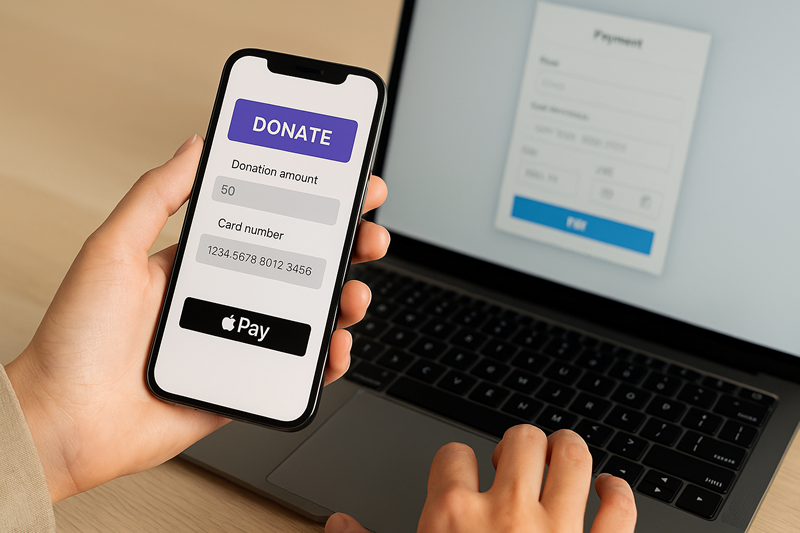
1 – Digital Donation Wallets & One-Click Giving
Digital wallets and one-click giving simplify the donation process, allowing supporters to contribute with minimal friction using saved payment methods such as Apple Pay, Google Pay, or wallet apps. By reducing form fields and enabling instant giving through websites, apps, or emails, charities dramatically cut drop-offs and boost completed donations.
Potential Impact
High – Dramatically increases conversion rates and overall revenue. For example, when the National Audubon Society introduced one-click forms, donors were 9× more likely to complete their gifts.
Effort Required
Moderate – Most modern donation platforms already support wallet payments. Activating or integrating APIs requires testing and compliance checks.
Teams Involved
- Digital / Tech: enable and test integrations
- Fundraising / Marketing: promote new giving options
- Finance / Compliance: ensure payment security
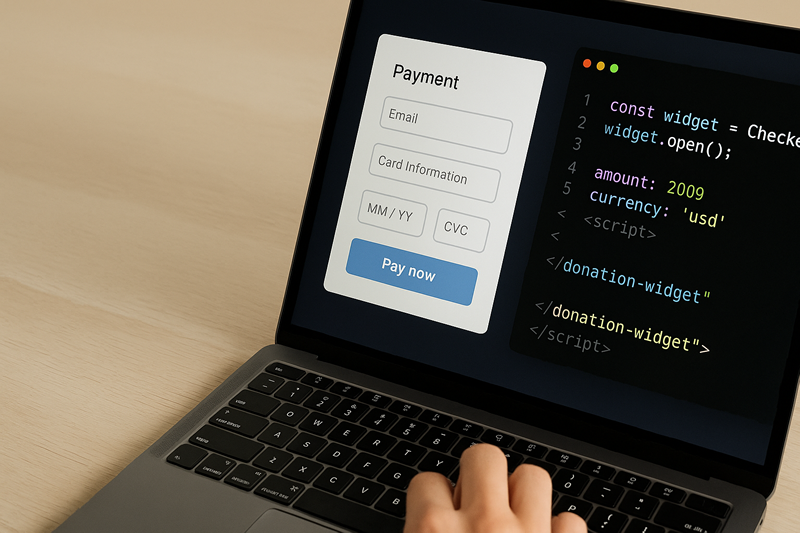
2 – Checkout Widgets & API Integrations
Checkout widgets and APIs extend your donation capability beyond your own website. Charities can embed “Donate” buttons on partner or media sites, or connect their donation system directly to external apps through API integrations. This meets donors wherever they already are.
Potential Impact
High – Removes barriers to giving and expands your reach by capturing donors from third-party platforms.
Effort Required
Moderate – Widgets are quick to embed; deeper API connections require development and testing.
Teams Involved
- Product / IT: manage integrations
- Partnerships: coordinate with external platforms
- Marketing / CRM: design campaigns and track data
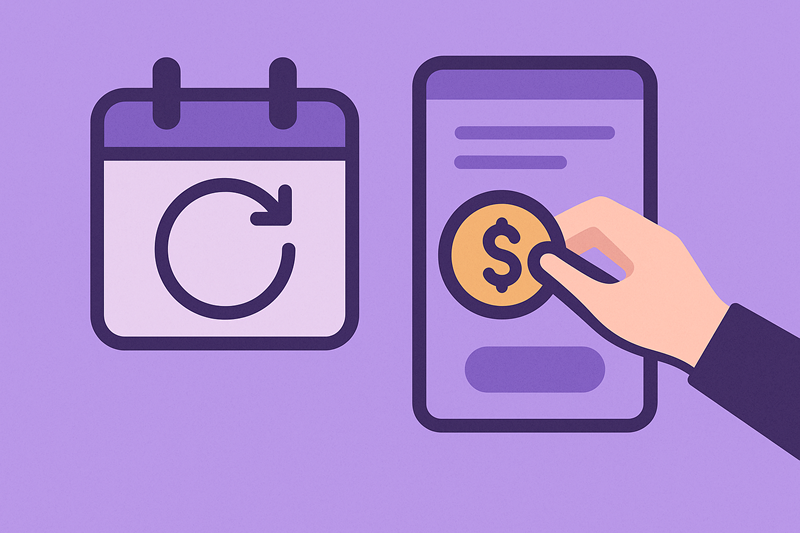
3 – Recurring Giving Subscriptions
Recurring giving transforms one-time donors into long-term supporters through automatic monthly or annual gifts. Modern tools make it easy for donors to “subscribe” to give regularly — ensuring consistent income and deeper loyalty.
Potential Impact
High – Recurring donors show 78% retention (versus 38% for one-off donors) and deliver predictable monthly revenue.
Effort Required
Low – Most platforms support recurring payments; the main task is branding and marketing your program (e.g. “Join our Monthly Heroes”).
Teams Involved
- Fundraising: design giving levels and strategy
- Marketing: create engagement campaigns
- Finance / CRM: manage recurring transactions
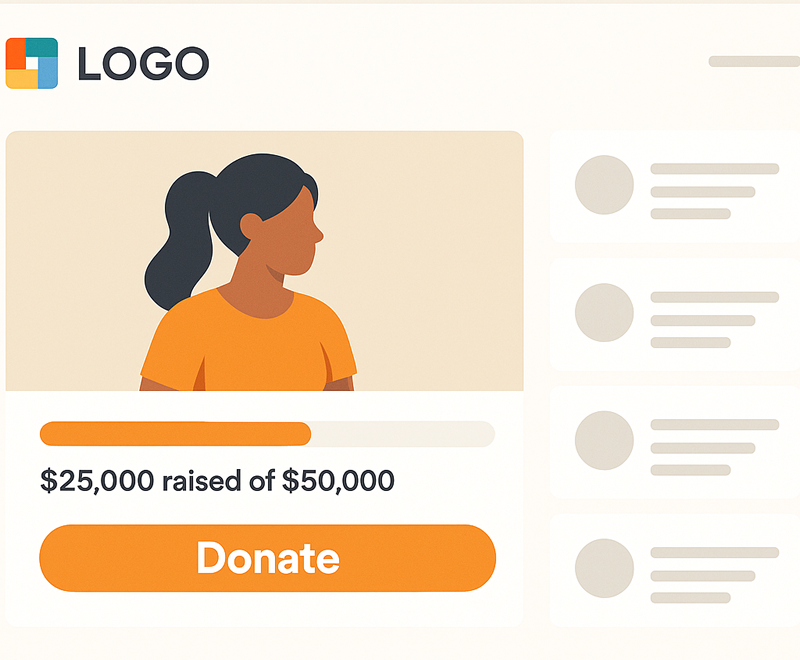
4 – White-Label Crowdfunding Portals
A white-label crowdfunding portal lets your charity host peer-to-peer campaigns under your own brand and domain. Supporters can fundraise on your behalf, while you retain donor data and brand control.
Potential Impact
High – Unlocks new networks of donors through supporter-led fundraising and strengthens brand visibility.
Effort Required
Moderate–High – Requires selecting or building a platform, branding, and ongoing management.
Teams Involved
- IT / Product: configure the portal
- Fundraising / Community: manage supporter campaigns
- Marketing: promote and provide shareable content

5 – Advanced Personalisation & Recommendation Engines
Personalisation uses donor data and algorithms to tailor giving experiences — recommending relevant campaigns or custom donation amounts.
Potential Impact
Medium–High – Boosts engagement and average gift size; personalised messages are 26% more likely to be opened.
Effort Required
Moderate – Basic segmentation can be done with existing CRM tools; advanced AI models require data infrastructure.
Teams Involved
- Data / Analytics: set up segments or algorithms
- Marketing: craft tailored content
- Web / Tech: implement dynamic website features

6 – Mobile App Enhancements
With most traffic now coming from smartphones, mobile app innovation ensures giving is as easy on the go as on a desktop. Features include in-app donations, push notifications, and gamified challenges.
Potential Impact
High – Improves engagement among younger donors and boosts mobile conversion rates (Apple Pay alone can raise conversions by 16%).
Effort Required
Moderate – High – Requires ongoing app development and user-experience testing.
Teams Involved
- Mobile / UX Design: enhance the interface
- Marketing: drive app downloads and engagement
- IT / Systems: maintain integrations and data flow

7 – Team Fundraising & Peer-to-Peer Tools
Empower supporters to raise funds within their own networks. Peer-to-peer (P2P) campaigns multiply reach and create community-driven momentum.
Potential Impact
High – Expands donor base exponentially; top 30 P2P programs in the US raised $1.14 billion collectively in 2024.
Effort Required
Moderate – Platform setup is straightforward; ongoing coordination and motivation are key.
Teams Involved
- Fundraising / Events: recruit and support fundraisers
- Marketing: promote campaigns and share stories
- Tech / CRM: integrate donor data

8 – Trust & Verification Features
Trust is central to giving. Verification badges, transparent reporting, and fraud detection tools reassure donors that their money is safe and impactful.
Potential Impact
Medium–High – Increases donor confidence and repeat giving. Verified platforms like GlobalGiving have raised over $1 billion globally through trust-driven design.
Effort Required
Low–Moderate – Many trust signals are process-based (vetting, clear reporting) with light tech implementation.
Teams Involved
- Compliance / Trust & Safety: handle verification
- Programs / Finance: share impact and reporting data
- Communications: promote transparency messages
How Product Innovation Drives Growth
Innovation in donation products and platforms isn’t just about new technology; it’s about unlocking measurable growth for your charity. Each innovation strengthens a specific growth lever: conversion, retention, trust, and reach. Below are the key ways these digital improvements drive sustainable fundraising success.
1 – Enhanced Donor Experience → Higher Conversion & Retention
Product innovation streamlines the donor journey, making giving faster, easier, and more satisfying. Features such as one-click giving, digital wallets, and personalised donation flows remove friction, leading to higher completion rates and repeat giving.
A smoother donor experience also boosts satisfaction and loyalty. When donors feel valued and find it effortless to support your cause, they are more likely to return — increasing their lifetime value and long-term commitment.

2 – Expanded Reach & New Audiences
Digital tools like checkout widgets, peer-to-peer fundraising, and social sharing integrations help your charity reach people far beyond your existing database. Each donor or partner effectively becomes a new marketing channel — amplifying your message to their networks.
This “network effect” means one supporter’s effort can inspire dozens of new donors, dramatically lowering your acquisition cost and broadening your donor base.

3 – Increased Donation Frequency and Volume
Recurring giving subscriptions, one-tap donations, and recommendation engines encourage donors to give more often and in more ways. For instance, adding a monthly giving option or suggesting related campaigns through personalisation tools can steadily increase total annual revenue per donor.
By simplifying repeat donations and prompting supporters with relevant opportunities, charities create a consistent and scalable income stream.

4 – Data-Driven Optimisation
Modern fundraising platforms offer rich data insights into donor behaviour — from donation timing and frequency to campaign preferences. Analysing this data helps charities make smarter decisions: refining messaging, testing new features, and continuously improving conversion rates.
Innovation also enables real-time feedback loops, such as A/B testing donation pages, automating thank-you messages, or using AI-driven analytics to predict which donors are most likely to upgrade or lapse. The result is faster learning and more efficient growth.

5 – Stronger Trust and Reputation
Trust remains the foundation of giving. By integrating verification features, impact dashboards, and transparent reporting, charities signal accountability and integrity.
Being seen as innovative and transparent strengthens donor confidence and differentiates your charity in a crowded market. Supporters are more likely to donate — and to recommend you — when they trust that their contributions are used effectively and transparently.
In essence, product and platform innovation acts as a multiplier for all areas of fundraising. It improves donor experience, expands reach, boosts frequency, drives smarter decision-making, and enhances your brand’s credibility — all leading to measurable, sustainable growth.

Implementing Product & Platform Innovation
Innovation doesn’t happen by accident — it’s the result of clear goals, collaboration, and structured execution. For charities, implementing new digital products and platform improvements requires both strategic planning and team alignment.
Below is a practical seven-step roadmap to help charity leaders and digital teams put innovation into action and achieve measurable growth.
1. Audit Your Current Donor Journey
Begin with a comprehensive review of your current digital giving experience, encompassing the entire process from discovery to donation and follow-up.
- Identify friction points: Where do donors drop off or hesitate?
- Map each stage of the journey to understand how supporters interact with your website, forms, or app.
- Gather donor feedback and analytics data to validate your insights.
This diagnostic stage will reveal quick wins (like simplifying donation forms) and deeper opportunities for innovation.
2. Set Clear Goals and Prioritise Innovations
You can’t implement everything at once. Define your top objectives and prioritise the innovations that best serve them.
- If your goal is acquisition, start with social sharing, widgets, or P2P tools.
- If you want loyalty and lifetime value, focus on recurring giving or personalisation.
- Set measurable KPIs — such as “increase conversion rate from 15% to 25%” or “gain 200 new monthly donors in six months.”
Clear priorities ensure every innovation aligns with your mission and delivers impact.
3. Secure Buy-In and Build an Innovation Team
Change succeeds only when everyone’s on board.
- Present the case for innovation with real examples and data.
- Involve leadership, fundraising, marketing, and tech early in the process.
- Form a small cross-functional “innovation taskforce” responsible for delivery.
Having a dedicated, empowered team accelerates progress and removes departmental bottlenecks.
4. Choose the Right Tools (Build vs Buy)
Decide whether to develop in-house solutions or adopt existing platforms.
- Buy if there’s a proven tool (e.g. digital wallet integration, white-label crowdfunding portal) that fits your needs.
- Build if your charity has unique workflows or needs deep customisation.
- Always ensure integration with your CRM, website, and analytics tools.
The right decision saves time, reduces risk, and ensures long-term scalability.
5. Implement in Phases and Test Early
Avoid launching everything at once. Instead:
- Roll out new features gradually (for example, enable Apple Pay first, then add personalisation).
- Use A/B testing to measure improvements.
- Pilot innovations with smaller donor segments before full rollout.
This phased approach reduces risk and allows continuous optimisation based on real user feedback.
6. Train Your Team and Communicate with Donors
Innovation is as much about people as technology.
- Provide hands-on training for staff and volunteers using the new tools.
- Prepare FAQs and support guides for donor-facing teams.
- Announce new features to supporters as benefits: “We’ve made giving easier with one click!”
When donors understand and trust new features, adoption rates rise significantly.
7. Monitor, Measure, and Iterate
Track results, learn from data, and refine continuously.
- Measure key metrics (conversion rates, recurring donors, app engagement, etc.).
- Collect donor feedback and internal insights.
- Adjust features or campaigns that underperform.
Innovation should be treated as an ongoing cycle — each improvement builds upon the last, compounding your charity’s growth and impact.
By following these seven steps, your organisation can move beyond one-off tech upgrades and build a culture of continuous innovation. Each new feature or platform enhancement becomes part of a larger strategy to create better donor experiences, improve efficiency, and scale sustainably.
Real-World Examples of Innovation-Driven Growth
Seeing innovation in practice helps bring its power to life. The following case studies showcase how charities of different sizes have leveraged product and platform innovation to achieve transformational results — from higher conversions to predictable revenue and stronger donor trust.
A – National Audubon Society – One-Click Giving Boosts Conversions
A leading environmental charity, the National Audubon Society, enhanced its email donation experience with one-click giving and pre-filled donor details. This simple UX improvement made donating almost effortless.
Results:
- Donors were 9× more likely to complete a donation through one-click forms.
- Email campaign revenue increased nearly ninefold.
- The smoother process encouraged repeat giving and improved donor satisfaction.
Takeaway: Streamlining donation flows can deliver dramatic gains. Even a small tech tweak, like one-click checkout or saved payment methods, can unlock substantial growth in response and revenue.
B – Charity: water – Recurring Giving Revolution
Charity: water launched “The Spring,” a monthly giving community designed as a branded subscription experience. Members receive exclusive updates, videos, and impact stories that build a sense of belonging.
Results:
- Over 62,000 monthly donors joined within 3½ years.
- Generates $19.8 million per year in recurring revenue.
- Delivered 40% year-over-year growth in predictable income.
Takeaway: Treating recurring giving as a branded product — not just a checkbox — can transform financial stability and deepen long-term engagement.
C – Movember Foundation – Peer-to-Peer Power
The Movember Foundation built a purpose-built peer-to-peer platform where supporters create pages, form teams, and compete in friendly fundraising challenges each November.
Results:
- Raised $837 million globally since launch.
- Funded 1,200+ men’s health projects across 20 years.
- Created a worldwide movement powered by community advocacy.
Takeaway: Peer-to-peer innovation turns donors into fundraisers. By gamifying giving through leaderboards, badges, and team goals, charities multiply their reach and donations through organic network effects.
D – GlobalGiving – Building Donor Trust Through Transparency
GlobalGiving, a global crowdfunding platform, made trust features the cornerstone of its product design. Every partner charity undergoes a strict vetting process, earning a verified badge and offering transparent project updates and impact reports.
Results:
- Facilitated $1 billion+ in donations to 40,000 projects.
- Earned donor confidence through transparency and credibility.
- Set a new industry benchmark for verified giving online.
Takeaway: Visibility builds trust. Integrating transparency into your digital experience — from badges to progress dashboards — converts hesitation into confidence and one-time givers into lifelong supporters.
Conclusion: Innovate to Accelerate Your Mission
Innovation isn’t just about adopting new technology — it’s about removing barriers, building trust, and creating better experiences for every donor. The charities leading digital transformation today aren’t simply upgrading systems; they’re redefining how generosity happens online.
By embracing innovations such as digital wallets, recurring giving programs, peer-to-peer fundraising, and transparent verification features, your organisation can turn one-time donations into long-term relationships and inspire a new generation of digital-first supporters.
The evidence is clear: charities that invest in product and platform innovation consistently achieve
- Higher conversion rates through frictionless giving,
- Stronger retention via recurring engagement, and
- Greater impact through data-driven insight and trust.
For your team, innovation begins with a simple mindset shift — from maintaining existing systems to continuously improving how donors connect with your cause. Start small: enable one-click payments, refresh your donation form, or test a recurring-giving pilot. Each improvement compounds over time, creating a smarter, more scalable fundraising engine.
What’s Next
At AMCM Agency, we help charities design, build, and implement digital innovations that drive measurable growth. Whether you’re exploring recurring giving models, white-label crowdfunding portals, or complete digital-platform overhauls, our team can guide you from concept to execution.
We’ve seen firsthand how even modest changes — like optimising checkout flows or adding mobile wallet options — can dramatically boost donations and donor satisfaction.
If you’re ready to future-proof your fundraising through innovation, we’re here to help you plan, prioritise, and deliver it. Together, we can make giving simpler, smarter, and more impactful for everyone who supports your mission.
👉 Download AMCM Agency media pack for Charities or contact us below.


