Introduction
If you're a budding affiliate or influencer seeking great insights into affiliate marketing to become an affiliate marketer, this guide is compiled specifically for you. Our experts at AMTC Agency have been immersed in the affiliate marketing world since Amazon pioneered its first affiliate program in 1996. Let's dive in and become an affiliate marketer.
What is affiliate marketing?
Affiliate marketing is a powerful performance-driven marketing approach, where brands or online stores reward publishers for directing potential customers their way. When these referrals convert to a successful sale or a lead, the publisher receives a pre-determined commission from the brand.
There are different types of publishers such as affiliates, social media influencers, mobile developers, bloggers, content writers and more who utilise affiliate marketing to monetise their users from their web, social and mobile platforms.
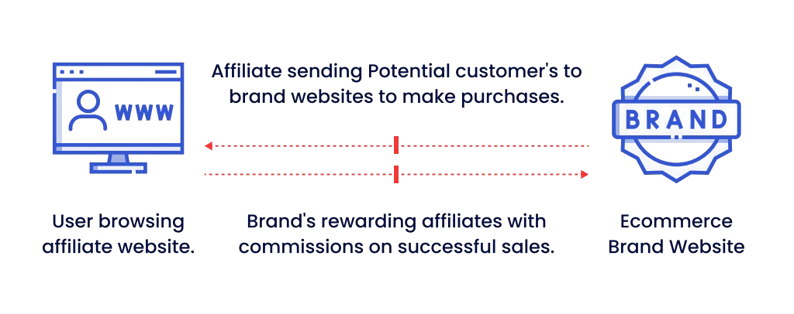
In affiliate marketing, both the publisher and the brand benefit. The brand gains sales from users directed by the affiliate, while the affiliate earns a commission for these referrals.
Key players in an affiliate marketing process?
Great, we've grasped the concept of affiliate marketing and identified the two primary players essential for its operation. Now, let's delve into the roles of all the participants in the standard affiliate marketing framework.
The key players that could be involved in the complete affiliate marketing mix are as follows.
How does affiliate marketing work?
So far we have understood the key players in the affiliate marketing framework. Let's understand the roles and responsibilities of each stakeholder to make the affiliate marketing process work effectively.
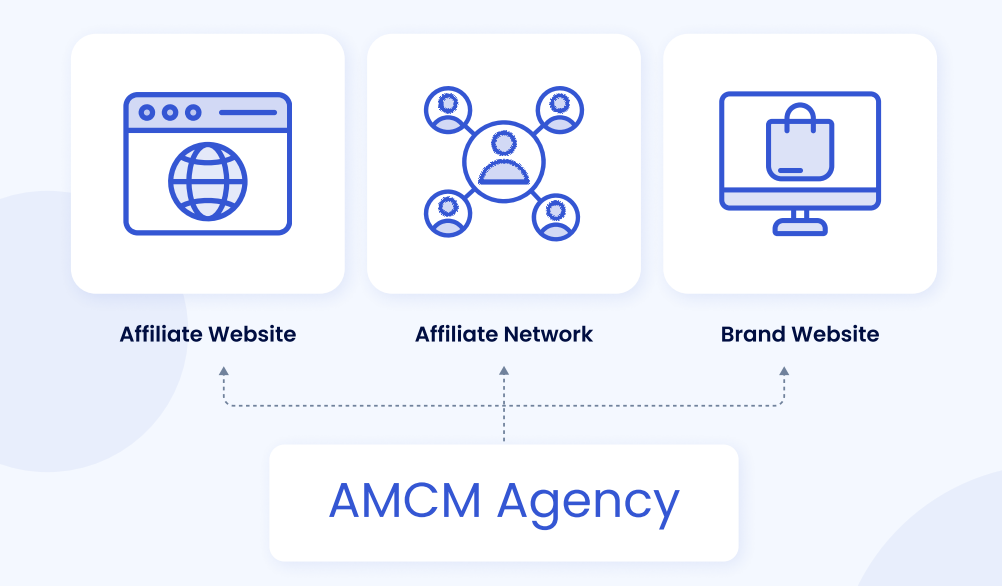
Certain prominent brands prefer to collaborate directly with publishers. They possess the necessary technology and tools to manage affiliate programs independently, as seen with Amazon Associates.
Yet, many global brands lack the expertise, financial means, technical infrastructure, or access to a vast network of publishers. As a result, they opt to engage with affiliate networks, which act as intermediaries, connecting the brand with publishers to effectively implement affiliate marketing campaigns.
The Brand
When a brand plans to initiate an affiliate marketing campaign, it undertakes comprehensive research, including:
- Examining competitor affiliate programs and the commission rates they offer to publishers.
- Determining the overall campaign expenses, encompassing affiliate commissions, network fees, costs associated with an affiliate management agency or an in-house manager, and expenses related to creative development.
- Establishing annual sales forecasts and outlining the campaign's objectives.
- Selecting the appropriate affiliate network for launching their campaign.
- Devising strategies to engage and onboard publishers for their campaigns.
- Estimating the time it will take for the campaign to break even and subsequently become profitable.
- Defining the compensation model for publishers.
Brand executives typically pose these inquiries to affiliate networks or the teams of affiliate campaign management agencies who can offer more tailored proposals to the brand.
If the campaign is hosted on the affiliate network, the network handles tasks such as recruiting affiliates, tracking the campaign's progress, and collecting commissions from the brand. Subsequently, they distribute these commissions to affiliates based on their successful referral sales.
The Publisher
As a publisher, you might receive details about an affiliate campaign from a brand or e-commerce site and be invited to promote it across your website, mobile app, or social media platforms. Your decision to participate and endorse the campaign hinges on several considerations:
- Whether your channels possess a user base that aligns with the brand's offerings and can be effectively monetised.
- The fairness of the compensation offered by the brand, compared to potential promotions from competing brands.
- The brand's terms for payments and the flexibility they provide regarding promotional strategies.
Should you choose to join the brand's affiliate program and drive traffic their way, you'd earn commissions via the affiliate network. A significant advantage for you as a publisher is the potential to receive a consolidated monthly commission from the affiliate network, encompassing all campaigns you've promoted.
The Affiliate Network
The affiliate network serves as the pivotal platform within the affiliate marketing ecosystem. Here are some key advantages of initiating an affiliate campaign through an affiliate network:
- Affiliate networks oversee numerous affiliate programs and provide insights into brand sales data, enabling new brands to gauge the potential and efficacy of their affiliate initiatives.
- These networks cultivate an expansive database of publishers, encompassing affiliates, influencers, mobile developers, sub-networks, DSPs, content creators, prominent publishing platforms, and more. Consequently, a brand's campaign could witness sales shortly after its launch.
- Affiliate networks offer brands technical support for monitoring clicks, sales, and managing commissions with their participating publishers.
- Publishers stand to gain by receiving consolidated payments from the network, streamlining the process compared to seeking individual commission payments from various brands.
- Affiliate networks foster innovation and set industry benchmarks, playing a pivotal role in shaping the multi-billion-dollar affiliate marketing landscape.
The Agency
The affiliate marketing campaign management agency specialises in tailored campaign oversight. With years of experience in the affiliate marketing realm, these professionals or teams excel in initiating, overseeing, and expanding a brand's affiliate marketing initiatives.
The agency oversees every facet of the campaign for the brand, ranging from strategising the affiliate campaign, recruiting publishers, consolidating commissions, crafting creatives, handling technical aspects, monitoring, and optimising the campaign, to providing comprehensive reports to the brand's teams. AMCM Agency provides complete affiliate marketing campaign management services to global brands and e-commerce stores.
Key terminologies in affiliate marketing
Every profession or field comes with its own set of terms and jargon. Let's delve into the essential terms used in the affiliate marketing industry.
Size of global affiliate marketing industry
The global affiliate marketing industry is a behemoth, estimated to be worth over $17 billion in 2023. That's a significant jump from just $13 billion in 2016, showcasing the sector's rapid growth and increasing importance in the digital marketing landscape. The global affiliate marketing industry is expected to grow to a market size of $28B by 2027.
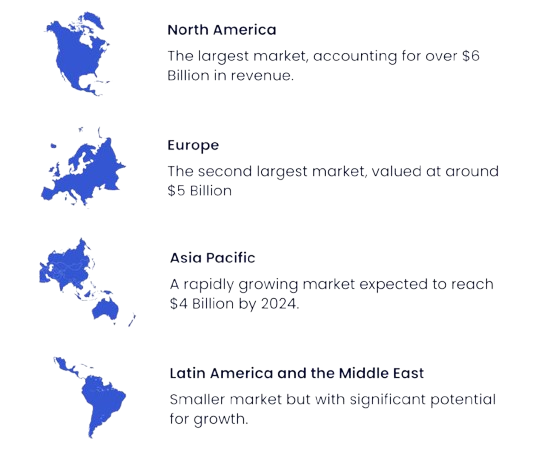
Here's a breakdown of the global affiliate marketing size by region:
- North America: The largest market, accounting for over $6 billion in revenue.
- Europe: The second-largest market, valued at around $5 billion.
- Asia Pacific: A rapidly growing market, expected to reach $4 billion by 2024.
- Latin America and the Middle East: Smaller markets but with significant potential for growth.
The affiliate marketing industry is driven by several factors, including:
- The rise of e-commerce: As more people shop online, affiliate marketing provides a cost-effective way for businesses to reach new customers.
- The growth of social media: Influencers and social media personalities have become powerful affiliates, driving traffic and sales for brands.
- The increasing sophistication of affiliate marketing technology: Tracking software and analytics tools have made it easier for businesses to measure the success of their affiliate programs.
The future of affiliate marketing is bright. The industry is expected to continue growing in the coming years, fueled by the factors mentioned above. If you're looking for a way to earn money online, affiliate marketing is a great option to consider.
Role of the publishers in affiliate marketing
In affiliate marketing, publishers play a crucial role as the bridge between merchants and their target audience. They are the content creators, website owners, bloggers, influencers, and various other digital platforms that promote the merchant's products or services to their established audience. Essentially, publishers are the voice of the merchants, bringing their offerings to the eyes of potential customers.
These affiliates encompass various groups, each with its distinct social, mobile, or web channels. Their primary objective is to cultivate user databases through the delivery of engaging content. As users engage and demonstrate heightened interest, they often register or subscribe to these publisher channels.
It's important to note that publishers don't sell a product or service directly. Instead, they leverage the affiliate marketing framework to endorse offerings from relevant brands, optimising their user monetisation strategies. For instance, a gaming blog writer might incorporate affiliate links within game review sections, allowing users to purchase featured games. By guiding users to make purchases, the publisher garners a commission on each successful transaction.
.The role of publishers in affiliate marketing is multifaceted and central to the ecosystem. Here are the primary roles and functions they serve:
- Content Creation: Publishers produce content tailored to their audience's interests and needs. This content can be in the form of blog posts, reviews, videos, podcasts, or any other medium relevant to their platform.
- Promotion: Publishers actively promote products or services from brands within their content. They incorporate affiliate links, banners, or other promotional materials provided by merchants to drive traffic and sales.
- Audience Engagement: Publishers cultivate and engage their audience, fostering trust and credibility. This engagement enhances the likelihood of users clicking on affiliate links and making purchases.
- Traffic Generation: Publishers utilise various marketing channels, including websites, social media platforms, email newsletters, and more, to drive targeted traffic to the affiliate products or services.
- Conversion Optimisation: Effective publishers continually optimise their content and promotional strategies to maximise conversions. This might involve A/B testing, refining content based on user feedback, or analysing affiliate performance metrics.
- Compliance: Responsible publishers adhere to affiliate program terms and guidelines, ensuring transparent and ethical promotional practices. They also disclose affiliate relationships to their audience as required by regulations.
- Reporting and Analysis: Publishers often monitor and analyse performance metrics provided by affiliate programs. This data helps them understand what strategies are most effective and where adjustments might be needed.
- Building Trust and Credibility: Unlike traditional advertising, publishers offer a more organic and personalised approach. They can share their genuine experiences and opinions about the product, building trust and credibility with their audience. This trust translates into higher conversion rates for the merchant, as viewers are more likely to purchase based on positive recommendations from a trusted source.
In the next section, let's understand different types of publishers and if you would like to become one of them.
Common types of publishers
Publishers leverage affiliate marketing to generate revenue across web, social, or mobile channels. Let's explore some prevalent publisher categories, helping you identify a potential role in affiliate marketing. Each category demands specific skills, influenced by the respective platform or website. Nonetheless, the fundamental monetisation approach remains consistent, as we'll delve deeper into it shortly.
- Loyalty & Cashback Publishers: Cashback is possibly the biggest affiliate marketing publisher model that generates over 20% of all affiliate sales.
- Discounts & Coupons Publishers: Probably the most popular affiliate type seeking discount and last minute deals, offers and coupons.
- Bloggers: More than 100 million bloggers globally use affiliate marketing to monetize their blog content. You can easily create a free blog using WordPress, craft content based on your expertise and passions, and then employ a tool like RevGlue to either automatically monetize your blog content or transform your blog keywords into sponsored links.
- Niche Content Sites: Publishers who focus on specific niches or industries, catering to a particular audience's interests. These sites can range from specialized blogs to dedicated platforms like recipe sites, fitness blogs, or DIY craft sites.
- Social Media Influencers: Individuals with a significant following on platforms like Facebook, Instagram, TikTok, or Twitter. They promote products or brands to their followers, often through sponsored posts or affiliate links. Influencers seek affiliate deals to earn passive income from their social media followers, groups, forums and communities.
- Search Publishers: Affiliates using PPC arbitrage typically earn £6 for every point spent. PPC affiliates attract traffic from top search engines on lower CPC rates to convert them to higher CPA, CPC or CPL rates to make their campaigns profitable.
- Lead Generation Publishers: Affiliates or lead generation companies specialised in generating leads mainly for CPL programs.
- Email Marketing Publishers: Publishers who have built email lists and send regular newsletters or promotional emails to their subscribers. They incorporate affiliate links or exclusive deals within their email content.
- Search Engine Optimization (SEO) Experts: SEO experts or digital marketing agencies optimise websites and content for higher search engine ranking, potentially including affiliate links.
- Review Website Publishers: Review websites that focus on reviewing products, services, or software. These reviews help consumers make informed decisions, and affiliate links are typically embedded within the reviews.
- Content Creators & YouTubers: Individuals who create video content on platforms like YouTube. They review products, offer tutorials, or share insights and integrate affiliate links in their video descriptions or within the content itself.
- Comparison Sites: Websites that compare products or services based on features, prices, or user reviews. They help consumers evaluate options and often include affiliate links to the products being compared.
- Mobile Apps & Extension Publishers: Individuals or companies that develop mobile applications and browser extensions. They can integrate affiliate links or ads within their apps, directing users to relevant products or services.
- Content Aggregators and Curators: Who they are: Websites or platforms collecting and showcasing content from various sources, potentially including affiliate product mentions.
- Community Forums and Q&A Sites: Platforms where users discuss specific topics, ask questions, or seek advice. Publishers on these sites can share affiliate links as recommendations or solutions to users' queries.
- Comparison Datafeed Publishers: More sophisticated affiliates building price and product comparison websites with brand data feeds such as broadband or a mobile comparison website.
- SaaS & Sub-network Publishers: Sub-networks like RevGlue simplify affiliate marketing for affiliates by offering a distinct set of B2B tools. These tools assist publishers in swift monetisation, facilitating straightforward affiliate website creation and the dynamic aggregation of affiliate content across their web, mobile, or social platforms.
- Podcasters and Audio Content Creators: Individuals or companies producing podcasts or other audio content, promoting affiliate products or services through sponsored mentions or product reviews.
- Game Developers: Affiliate marketing is employed within the realm of video games to display brand images and banners. Players can interact with these banners or images, which then redirect them to the brand's website in their web browsers for potential purchases.
- DSPs and Ad Platforms: Demand Side Platforms (DSPs) and prominent advertising platforms are increasingly leveraging affiliate marketing to expand their ad inventory offerings for publishers. They integrate advertisements from search engines, social media platforms, and affiliate networks.
I understand it might seem daunting, but trust me, understanding these distinctions will guide you in choosing the type of publisher role that best suits you. Whether you're inclined towards content creation, setting up discount coupon sites, cashback initiatives, or review platforms, each requires its own technical expertise.
Our goal isn't necessarily to delve into the technicalities of building these platforms. Instead, it's to highlight that all these avenues leverage the affiliate marketing model for efficient monetization across web, social, or mobile platforms.
Payment types for affiliates
Publishers typically don't receive commissions immediately. Instead, these payments often come through after a set period, such as 7, 15 or 30 days, and are deposited into their bank or PayPal accounts by the brand or affiliate network.
Why is there a delay in affiliate payments?
This is a common query raised by publishers. It's crucial to recognise that affiliate marketing operates on a performance-based model. Brands only confirm commissions once a valid sale has been completed and the user has received the product or service.
Consider this: You refer a user to a brand, and they make a purchase today. However, the actual product delivery might take 7 days. Moreover, under e-commerce regulations, customers have a 14-day window to return products if they're dissatisfied, either for a full refund or a partial one if only some items from their order are returned. Given these factors, brands often wait around 30 days post-product delivery to ensure the customer is satisfied before confirming the commission.
Another instance could be when a user books a flight or hotel for a trip scheduled for the upcoming summer. In such cases, publishers might not receive their commission until the user's trip is over. This approach is reasonable for brands, ensuring they're not paying commissions for sales that customers might not ultimately utilise. When joining an affiliate program, it's essential to familiarise yourself with the specific commission terms set by each brand. Now, let's delve into the various payment structures publishers might encounter when entering into an affiliate agreement.
- Pay-Per-Sale (PPS): Publishers earn a commission for every sale generated through their referral link.
- Pay-Per-Lead (PPL): Publishers receive payment for each lead they generate. This could be a sign-up, form submission, or any other predefined action.
- Pay-Per-Click (PPC): Publishers earn money based on the number of clicks generated from their referral links, irrespective of whether a sale or lead is achieved.
- Recurring Commissions: Publishers earn commissions on a recurring basis, typically for subscription-based products or services, as long as the referred customer remains subscribed.
- Tiered Commissions: Publishers receive different commission rates based on the volume or value of sales they generate. Higher sales volumes or values might result in higher commission rates.
- Flat Fee: Instead of a percentage-based commission, Publishers receive a flat fee for each sale or lead they refer.
- Performance Bonuses: Some affiliate programs offer bonuses or incentives for affiliates who exceed certain performance thresholds, such as reaching a specific number of sales or leads within a set period.
- Hybrid Models: These combine two or more payment types, such as a combination of PPS and PPL, to offer affiliates multiple ways to earn commissions.
- Gifts or Incentives: In addition to monetary payments, affiliates might receive gifts, free products, or other incentives as a form of compensation.
Pros and Cons in affiliate marketing for publishers
Be advised: Affiliate marketing can either be mundane or immensely rewarding, contingent on the outcomes you attain.
Here are the top advantages of affiliate marketing for affiliates:
- Be Your Boss: Ditch the 9-to-5 grind and set your hours. Work from anywhere with an internet connection, shaping your workday around your life, not the other way around.
- Work from Your Passions: Promote products and services you genuinely love and believe in. Share your enthusiasm and expertise with your audience, building a community around your passions and interests.
- Low Initial Investment: Affiliate marketing typically requires minimal upfront costs, making it accessible for individuals with limited capital.
- Unlimited Income Potential: Your earnings are directly tied to your effort and creativity. There's no cap on how much you can earn, making affiliate marketing a scalable income stream.
- No Product Creation or Inventory: Affiliates don't need to create products or manage inventory. They promote existing products or services provided by merchants and brands.
- Flexible Schedule: Affiliates have the freedom to choose their working hours, offering flexibility to balance other commitments or pursue multiple ventures.
- Location Independence: Work from anywhere in the world with a stable internet connection. Travel, explore, and live life on your terms while your affiliate efforts keep ticking.
- Passive Income Potential: Once set up and optimised, affiliate marketing campaigns can generate passive income, where affiliates earn commissions without constant active involvement.
- Global Reach: Affiliates can target audiences worldwide, expanding their potential customer base beyond geographical limitations.
- Diverse Product Selection: Affiliates can choose from a vast array of products and services to promote, allowing them to align with their interests or cater to specific audience needs.
- Performance-Based Earnings: Affiliates are rewarded based on performance, typically receiving a commission for each sale or lead they generate, ensuring a direct correlation between effort and reward.
- Minimal Customer Service: Affiliates aren't responsible for customer service, returns, or product inquiries, as these aspects are managed by the merchants.
- Scalability: As affiliates gain experience and refine their strategies, they can scale their efforts by expanding into new niches, promoting additional products, or leveraging various marketing channels.
- Learning and Growth Opportunities: Affiliate marketing provides a platform for continuous learning, experimentation with different strategies, and staying updated with the latest trends and technologies in digital marketing.
Don't these benefits suffice to kickstart your journey in affiliate marketing? Nevertheless, it's crucial to also familiarize yourself with the potential drawbacks of stepping into the affiliate marketer's role.
- Dependence on Merchant: Affiliates rely on merchants to provide accurate tracking, timely payments, and quality products or services. Any shortcomings on the merchant's end can affect the affiliate's earnings and reputation.
- Low Conversion Rates: Not everyone who clicks your link will buy, and conversion rates can vary greatly depending on your niche and strategies. This can require significant effort and optimization to turn clicks into conversions.
- Commission Structures: Some affiliate programs may offer low commission rates, limiting the potential earnings per sale or lead generated.
- Long Lead Time: Building a successful affiliate business takes time, effort, and consistent content creation. Earning significant income might not happen overnight and requires patience and dedication.
- High Competition: The affiliate marketing space can be highly competitive, with many affiliates vying for the same audience, leading to potential saturation in certain niches.
- Risk of Non-payment: There's a risk of not receiving commissions if the merchant goes out of business, changes their affiliate terms, or disputes the validity of referrals.
- Changing Algorithms and Policies: Platforms like search engines and social media sites frequently update their algorithms and policies, affecting affiliate marketing strategies and visibility.
- Customer Relationship Limitation: Affiliates don't have direct access to customers. If customers have issues or queries, affiliates might not be equipped to address them, potentially leading to dissatisfaction.
- Building Trust and Credibility: Earning your audience's trust and establishing yourself as a reliable source takes time and genuine engagement. Overcoming scepticism and promoting authenticity is crucial.
- Need for Continuous Engagement: Successful affiliate marketing requires ongoing efforts to maintain and optimize campaigns, requiring time and consistent monitoring.
- Technical Challenges: Understanding website tracking, analytics, SEO, and marketing strategies can be daunting for beginners. Mastering these skills takes time and ongoing learning.
- Potential for Fraud: Affiliates might face challenges related to fraudulent activities, such as fake referrals or unauthorized use of affiliate links, impacting their credibility and earnings.
- Legal and Ethical Considerations: Navigating disclosure laws, FTC regulations, and ethical marketing practices is essential. Avoiding false claims, misleading information and unethical promotion is crucial.
- Adapting to Market Changes: Affiliates need to stay updated with market trends, consumer behaviour, and industry shifts to remain relevant and competitive, which requires ongoing learning and adaptation.
- Income Variability: Affiliate income can be inconsistent, with fluctuations based on factors like seasonality, market trends, or changes in consumer preferences, leading to unpredictable earnings. For small affiliates, relying solely on affiliate revenue can be risky and requires alternative income streams or financial resilience.
- Algorithm Changes and Platform Dependence: Social media platforms and search engine algorithms can significantly impact your reach and visibility. Adapting to these changes and diversifying your traffic sources is necessary.
- Potential for Negative Feedback: Promoting products not meeting expectations can lead to negative reviews and reputational damage. Choosing quality products and genuinely recommending them is essential.
Remember, despite these challenges, affiliate marketing can be a rewarding and lucrative path. By approaching it strategically, managing expectations, and continuously learning, you can overcome these hurdles and build a successful online business.
How to start affiliate marketing as an affiliate?
Starting with affiliate marketing as an affiliate involves several steps. Here's a short guide to help you kick off your journey.
1. Research and Choose a Profitable Niche
- Identify your interests, passions, or areas of expertise and knowledge of the product or service.
- Analyse the niche landscape, identify potential audiences, and assess competition to ensure market potential for your efforts.
- Research affiliate programs and products within that niche to ensure there's demand and potential for profit.
- Use Google and Google Trends to find the potential for the product keywords and may use Amazon and eBay b2b service to explore the potential to sell a product.
2. Select Top Affiliate Programs in that Niche
- Join top brands affiliate programs from reputable affiliate networks like Amazon Associates, Awin, TradeDoubler, Webgains and Admitad.
- Review the commission structures, payment terms, and support provided by the affiliate programs.
- Read the keyword policy that may limit you with brand-related keyword promotions.
- Check competition, price points for the product or service and seasonality of the product.
3. Build a Platform
- Would you create a coupon, cashback, price comparison website, or utilise an existing platform or utilising social media?
- Decide on a platform to promote affiliate products. This could be a blog, website, YouTube channel, podcast, or social media profile.
- Create high-quality content that provides value to your audience. This can be in the form of blog posts, videos, reviews, tutorials, etc.
4. Drive Traffic to Your Platform
- Implement SEO strategies to improve your platform's visibility on search engines.
- Utilise social media marketing, paid social and search, email marketing, and other promotional tactics to drive relevant traffic.
5. Promote Affiliate Products
- Integrate affiliate links naturally within your content. Avoid being overly promotional; focus on providing genuine recommendations and solutions.
- Use compelling call-to-actions (CTAs) to encourage clicks and conversions.
- Check and update your affiliate links and banners regularly.
6. Track and Optimise
- Monitor your affiliate performance using tracking tools provided by affiliate networks or third-party software.
- Analyse data to understand which products, content types, or promotional strategies are most effective.
- Continuously optimise your campaigns based on the campaign results, financial return, user insights and feedback.
7. Stay Updated and Compliant
- Stay informed about industry trends, new product launches, and changes in affiliate marketing regulations.
- Ensure compliance with affiliate program terms, promotional guidelines, and legal requirements.
8. Build Trust and Credibility
- Be transparent with your audience about your affiliate relationships.
- Focus on building trust by providing honest reviews, recommendations, and valuable content.
Here are two bonus points for you to become an expert affiliate marketer.
9. Learn website development
- Learn basic web development on how to create a simple blog with WordPress.
- Learn advanced programming to build your own simple coupons, price comparison websites or apps.
- Hire a CTO and build your tech platforms for full control of the data, tech and users.
10 - Learn digital marketing
- Learn paid search and social media campaign management to an extent where you can understand, launch and manage simple campaigns.
- Learn SEO to optimise your affiliate websites.
- Learn how to build an email subscribers list, design a simple HTML-based newsletter and deliver it to your customers.
Starting with affiliate marketing requires dedication, continuous learning, and patience. It's essential to focus on providing value to your audience and building genuine relationships, which will ultimately drive long-term success in affiliate marketing.
Popular niches in affiliate marketing
Affiliate marketing spans a vast array of niches, each with its audience, products, and opportunities. Some popular niches in affiliate marketing include.
- Health and Fitness: Fitness programs, sports, supplements, weight loss products, and natural health remedies are commonly promoted within this niche.
- Personal Finance: Credit cards, insurance, personal loans, investment platforms, and financial education resources are popular affiliate products in this niche.
- Beauty and Skincare: Makeup, skincare products, beauty tools, and hair care items are frequently promoted within the beauty and skincare niche.
- Technology and Gadgets: Electronics, software, mobile apps, and tech gadgets are popular products within the technology niche.
- Fashion and Lifestyle: Clothing, accessories, footwear, and fashion subscriptions are commonly promoted within the fashion and lifestyle niche.
- Home and Garden: Furniture, home decor, gardening tools, and home improvement products are popular in the home and garden niche.
- Travel and Tourism: Travel packages, hotel bookings, flight tickets, and travel gear are commonly promoted within the travel and tourism niche.
- Parenting and Family: Baby products, parenting guides, educational toys, and family-oriented services are popular affiliate products in this niche.
- Education and Online Courses: Online short courses, professional online courses, degree and MBA education.
- Digital Products: Online courses, e-books, digital tools, and membership sites are commonly promoted within the digital products niche.
- Pet Care: Pet food, pet supplies, pet care services, and pet health products are popular in the pet care niche.
- Gaming and Consoles: Xbox, Nintendo, Playstation game consoles and online games.
Smaller niches like gifts, food, and seasonal items such as flowers, candies, and chocolates also hold popularity. As an affiliate marketer, it's beneficial to have a solid understanding of the niche you're considering for your affiliate endeavours.
Some niches might not offer substantial monetisation opportunities, face challenges in reaching the target audience, or encounter high competition. You have the flexibility to select a niche based on broader categories, specific products, or even individual brands.
Four types of affiliate product groups
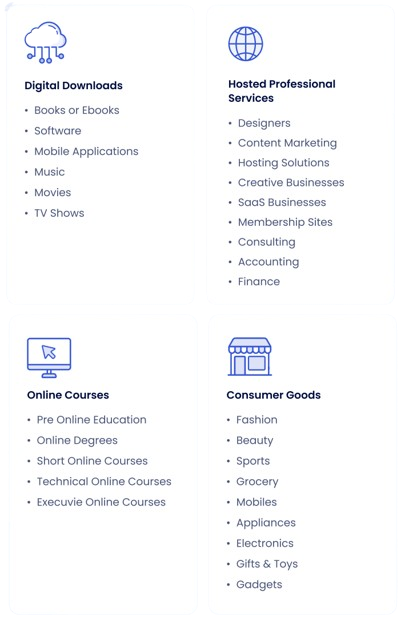
While affiliate marketing offers a vast array of products and services for publishers to monetise their websites, we can categorise them into four main groups for clarity.
You can choose the category of affiliate products that align with your interests. Each category presents distinct product offerings, shopping cart-to-checkout processes, target audience segments, buying frequency tendencies, commission structures, and payment methods
Top ten global affiliate networks
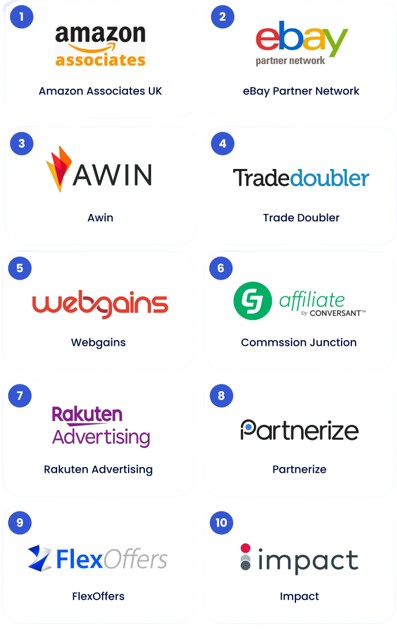
We've collaborated with numerous global affiliate networks. While some specialise in specific niches, others cater to a wide range of brands and categories. Many smaller networks leverage SaaS technologies for their affiliate platforms, offering cost-effective solutions but with certain limitations. In contrast, larger networks possess the financial and technical prowess to develop and refine their proprietary affiliate network technologies.
Here are the top ten affiliate networks we've partnered with, listed in no particular order
Affiliate Creatives Bank explained
Upon joining an affiliate program, publishers gain entry to the creative bank. This repository offers various types of content and creatives that affiliates can utilise to advertise the brand's offerings.
Let's delve into the primary creative formats available.
- Static Links: Publishers receive distinctive static links, typically embedded with the affiliate tracking path from the affiliate network. Utilising these links is crucial; otherwise, publishers might miss out on their commissions. Certain affiliate networks offer tools that simplify the process of generating links for various brands using their technology. Additionally, publishers can craft deep links using this tool.
- DeepLinks: These links can directly lead to specific product or category pages. Publishers often have the option to create deep links, directing their audience straight to particular product or service pages if they choose to do so.
- Banners: Many publishers opt to advertise brands using banners, which come in a range of sizes from compact to expansive. These banners can feature the brand exclusively, highlight specific products or categories, or be tailored in line with the brand's marketing campaigns and strategies. For accurate commission tracking, publishers are advised to utilise the monetized links embedded within these banners.
- Coupons: Consumer product brands frequently provide publishers with discount coupons. While these coupons can attract users by offering savings on purchases, they may also decrease the overall purchase amount. Consequently, this can lead to a lower commission for the publisher, typically calculated based on the total purchase value. However, it's advisable to monitor the conversion rates associated with each brand rather than focusing solely on individual commissions. Some brands may yield higher conversions and sales due to factors such as discounts, product quality, brand reputation, and favourable return policies, among others.
- Product Feeds: This represents a database containing a collection of brand products. It generally includes essential details like Product Unique ID, title, description, RRP, price, deeplink, image link, and category. Publishers can leverage this data to develop product or price comparison platforms. Such information is available in formats like CSV, Excel, Text, JSON, XML, or through other web services.
- Others: Certain brands provide HTML-based iframes, JavaScript-based search forms, or even comprehensive comparison website integrations. These tools are particularly favoured in sectors like travel, ticket booking, and holiday reservations. The advantage of such tools is that the brand handles all data and technical aspects. Publishers can effortlessly incorporate them by adding a straightforward code snippet or an HTML/PHP file to their server, resulting in a fully functional website. This approach spares publishers from dealing with technicalities like hosting, databases, or development tasks.
Affiliate marketing without a website
Certainly, you can engage in affiliate marketing even without having an affiliate website. Publishers have various methods to promote brand offers and generate commissions, many of which are entirely cost-free.
Let's explore some of these options.
Design a Forum and build a community
- Numerous free hosting and software platforms allow you to establish a forum or community centred around particular interests like gaming, sports, health, wellness, and more.
- Create pertinent content to attract and involve members in the forum discussions. You can opt for a subscription fee or maintain free access, leveraging affiliate partnerships for monetisation.
- Boost your traffic through SEO, paid social advertising, and search engine marketing while also focusing on growing an engaged community united by common interests.
Create WhatsApp Group
- Establish a WhatsApp group, invite your circle of friends and relatives, and encourage them to extend the invitation to others in their network. Even if you start with just 100 members, it's a solid beginning.
- Clearly outline the group's objective, like showcasing the top 10 daily deals, and regularly post the best offers to facilitate purchases for your members.
- Ensure you're well-informed about the group's preferences. Share valuable insights, updates, and deals to keep the members engaged and interested.
Write an eGuide
- Create an eGuide on the topic that you believe is informative and engaging and share it freely on forums, online communities, and social media groups.
- Ensure the guide offers valuable and pertinent content for the intended audience. Incorporate links and banners from relevant brands for potential monetisation.
- Implement a lead generation strategy to gather user details, which you can then utilise to reconnect and further monetise with targeted offers.
Create YouTube Channel
- Launch a YouTube channel centred around a topic that intrigues you, whether it's a specific niche like reviewing products within a particular industry.
- Provide comprehensive details in the description area and incorporate monetised links to earn commissions from sales generated.
- Ensure your YouTube content offers genuine value to enhance user subscriptions and engagement.
- You may also use the comments section of videos created by others with relevant information and monetisation links.
Create Facebook Group / Page
- I've come across numerous Facebook groups and pages dedicated to particular subjects and passions. Within these, you can post images, reels (brief videos), deep links, and more.
- Construct a community around shared interests; it doesn't necessarily have to be vast. Focus on topics where you possess expertise and in-depth knowledge.
- Promote your Facebook page by sharing its link in other relevant Facebook communities to draw more users to your channel or group.
Comment in Review Websites
- Craft comprehensive reviews of products or services based on your experiences and post them on various websites. Some sites might permit you to include your links within these reviews.
- This serves as a strategic link-building approach, enabling you to channel traffic either to your primary platform or directly to specific brands using deep-links.
Advertise with Native Ads
- If you're acquainted with native ads technology, it enables you to publish comprehensive written content on external websites. You can incorporate your content and links within these articles.
- While there might be a cost associated with promoting the native ad, if your content captivates the audience, they're more likely to click on the links and potentially make a purchase.
Utilise search engines for paid PPC arbitrage
- Many leading search engine marketing firms employ paid campaign options within search engines to promote affiliate products or services.
- This strategy, known as PPC arbitrage, enables them to buy clicks at lower CPC rates and achieve conversions at more favourable CPC or CPA rates.
Use sub-networks and SaaS technologies
- Numerous sub-networks and affiliate SaaS platforms offer the capability to set up straightforward affiliate websites, which they fully host and oversee. As an affiliate, you don't need technical expertise or direct access to the affiliate networks since everything operates within the SaaS framework.
- RevGlue.com provides this service in the UK, enabling publishers to establish basic affiliate websites swiftly or gain access to a vast array of affiliate deals on a revenue-sharing model. All the tools they provide are user-friendly and complimentary.
10 Don't as an affiliate marketer
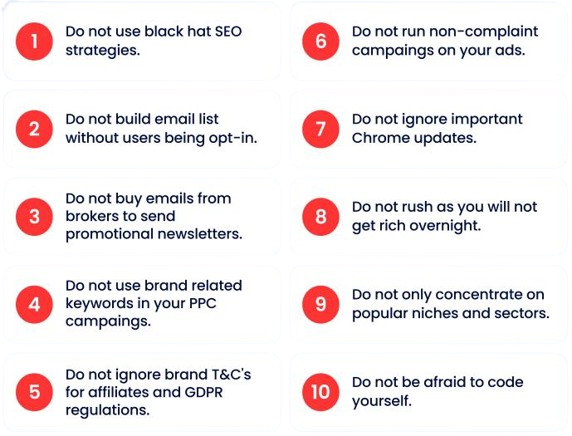
While we can suggest certain tactics, some might appear legitimate but could potentially result in a ban from an affiliate network or a specific brand's affiliate program. As affiliate marketing evolves, practices involving fake leads and clicks are becoming obsolete. Affiliate network technologies are adept at detecting malicious activities and can promptly restrict access for violators. Therefore, it's crucial to adhere to the guidelines and terms set forth by both the affiliate networks and individual brand campaigns.
Here are ten straightforward DON'Ts to keep in mind:
How to start the first affiliate marketing project
We've outlined the foundational steps for becoming an affiliate marketer earlier. Now, let's delve deeper into the specifics of initiating your first affiliate project.
1 - Find a Niche sector, product or service
The initial step involves selecting a topic that aligns with your expertise, experience, and the potential of the niche, whether it's a product or a service. This could range from broad interests like offering discounts and coupons across various leading brands to focusing on specific niches such as sports, wellness, or even individual products like mobile phones.
2 - Find a tech provider - SaaS or in-house development team
Suppose you've decided to establish a coupons and deals website. The subsequent phase involves determining the approach for setting up this platform. You have multiple options: you could hire technical experts to construct it for you, explore SaaS sub-networks that might provide solutions based on a fixed fee or revenue-sharing model, or embark on the journey of learning coding yourself.
3 - Find the affiliate networks and brands you wish to work with
Subsequently, identify the brands and affiliate networks you're interested in collaborating with and compile a list. While you can begin the registration process with these affiliate networks, they might not engage with you until you present a preliminary version of your website or showcase a social media channel to demonstrate how you intend to promote their brand offers.
4 - Build your web, social or mobile platform
The next phase involves constructing your platform, whether it's a website, mobile app, or leveraging social media channels. Each option comes with its unique pros and cons. Social media platforms may be cost-effective, but they offer limited user data access and control. Conversely, developing your website or mobile app could be more expensive initially, yet it grants you comprehensive access and autonomy over all features.
Opting for a SaaS-hosted solution can be advantageous for launching your initial website, as it provides both the technology and affiliate offerings. However, remember that you'll share a portion of the commissions with them. Your team must grasp the nuances of affiliate project development, which includes integrating APIs with affiliate networks and brands to ensure daily data updates.
5 - Drive relevant traffic to your project for monetisation
Once your project is live, the subsequent step involves attracting relevant users through various digital marketing strategies. This can encompass SEO, paid social advertising, and search campaigns. The goal is to cultivate a pertinent user database, which is crucial for sustaining engagement. Regular email newsletters can then be employed to re-connect with these users and keep them engaged with your website.
How to drive traffic to an affiliate website
Generating and directing traffic to an affiliate website follows similar principles to promoting any other website. Certain fundamental considerations are essential to achieve your goals.
Initially, it's crucial to identify your target audience. This involves segmenting users based on factors like location, gender, age, interests, and other relevant criteria to attract more tailored traffic to your site.
Subsequently, develop a marketing strategy that aligns with user preferences. Consider the platforms available for advertising and weigh the costs associated with each campaign to ensure optimal results.
Let's explore the top 5 methods affiliates employ to direct traffic to their sites.
- SEO Affiliates often kick off their promotional efforts with a robust SEO strategy. While it's a longer-term approach, it can be particularly effective if you're dealing with niche products that resonate with a specific audience.
- Paid Search Seasoned affiliates leverage platforms like Google and other search engines to harness PPC (Pay-Per-Click) strategies, driving substantial traffic to their platforms.
- Paid Social By crafting paid promotional campaigns on major social platforms such as Facebook, Instagram, and YouTube, affiliates can tap into vast user bases.
- Native Ads Affiliates harness the potential of native advertisements, which seamlessly blend with the platform's content, to attract significant traffic.
- Affiliate Program Established publishers, especially those in the coupon or loyalty sectors, often establish their affiliate programs. This initiative assists other publishers in driving traffic to their sites, fostering a collaborative growth environment.
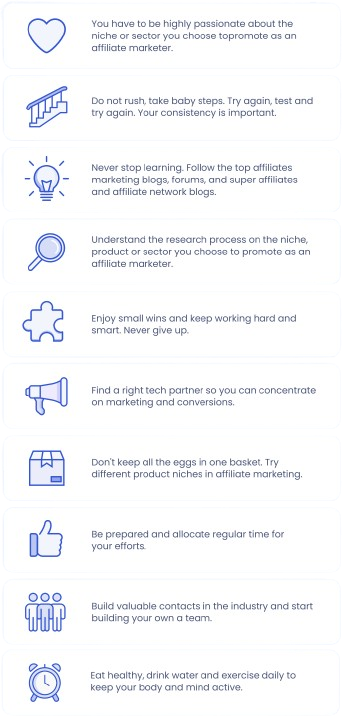
Top tips for affiliate marketing success
Achieving success in affiliate marketing isn't governed by a one-size-fits-all approach. However, drawing from our extensive experience in the field, we've curated a list of the top ten insights to guide aspiring affiliates.
Common questions in affiliate marketing by publishers
1. What is affiliate marketing?
Affiliate marketing operates on a performance-driven model, wherein affiliates earn commissions for directing potential customers to e-commerce platforms, leading to successful purchases.
2. What is an affiliate program?
Retailers offer affiliate programs with specific terms to potential affiliates. Typically, affiliates apply to these programs through affiliate networks. Once accepted, they begin promoting products, services, or websites and earn commissions based on the sales or leads by their referrals.
3. What is an affiliate network?
An affiliate network serves as a centralised platform and communication link between publishers and e-commerce stores. For publishers, the advantage is the ability to access multiple e-commerce affiliate programs through one platform. Meanwhile, e-commerce stores benefit by quickly connecting with a vast network of potential affiliates.
4. How much can I earn as an affiliate?
Earnings in affiliate marketing are not capped. Part-time affiliates might earn around £100 monthly, whereas full-time professionals could rake in commissions amounting to millions monthly. The income largely hinges on the expertise applied in attracting and guiding relevant traffic to e-commerce stores, resulting in fruitful transactions.
5. Can I make this a career and work from home?
Absolutely! With a laptop and internet connection at your disposal, you can carve out a rewarding career in affiliate marketing right from the comfort of your home. All it takes is a modest budget, dedication, and consistent effort to practice, learn and refine your campaigns to thrive.
6. What other skills do I need as an affiliate marketer?
Acquire essential technical skills like web design, SEO, PPC, content marketing, and creative writing. Familiarize yourself with user web funnels, analytics, and reporting to enhance your proficiency in affiliate marketing.
Conclusions
Affiliate marketing offers lucrative opportunities for online publishers who understand the intricacies and invest in essential resources. This includes identifying high-value niches and establishing appropriate platforms, be it websites, mobile apps, browser extensions, or social media channels, to cater to the right audience.
The beauty of affiliate marketing lies in its limitless potential. Earnings can range from a modest $100 to an astounding $100 million. Remarkably, some top affiliate websites have been acquired for over $100 million. Today, affiliate marketing stands as a premier marketing channel for brands, with over 80% of global brands offering affiliate programs. This abundance provides affiliates with a vast array of offers and deals to promote, thereby earning commissions.
If you possess the skills to craft basic websites and attract traffic to them, you're already halfway there. This skill set provides you with a competitive advantage. Yet, it's important to note that affiliate marketing is a dynamic field. Staying abreast of the latest advancements and trends in the industry is crucial for sustained success.
Useful Websites for affiliates
Here is a list of top global affiliate websites, affiliate networks, and sub-networks that you can browse to learn more about affiliate marketing as an affiliate.
Global Affiliates Networks
Global SaaS affiliate campaign management and network technologies
Global Sub-networks
Top Cashback Loyalty Websites
Top Coupons Websites
Deals & Product Feed Comparison Websites